
By Fern Goddard, Roofing Guides EditorUpdated September 2026
When a Philadelphia flat roof starts leaking, protect the room first: catch the drip, move belongings, switch off any light the water is near, and relieve a bulging ceiling with a small hole at its low point. Stay off a wet roof. Then call a roofer; the usual causes are an open seam, a clogged scupper, or failed flashing at a parapet.
Inside the House: The First Ten Minutes
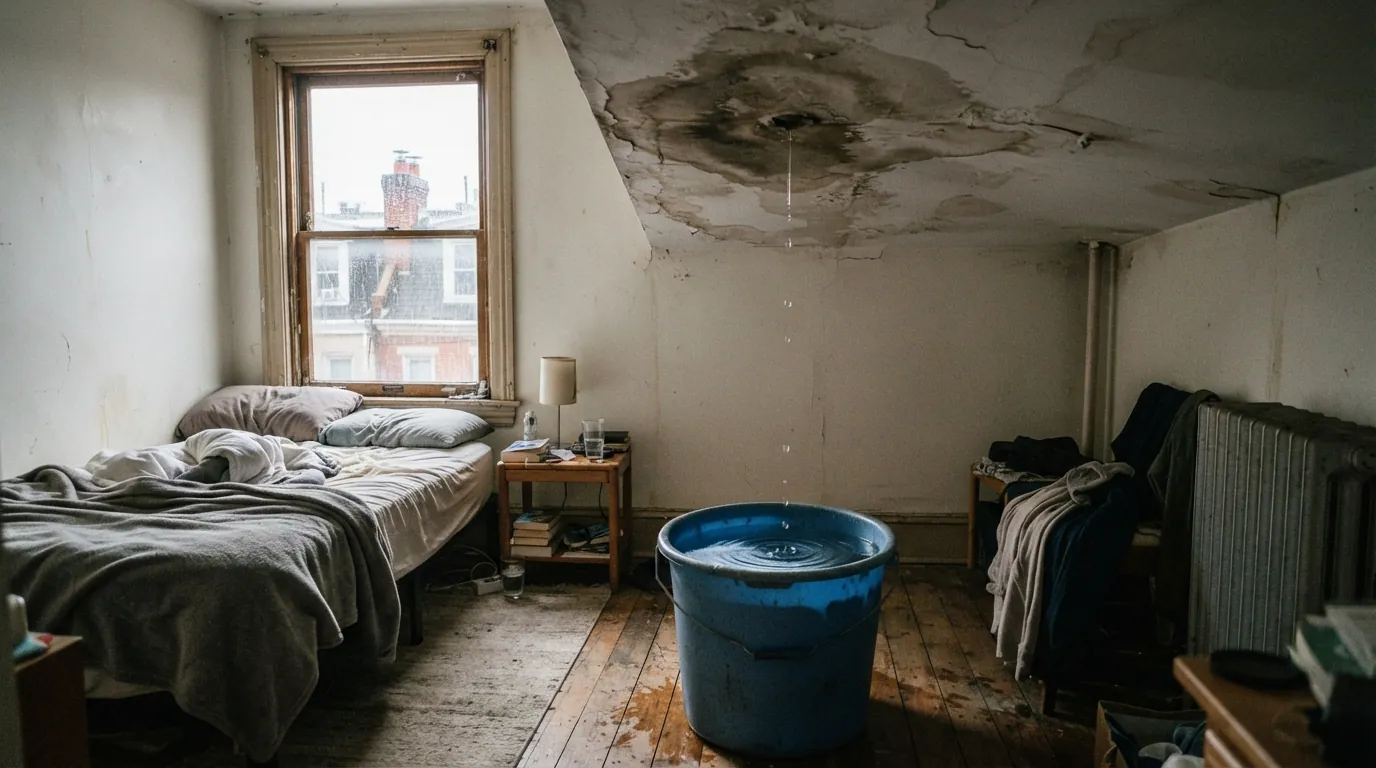
Put a bucket or pot under the drip and a towel under that to stop splashing. Move furniture, rugs and electronics out of the way. If water is near a light fixture or a ceiling fan, switch that circuit off at the breaker and leave it off until an electrician or roofer has looked.
If the ceiling paint is bulging with water, it will eventually let go. Poking a small hole at the lowest point of the bulge, with a bucket beneath it, drains the water in a controlled way and often saves the ceiling. Photograph the stain, the water and anything damaged, with the time visible if you can. Those photos matter later for repairs and any insurance claim.
What Not to Do on the Roof
Do not climb onto a wet flat roof in the dark or during a storm. Membranes are slippery when wet, and rowhome roofs often have low parapets and open rear edges. Do not smear roof cement on a rubber or TPO roof; it does not bond and often traps water under the patch. Do not nail a tarp through the membrane; each nail is a new hole.
If the leak started after heavy rain and you can safely see the rear scupper from a window or the ground, check whether water is pouring out or not. A scupper that is not draining is a strong clue.
Where Flat Roof Leaks Usually Start
Philadelphia rowhome roofs usually leak at a few predictable places: an opened lap seam where two sheets of membrane overlap; a clogged scupper or drain that lets water pond against the seams; a blister or split in old modified bitumen; flashing that has pulled away where the roof meets a parapet or the neighbor's roof; and cracked boots around vent pipes.
Because water can travel under the membrane, the drip inside is often a few feet from the actual opening. On attached rows it can even start on the neighbor's side of a shared parapet. That is why a real repair starts with tracing, not patching above the stain. Our flat roof repair page covers each of these repairs.
The Temporary Fix and the Real One
If water is coming in steadily, a roofer's first visit may be a temporary seal: a self-adhered membrane patch over the opening, which works far better on a flat roof than a tarp that simply fills with water. See emergency roof tarping for how that is done.
The permanent repair follows when the roof is dry. It uses the same membrane family as the roof: heat-welded TPO patches, primed and taped EPDM repairs, or new modified bitumen plies. The drainage that caused the problem gets fixed too, because a patch under a standing puddle will fail again.

Water coming through the ceiling now?
Call any hour and we talk you through protecting the room.
What to Tell the Roofer When You Call
A few details speed everything up: your address, whether water is coming in right now, which room and how close to an outside wall, whether it leaks in every rain or only heavy storms, and whether you know what the roof is made of. Silver sheets are usually modified bitumen, black rubber is EPDM, and white welded sheets are TPO. Mention any recent work on your roof or your neighbor's.
Preventing the Next Flat Roof Leak
Most flat roof leaks start with drainage. Have the scuppers, drains and downspouts cleared every fall, after the leaves drop, so water leaves the roof instead of sitting on the seams. Recoat a silver modified bitumen roof when the coating chalks off and black shows through. Keep foot traffic to a path or walkway pads, and keep grills, planters and furniture off the membrane unless they sit on protection pads.
A short yearly check, done by a roofer in the fall, catches lifted seams and cracked flashing while they are small repairs. See roof maintenance for what that visit covers.
When a Leak Means the Roof Is Done
One leak on a sound roof is a repair. Several leaks, a membrane that cracks underfoot, water standing across large areas days after rain, or soft spots when you walk are signs the whole roof has reached the end. At that point repeated patching costs more than a flat roof replacement that fixes the slope as well.
Common Questions
If water is coming into living space, yes. Call, protect the room, and let the roofer seal it.
Small temporary patches are possible when dry, but the wrong material makes the permanent repair harder.
Ponding or a slow scupper lets water rise over a weak seam that stays dry in light rain.
It depends on the policy and the cause; sudden damage is treated differently from wear. Check your policy.
Most repairs take a few hours once the roof is dry enough to work on.
Yes, on attached rows. A roofer can trace where the water enters and document it.