Leaking Skylights Repaired in Philadelphia
Most skylight leaks are roofing problems, not window problems. The water gets in where the unit meets the roof, so that is where we start before anyone talks about a new skylight.
A leaking skylight in Philadelphia is usually failing at its flashing or curb seal, not the glass. Published regional figures put skylight flashing repairs at $150 to $500 and full unit replacement at $1,200 to $3,500 installed, so we confirm where the water enters before recommending either.
Where Skylights Actually Leak
A skylight sits in a hole in the roof, and everything depends on how that hole is closed. Flashing and underlayment carry water around the unit. When the flashing loosens or the sealant dries out, water runs down the curb into the ceiling below.
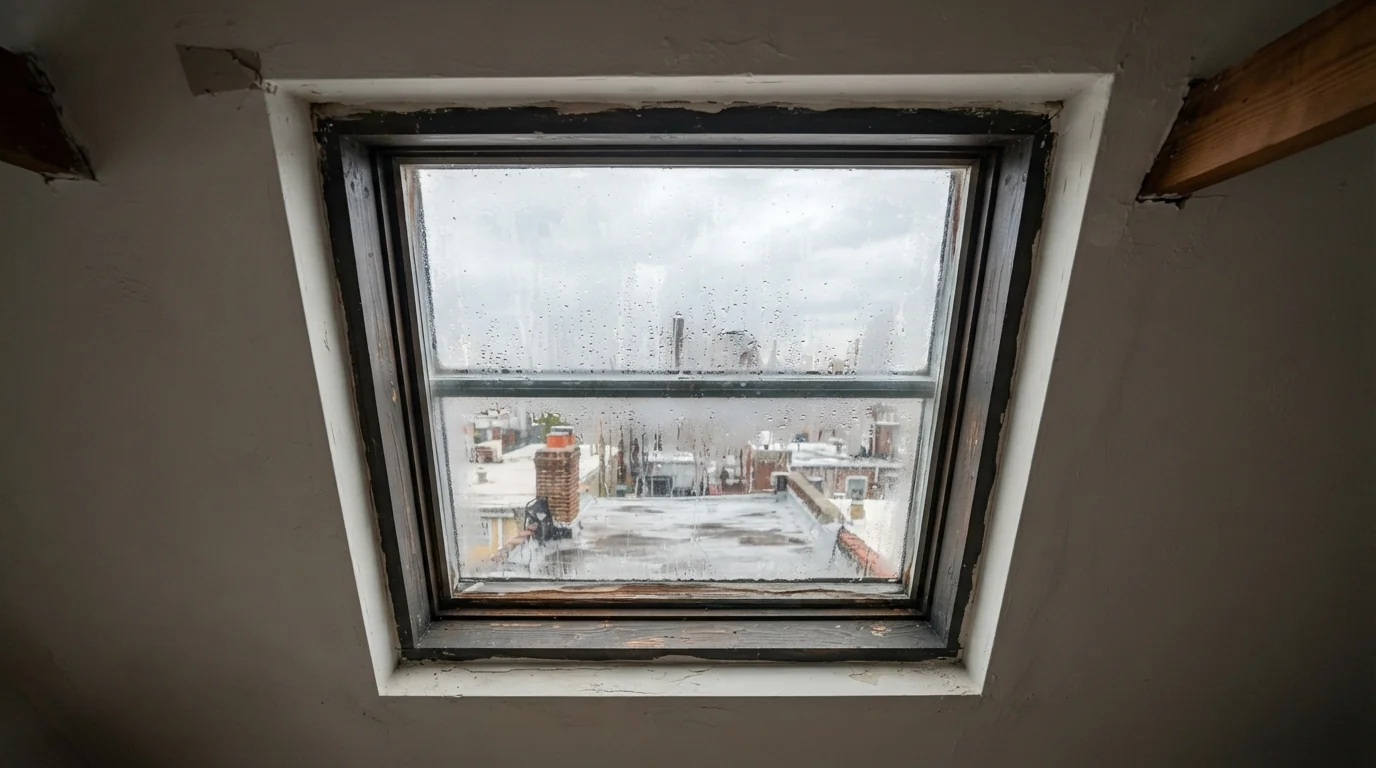
Condensation is the one thing that looks like a leak and is not. Drips on cold mornings with a dry roof usually mean warm, moist air meeting cold glass, and the fix is ventilation, not roofing. Replacement flashing kits and glazing are matched to the unit, and Velux kits are the most common; the flashing then ties into GAF, CertainTeed or Carlisle roofing around the curb.
What Moves the Cost of a Skylight Repair
- Where the leak isA reseal costs far less than a new flashing kit.
- Skylight typeCurb and deck-mount units flash differently.
- Glass or unitReplacing glass or the whole unit adds parts cost.
- Curb and framingRotted wood is replaced before anything is sealed.
- Interior damageStained drywall in the shaft is a separate repair.
Published regional figures put a full skylight replacement at $1,200 to $3,500 installed. Those are planning ranges from market data, not our quote.
Repair the Skylight or Replace It?
Five questions settle it once we are on the roof.
| Question | Repair makes sense | Replacement makes sense |
|---|---|---|
| Where does it leak? | At the flashing or curb seal | Through the frame or glazing |
| How is the glass? | Clear, seal intact | Fogged or cracked, no parts available |
| How is the curb? | Solid wood, square | Rotted or out of square |
| How old is the unit? | Current model, parts made | Discontinued or badly worn |
| New roof due in a few years? | No, roof has years left | Yes, swap it with the roof |
Curb and Flashing Reseal
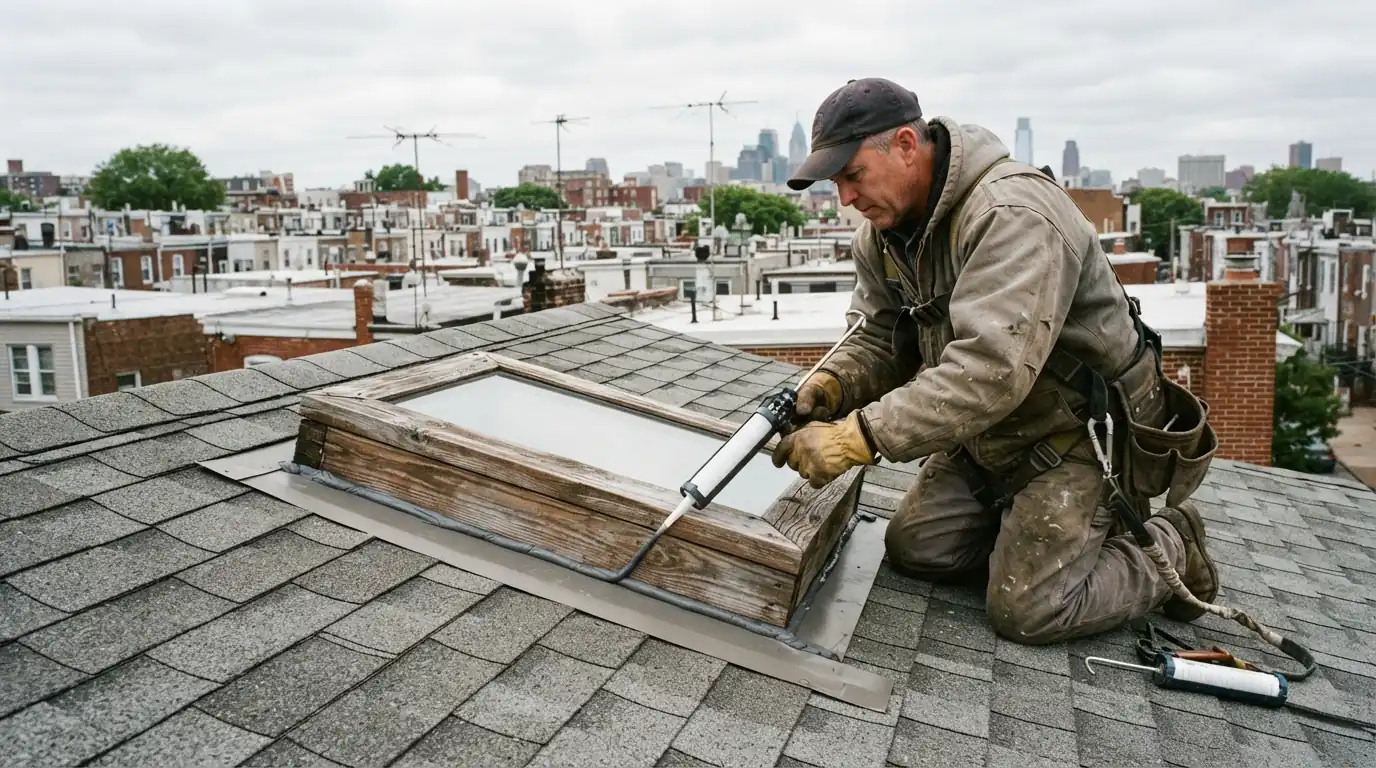
Curb-mounted skylights sit on a raised wooden frame, with flashing wrapped up its sides. The usual failure is dried sealant or flashing that has lifted at the uphill corner, where water and snow collect. Drips appear at the top of the skylight shaft after rain. We remove the old sealant, refasten or replace the flashing, and reseal the curb. Published regional figures put resealing at $75 to $250 and flashing repair at $150 to $500. Rotted curb wood gets replaced at the same time, because sealant will not hold on it.
Cracked Skylight Glazing
A crack from hail or a falling branch, or fog trapped between the panes, means the glass itself has failed. Fog is a broken seal in the insulated unit, which lets in moisture and costs heat, though it does not always leak rain. Where the frame is sound and the model is still supported, the glass unit can be replaced on its own, which regional figures put at $150 to $600. On older or discontinued units a full replacement is usually the better spend.
Deck-Mount Skylight Flashing Kit Replacement
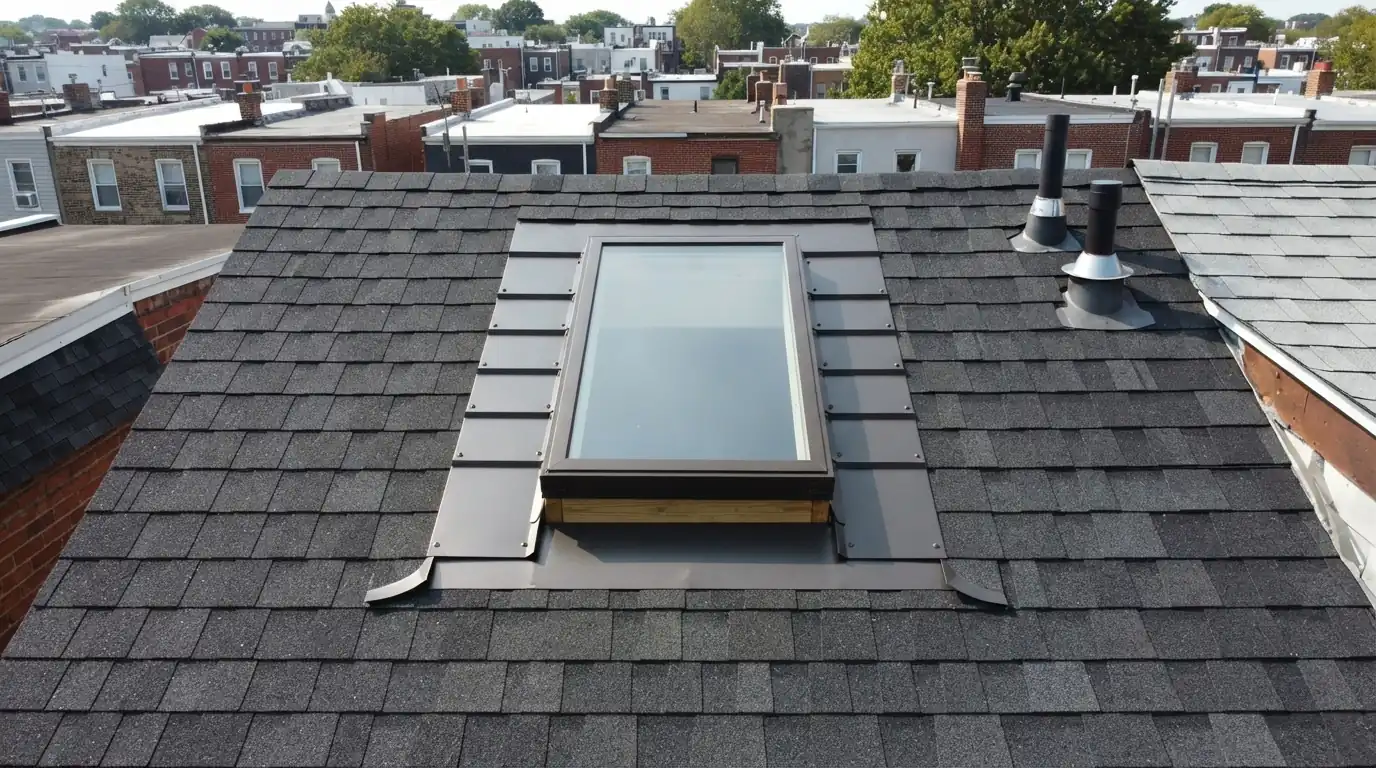
Deck-mounted skylights, including most Velux units, sit directly on the roof deck and rely on a factory flashing kit of interlocking pieces. When the kit was left out, cut down, or replaced with sealant at install, leaks start early. We lift the shingles around the unit, remove what is there, and install the matching flashing kit with ice and water barrier underneath. If the skylight is old enough that no kit is made for it, replacing unit and kit together is usually the honest recommendation.
Brands we install and service

Skylight dripping into the room?
Call and we seal it before the next storm.
What We See on Philadelphia Roofs
Philadelphia averages about 22 inches of snow a year, and on a pitched roof it drifts against the uphill side of a skylight, exactly where the flashing is most exposed. Freeze-thaw cycles from November through March then work at the sealant and gaskets. That is why most skylight calls we get come in late winter and early spring, and why we reseal the uphill corner first on any skylight repair.
How a Skylight Repair Runs
- 1
Leak or condensation?
We ask when it drips; cold dry mornings point to condensation.
- 2
Inspect from both sides
Shaft and ceiling inside, flashing and curb outside.
- 3
Show you the failure
Photos and the repair versus replace options.
- 4
Open the flashing
Shingles lifted, old sealant and metal removed.
- 5
Repair or replace
New flashing, kit, glass or unit as agreed.
- 6
Water test
The repaired joint is hosed before we close up.
Skylight Questions
That is usually condensation, not a leak. Warm, humid air hits cold glass. A bath fan or better attic ventilation helps more than roofing.
Yes. The opening is framed in, decked and roofed to match, which removes one of the roof's most common leak points.
Yes. We repair and reflash Velux and other deck-mount units, using the matching flashing kit where one is still made.
If the skylight is older, usually yes. Its flashing gets redone anyway, and a new unit avoids opening the new roof later.
No. It means the glass seal failed. Plan a replacement, but it rarely leaks rain on its own.
More Roof Repair Work in Philadelphia
Get Your Skylight Sealed Properly
Tell us when it drips and how old the unit is. We find the entry point first.