Chimney Flashing Leaks Fixed in Philadelphia
The joint where a brick chimney meets the roof is the most common leak point on an older house. We rebuild it in metal, set properly into the masonry, instead of burying it under another coat of tar.
Chimney leaks in Philadelphia usually come from the flashing, not the chimney: step flashing rusted through along the sides, counterflashing pulled out of its mortar joint, or water backing up behind a wide chimney with no cricket. A proper repair replaces those pieces in metal and seals them into the masonry, which outlasts tar patches by many years.
How Chimney Flashing Is Supposed to Work
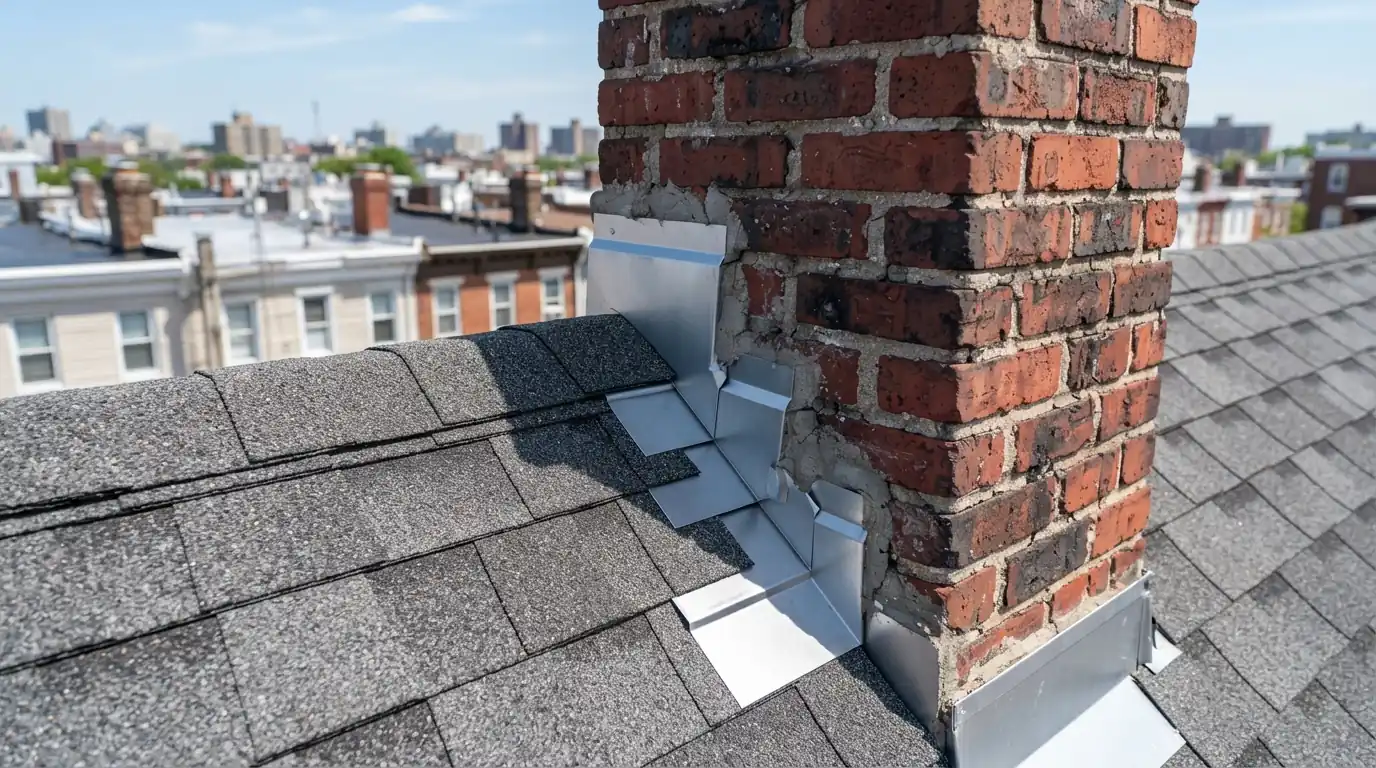
Chimney flashing is two layers. Step flashing is woven into each course of shingles along the sides and bent up the brick. Counterflashing is cut into a mortar joint and folded down over the step pieces, so water running down the brick lands on the outside of the joint.
Most leaking chimneys we see have lost one of those layers or had both smothered in roofing cement. Cement cracks in the first hard winter and then holds water against the brick instead of shedding it.
What Sets the Price of Chimney Flashing Work
- Chimney sizeA wide chimney means more step pieces and possibly a cricket.
- Roof coveringShingle, slate and flat membrane each flash differently.
- Mortar conditionSoft joints need repointing before new counterflashing can hold.
- Roof pitch and heightSteep and three-story roofs need more safety setup.
- Damage underneathRotted decking or framing around the chimney is replaced first.
A 2026 Philadelphia roofing cost guide puts a full step and counterflashing rebuild at $800 to $2,500, depending on chimney size, access and whether repointing is needed. Smaller reseals cost less. These are planning ranges, not our quote.
Step Flashing Replacement
Step flashing is a series of L-shaped pieces, one per shingle course, running up both sides of the chimney. On older roofs it rusts through or was never installed, replaced by a single long strip or a bead of cement. Stains on the ceiling or wall beside the chimney breast are the usual sign. We remove the shingles along the chimney, install new step pieces course by course, and relay the shingles over them. On slate roofs the same work is done with slate hooks and metal suited to slate.
Counterflashing Reset and Reglet Sealing
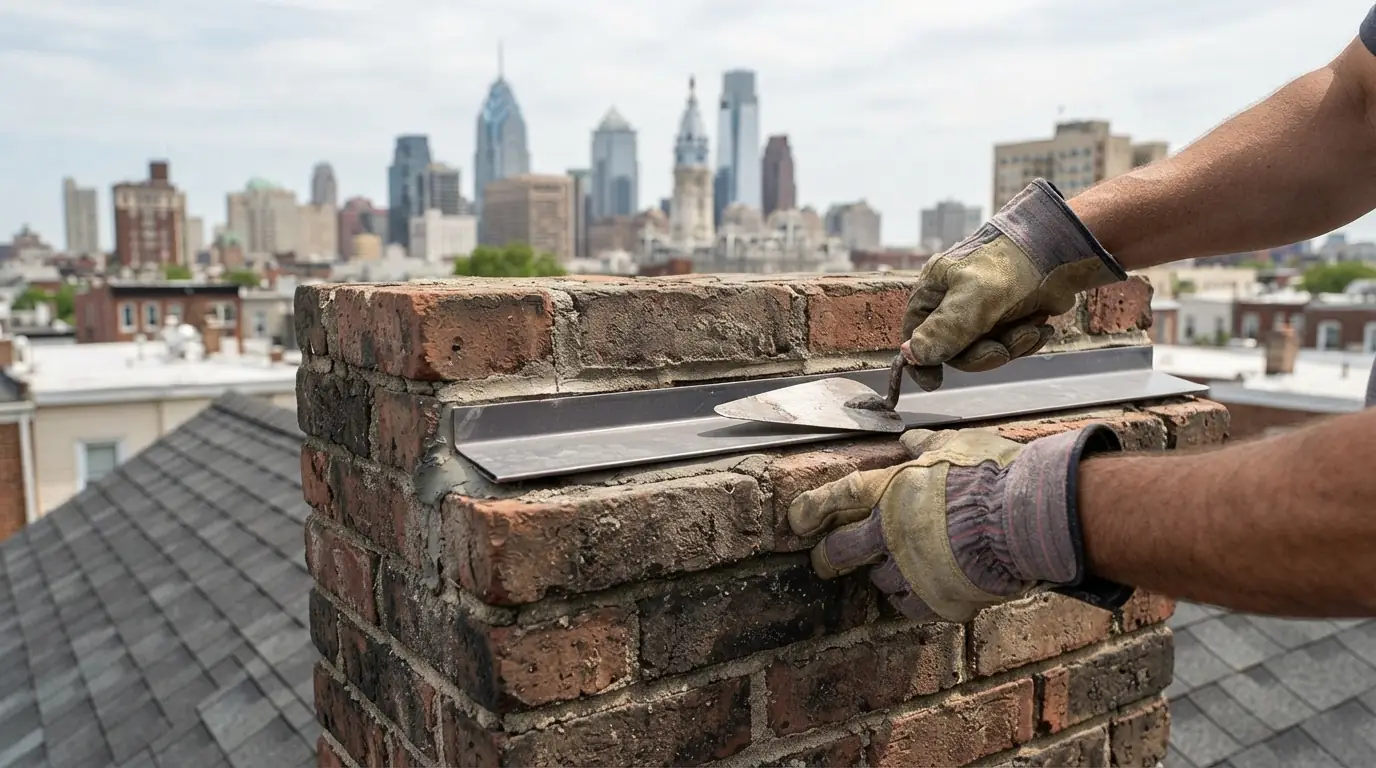
Counterflashing covers the top edge of the step flashing. It is held in a reglet, a slot ground into a mortar joint, and sealed there. When the mortar crumbles, the counterflashing works loose and water runs behind it. We grind a fresh reglet, set new counterflashing into it and seal the joint. If the surrounding mortar is soft, repointing that section comes first, otherwise the new metal has nothing solid to hold. A cracked crown on top of the chimney gets flagged too, since it feeds the same leak.
Chimney Cricket Installation
A cricket is a small peaked roof built on the uphill side of a chimney so water and snow split around it instead of piling against the brick. Common practice calls for one on chimneys wider than 30 inches, and plenty of older chimneys were built without one. Leaks that show up after heavy rain or snowmelt, right behind the chimney, often trace to this. We frame the cricket, cover it in underlayment and metal or shingles, and flash it into the chimney like the rest of the joint.
Chimney leaking again after the last storm?
Call and we rebuild the flashing properly this time.
What We See on Philadelphia Roofs
Chimneys on the 1920s and 1930s brick rows of Frankford, Holmesburg and Wissinoming are usually as old as the houses, and many still sit in slate or on slate-era decking. Older Philadelphia masonry was laid in soft lime mortar, which weathers out of the joints faster than the brick around it. On those chimneys the counterflashing has little solid to grip, so we check the joints first and build repointing into the flashing job where the mortar has gone.
How We Rebuild Chimney Flashing
- 1
Confirm the source
Flashing, crown or brick; we check which one is leaking.
- 2
Photos and scope
You see the failed pieces and the repair plan.
- 3
Open the joint
Shingles or slate lifted and old metal and cement removed.
- 4
Repoint if needed
Soft mortar raked out and refilled where the flashing will sit.
- 5
New step and counterflashing
Woven in course by course and sealed into a fresh reglet.
- 6
Close up and test
Roofing relaid and the joint water-tested before we leave.
Signs the Chimney Flashing Is Failing
A stain beside the chimney breast
Water is getting in at the side joint.
Leaks only in wind-driven rain
Sideways rain is getting behind loose counterflashing.
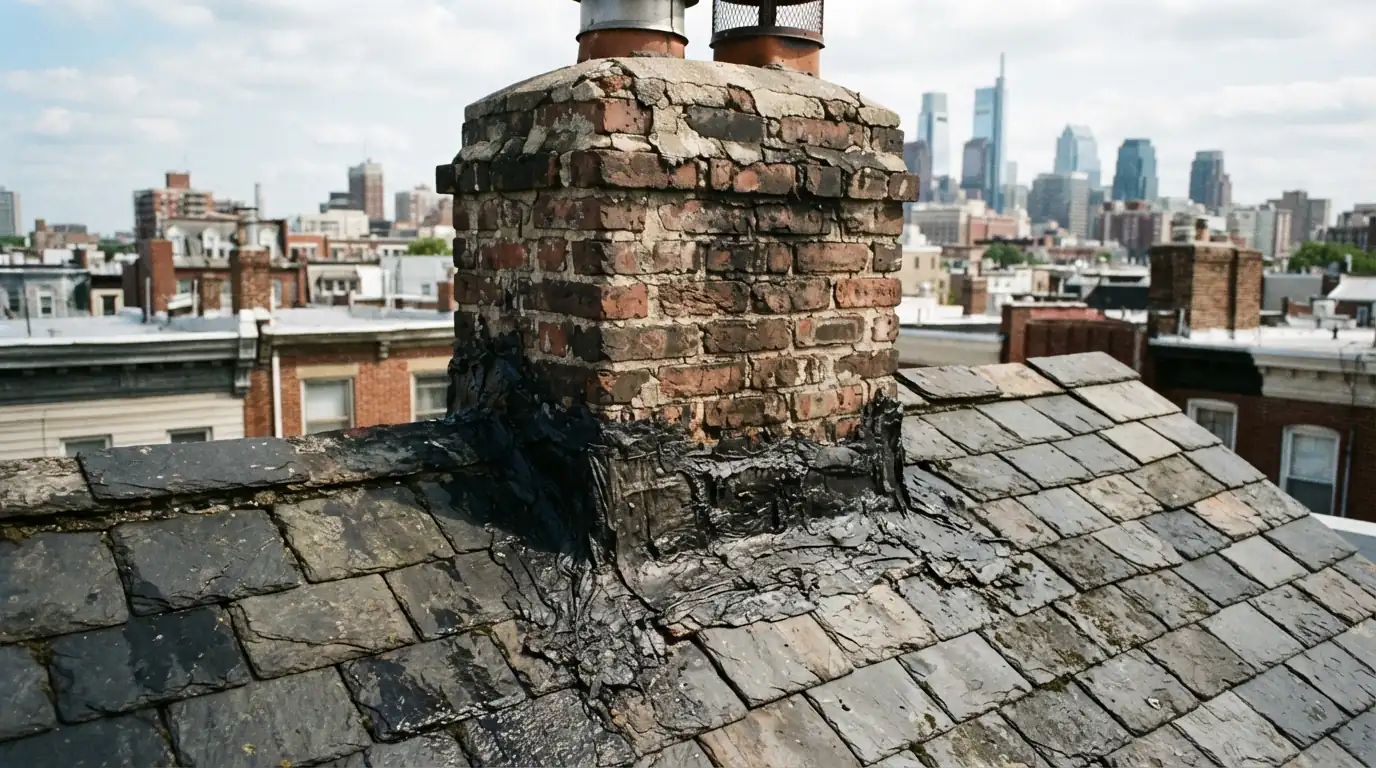
Tar smeared around the base
Someone has patched it before; the metal is likely gone.
Loose metal at the mortar line
Counterflashing has pulled out of its joint.
Crumbling mortar near the roof
The flashing has nothing solid to hold.
Water after snowmelt behind the chimney
Often a missing cricket.
Chimney Flashing Questions
A leak in wind-driven rain, low beside the chimney, points to flashing. Damp brick higher up or inside the flue points to the crown or masonry. We check both.
Rarely. Old pieces are usually rusted or bent. New metal costs little next to the labor of opening the joint.
Copper lasts longest and suits slate and historic roofs. Aluminum and galvanized steel are fine on most shingle roofs.
We repoint the joints the flashing depends on. Larger masonry work such as a crown rebuild is scoped separately.
Yes. Reusing old chimney flashing under a new roof is one of the most common causes of early leaks.
More Roof Repair Work in Philadelphia
Seal the Chimney Joint for Good
Tell us where the stain shows up and when. We rebuild the flashing in metal, set into sound mortar.