Siding Repaired on Philadelphia Homes
A cracked panel or a run of siding that blew loose in a storm does not mean re-siding the house. What matters is whether water has got behind it, which is the first thing we check.
Siding repair in Philadelphia usually means replacing cracked or missing vinyl or aluminum panels, refastening runs that wind has loosened, and fixing the wet sheathing or flashing behind a leak. We match panels as closely as we can, and when a wall keeps taking water we trace the cause, often window or roof-to-wall flashing, before closing it up.
When Siding Can Be Repaired
Most siding damage is local: a panel cracked by a ball or a cold-weather impact, a few courses pulled loose by wind, or a dented piece of old aluminum. If the wall behind is dry and sound, those pieces can be replaced or refastened.
The harder question is water. Stains inside, soft spots in the wall, or siding that bulges point to water getting behind it, and the repair then includes the wrap, flashing and sheathing, not just the panel.
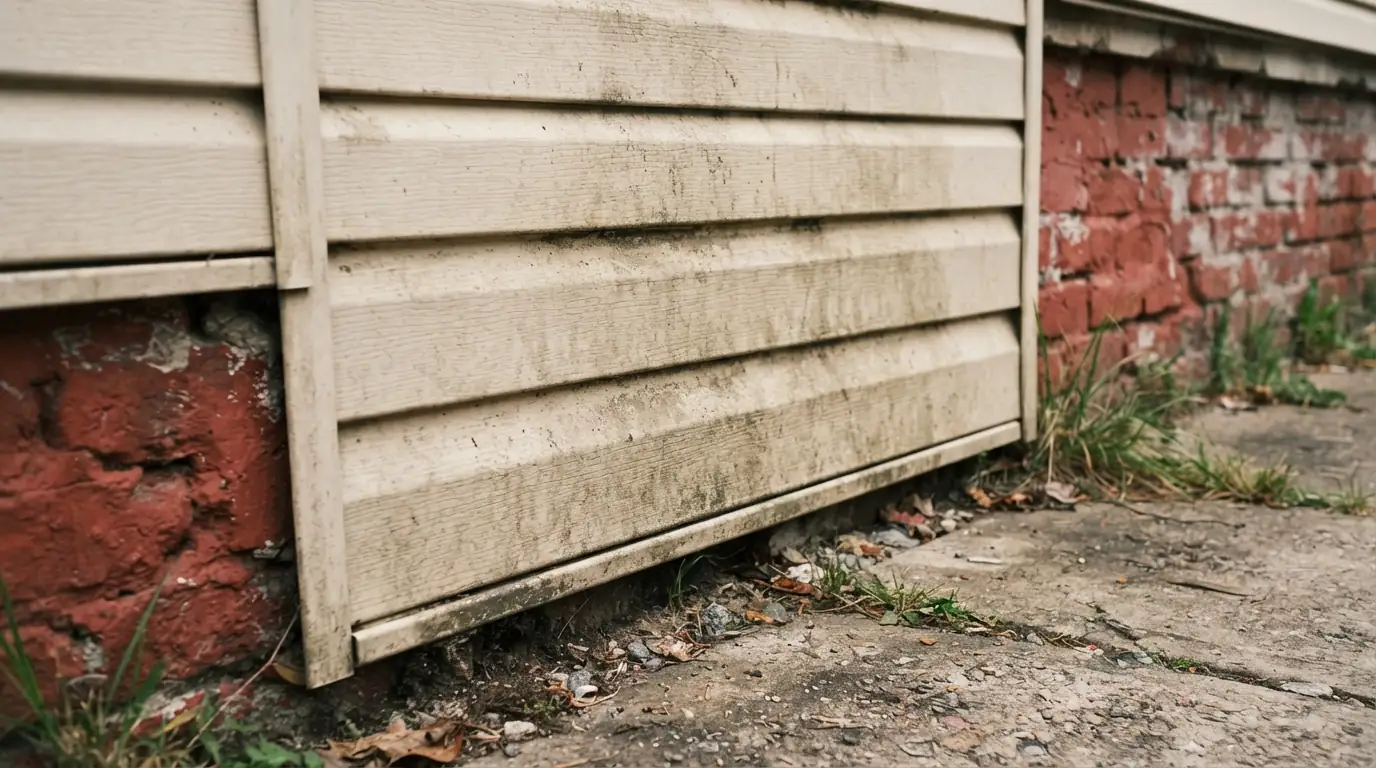
What Sets the Price of a Siding Repair
- Number of panelsA single panel versus several courses.
- MatchingDiscontinued colors take longer to source.
- Water damageWet sheathing and wrap replaced behind the siding.
- Flashing fixesWindow or roof-to-wall flashing that caused the leak.
- HeightUpper-story walls need ladders or staging.
Siding repairs are priced by what we find behind the panels, so we quote after opening the damaged section.
Can You Snap a Siding Panel Back Yourself?
A loose ground-level panel is often a homeowner fix. Anything wet or high is not.
What a homeowner can safely do
- Snap a loose low panel back into its lock
- Photograph damage after a storm
- Keep gutters clear so they do not overflow onto siding
Where it needs a roofer
- Any work above a single-story ladder
- Stains, soft spots or leaks behind the siding
- Matching and replacing damaged panels
Cracked and Missing Panel Replacement
Vinyl gets brittle in the cold and cracks on impact, and wind can pull out a whole piece. We unhook the courses above with a zip tool, remove the damaged panel, and slide in a new one nailed loosely in the slots so it can move with temperature. Matching is the hard part: colors fade and profiles change, so we look for the closest current match or borrow a panel from a less visible wall and use the new one there. Aluminum siding is patched with formed replacement pieces.
Loose Siding Refastening
When siding rattles, bows or lifts in wind, it has usually come off its nails or been nailed too tight and buckled. Loose courses let wind-driven rain behind the siding and can tear free in the next storm. We unhook the affected runs, check the sheathing they fasten to, and renail in the slots at the correct spacing, leaving room for expansion. Buckled panels that were nailed too tight are released and rehung so they lie flat and straight again.
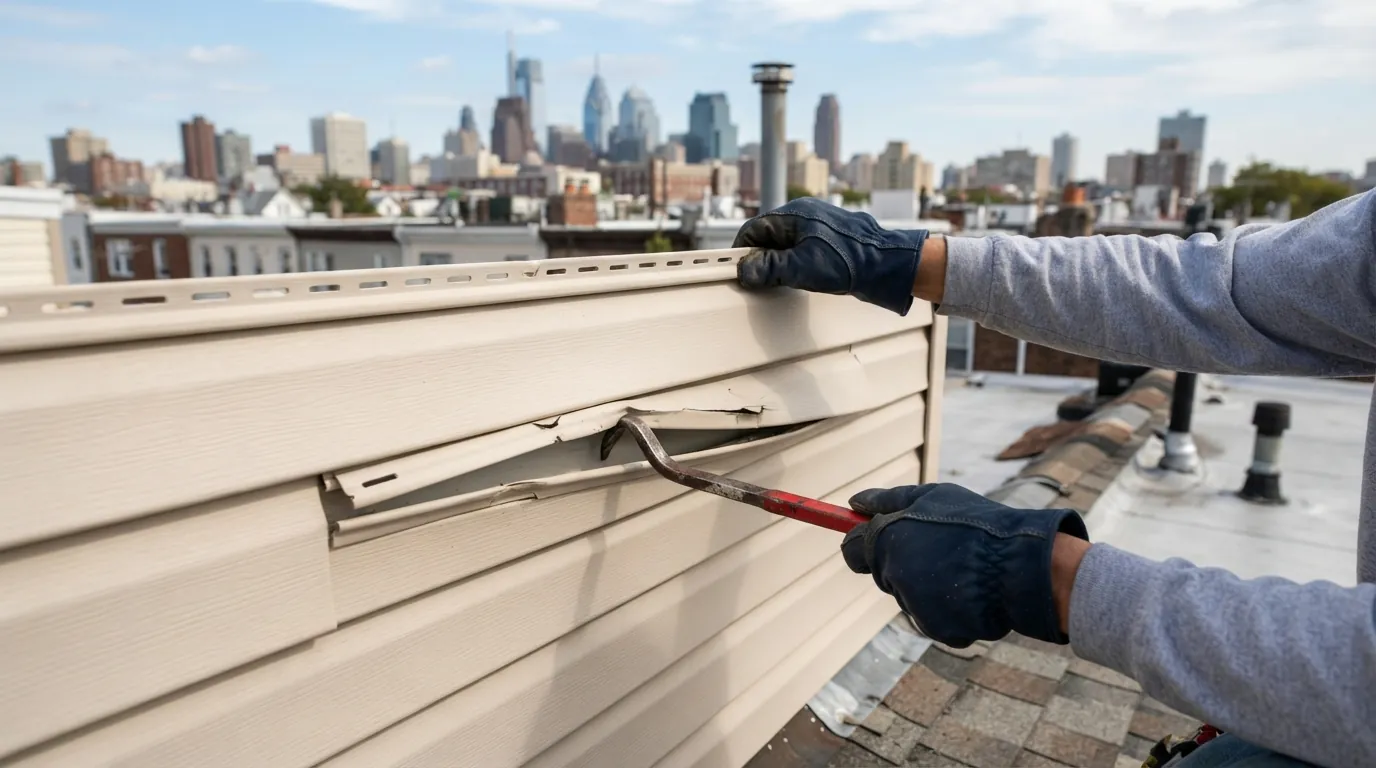
Water Damage Behind Siding
Water behind siding shows up as stains inside, peeling paint on interior walls, or soft spots you can press. The cause is usually above the damage: a window without proper flashing, a missing kick-out flashing where a roof meets the wall, or a gutter that overflows onto the siding. We open the wall, replace wet sheathing and wrap, fix the flashing that let water in, and reinstall or replace the siding. Fixing only the panel leaves the leak in place.
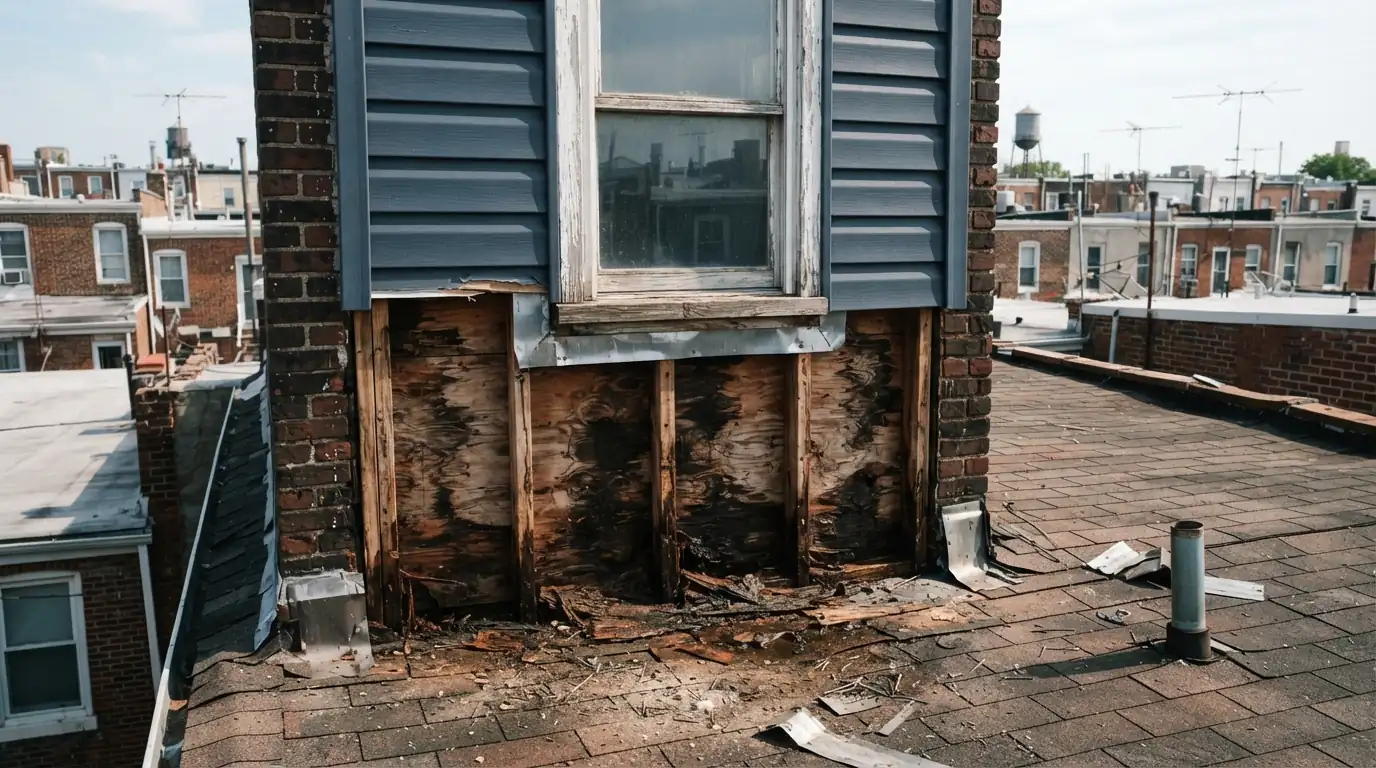

Siding blown loose in the storm?
Call and we refasten it before rain gets behind it.
What We See on Philadelphia Roofs
Around Oxford Circle, late-1920s rowhouses sit near 1950s homes, and rows from the 1960s line Roosevelt Boulevard, so siding repairs here range from mid-century aluminum to newer vinyl on the same block. Philadelphia owners in that era often covered brick fronts and rears with aluminum or vinyl siding, and on those walls the brick underneath and the flashing at the edges decide how the repair is done.
How a Siding Repair Runs
- 1
Inspect the wall
Damage, stains and soft spots checked.
- 2
Find the source
Windows, roof walls and gutters checked for leaks.
- 3
Open the section
Panels unhooked and removed carefully.
- 4
Repair behind
Wet sheathing, wrap and flashing replaced.
- 5
Replace panels
New or matched panels hung loose on their nails.
- 6
Check the finish
Courses aligned and locked.
Siding Repair Questions
Often closely. When not, we move a panel from a hidden wall and use the new one there.
It was likely nailed too tight and cannot expand. It can be released and rehung.
Yes. It lets water behind the siding and grows in the cold.
Yes, with formed pieces and paint, though exact matches are harder.
That depends on your policy. We document the damage with photos.
More Exterior & Water Management Work in Philadelphia
Fix the Siding and What Is Behind It
Call and tell us what the siding is doing. We check behind it before we close it up.