Green Roof Installation in Philadelphia
A green roof is a roofing job first and a garden second. The waterproofing under the plants has to be right, because nobody wants to dig it up once the sedum has taken hold.
A green roof is a layered system: a new waterproof membrane with a root barrier, drainage and filter layers, a lightweight growing medium and drought-tolerant plants such as sedum. In Philadelphia, businesses can claim a tax credit for half of the cost up to a cap, so the structural review and permits matter as much as the planting.
What Goes Into a Green Roof
Most green roofs we build here are extensive roofs: a few inches of lightweight growing medium planted with sedum and other low plants that survive a hot, dry summer on a roof. They add weight, so the first step is an engineer's look at the structure, then a new membrane with a root barrier, because the plants will sit on that waterproofing for decades.
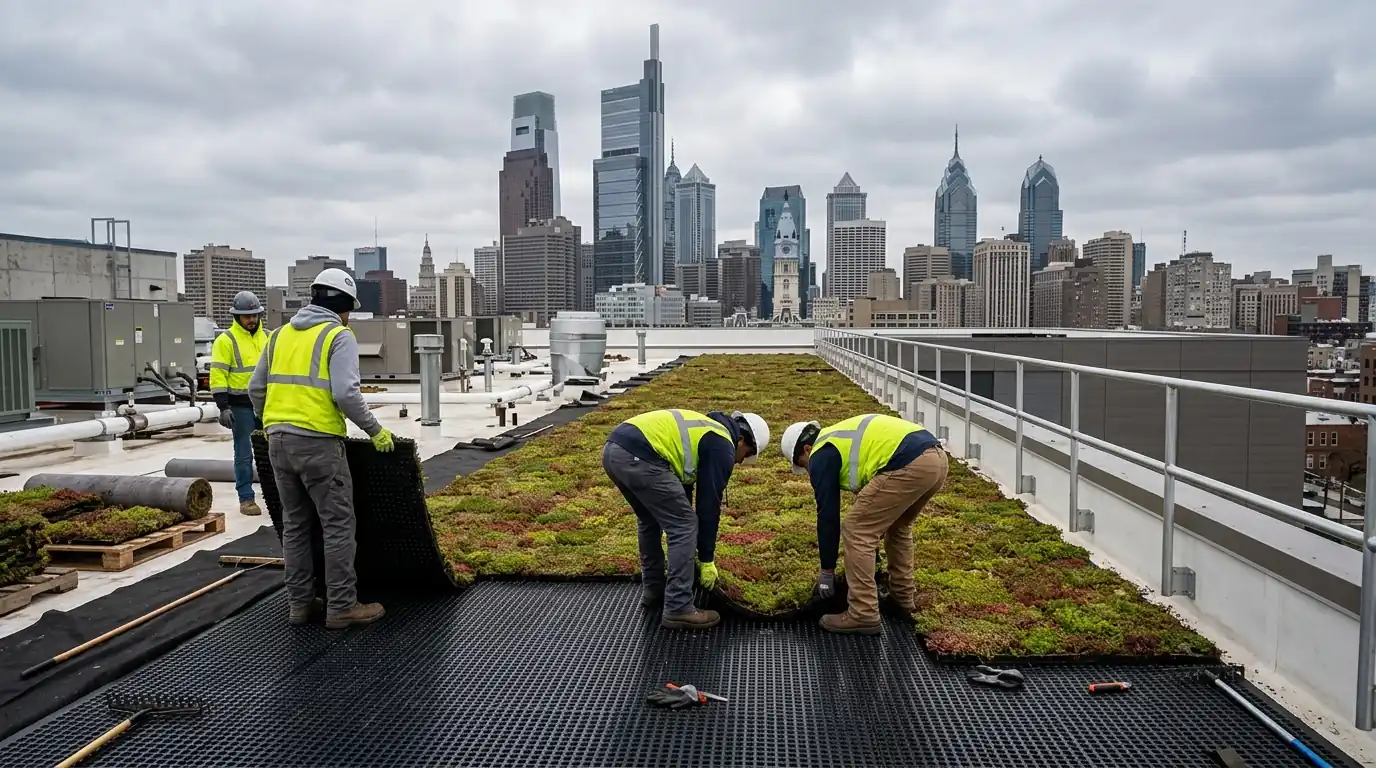
Above the membrane come protection and drainage layers that hold some water and shed the rest to the drains, a filter fabric, the growing medium and the plants, with gravel borders at edges, drains and anything that needs inspecting. Done properly, the roof slows rainwater, shades the membrane and cools the building below.
What Sets the Price of a Green Roof
- Roof areaLarger roofs spread the fixed costs.
- Structural workSome buildings need reinforcement first.
- Membrane replacementUsually required under the planting.
- System depth and typeMats, trays or built-up layers.
- Access and liftingMaterials must be craned or carried up.
Green roofs are priced after the engineer's review and a roof survey, since the structure and the existing roof decide the system.
Green Roof, Cool Roof or Coating?
A green roof is not always the right answer for a building.
| Option | When it fits | Tradeoff |
|---|---|---|
| Extensive green roof | Strong structure, stormwater or tax credit goals | Highest cost and weight |
| White membrane roof | Lighter structure, cooling wanted | No stormwater benefit |
| Coating on a sound roof | Roof still dry and intact | Short-term, no planting |
Extensive Green Roofs on Commercial Buildings
Offices, schools, stores and apartment buildings are where most green roofs go in, often as part of a full roof replacement. We work from the engineer's load figures, install the new membrane and root barrier, test it for leaks before anything covers it, then build up the drainage, growing medium and plants. Rooftop units, hatches and drains stay ringed with gravel so they can be reached without disturbing the planting. The paperwork the tax credit needs is kept from day one.
Green Roofs on Rowhome Additions
On a rowhome, the best candidate is usually a low rear addition or garage roof that the house looks down on. These roofs are small and often need replacing anyway, so the membrane, root barrier and a thin sedum system can go on together. The structure has to carry the extra weight when soaked, so we check the joists first; where the framing is light, a lighter tray system or a simple reflective roof is the honest recommendation. A light system on a small addition still slows the rain that hits it and keeps the room below cooler in July.
Green Roof Repairs and Upkeep
Green roofs need a little care, mostly in the first two years while the plants fill in: weeding, clearing drains, replacing bare patches and watering through a dry spell. When a green roof leaks, the cause is usually at an edge, a drain or a penetration rather than under the plants. We open the gravel borders first, test the flashing and repair it, and only lift planting where the evidence says the membrane itself has failed. Each care visit ends with the drains cleared and photographed, so you can see the outlets are open going into storm season.
What a Green Roof Job Includes
Every green roof proposal from us lists each of these.
- Engineer's load review
- L&I building permit
- New membrane and root barrier
- Flood or leak test before covering
- Drainage and water-retention layer
- Filter fabric and growing medium
- Sedum mats or plugs
- Gravel borders at edges and drains
- Watering and weeding plan for year one

Thinking about a green roof?
Call and we will look at the structure and the roof first.
What We See on Philadelphia Roofs
Philadelphia gives businesses a Green Roof Tax Credit worth half of what they spend building one, up to $100,000, against the Business Income and Receipts Tax. To qualify, the roof needs an L&I building permit, an engineer's report on its condition and structure, plants over at least 60% of the rooftop and a five-year maintenance commitment. The city's interest is stormwater: about 60% of its sewer system is combined, so every roof that holds back rain eases the load on old pipes.
How a Green Roof Goes On
- 1
Survey and engineer
Roof condition and structural capacity checked.
- 2
Permit
Building permit filed with L&I.
- 3
New waterproofing
Membrane and root barrier installed.
- 4
Leak test
The membrane is tested before it is covered.
- 5
Build the layers
Drainage, filter fabric, growing medium.
- 6
Plant and hand over
Sedum installed, care plan explained.
Green Roof Questions
No. The structure has to carry the soaked weight, which an engineer confirms.
The city credit is for businesses filing the Business Income and Receipts Tax.
Not if the membrane is right. That is why it is tested before planting.
Most work is in the first two years; then a few visits a year.
Yes, with mounts designed for it and access left around the panels.
More Flat & Commercial Work in Philadelphia
From our guides: How the Green Roof Tax Credit Works in Philadelphia
Plan Your Green Roof Properly
Call and we start with the structure and the waterproofing.