Roof Drain and Scupper Repair in Philadelphia
A flat roof is only as good as the place the water leaves it. When a scupper or drain fails, the water backs up onto the membrane, into the wall or into the house next door.
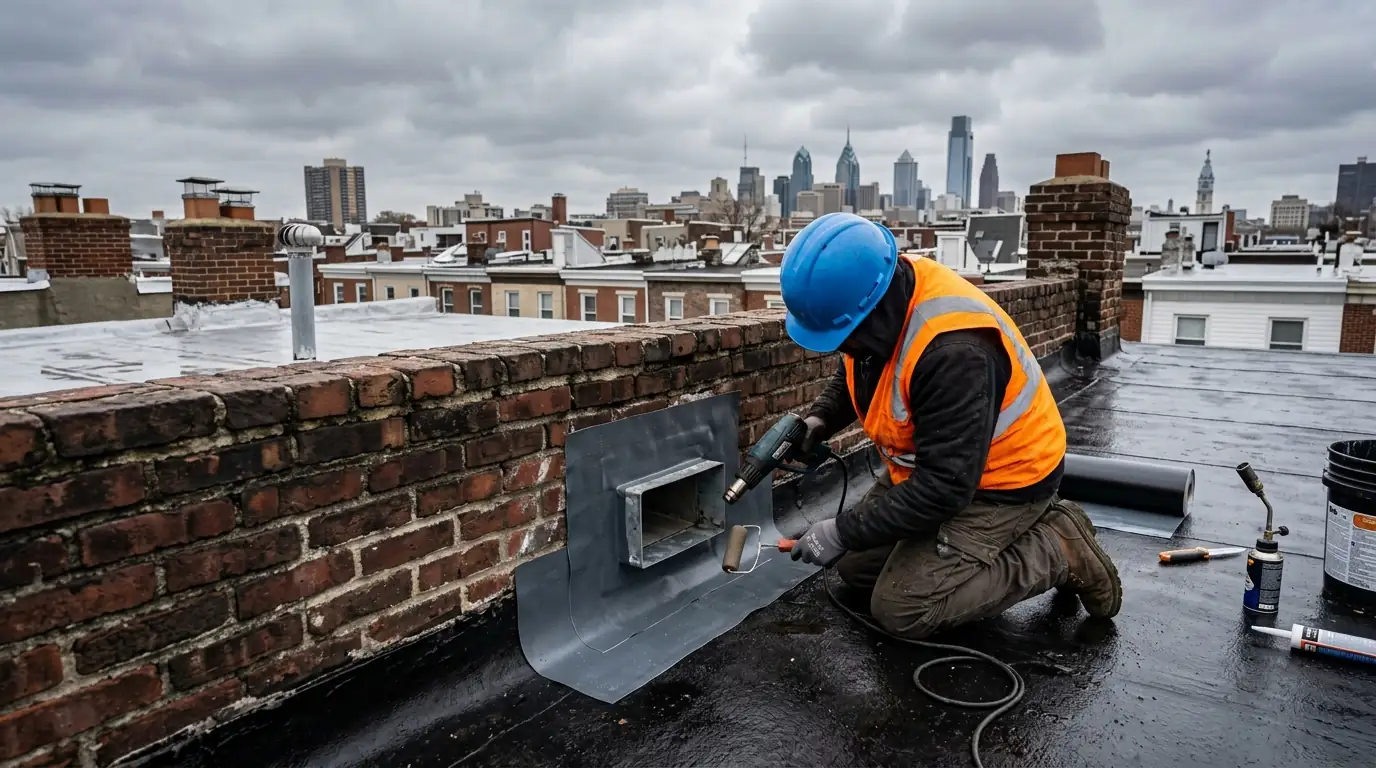
Most Philadelphia flat roofs drain through a scupper in the parapet into a leader head and downspout, or through an internal drain in the roof. Repairs mean clearing the blockage, re-flashing the scupper or drain into the membrane, replacing corroded leader heads and fixing the slope so water actually reaches the outlet.
How Flat Roofs Drain and Why They Back Up
On rowhouses, water usually leaves the roof through a scupper, an opening in the rear or side parapet, into a leader head and down the downspout. Bigger buildings often have internal drains in the roof that feed pipes inside the building. Both depend on the roof sloping toward them and on the joint between the outlet and the membrane staying sealed.
Problems start with leaves and debris, then with the flashing around the outlet cracking or pulling away, corroded leader heads and downspouts, and low spots that keep water away from the drain. Because attached houses share parapets and sometimes drains, a blocked outlet on one roof can flood the roof next door.
Signs a Roof Drain or Scupper Is Failing
Water stays on the roof
Puddles remain two days after rain.
Overflow down the wall
Water spills over the parapet in storms.
Stains under the drain
Ceiling stains around an internal drain.
Rusted leader head
Holes or streaks at the top of the downspout.
Damp parapet brick
Wet brick or efflorescence near the scupper.
Debris at the outlet
Leaves and grit packed at the strainer.
How We Fix a Drain or Scupper
- 1
Find the outlet
Scupper, drain and downspout traced.
- 2
Clear and flush
Blockages removed, flow tested.
- 3
Open the flashing
Failed membrane joint exposed.
- 4
Replace the metal
New sleeve, head or clamping ring.
- 5
Re-flash
Membrane sealed into the new outlet.
- 6
Check the slope
Ponding corrected where needed.
Scupper and Leader Head Repair
Scuppers leak where the membrane is turned into the opening through the parapet, and leader heads rust through or pull off the wall. We open the scupper, install a new metal sleeve sealed into the membrane, and replace the leader head and the top run of downspout where they have failed. Undersized scuppers that overflow in heavy rain can be enlarged, and an overflow scupper added higher in the parapet as a safety outlet. Where a downspout empties onto a neighbor's roof or the sidewalk, we reroute it so the water ends up on your own property.
Internal Roof Drain Repair
Internal drains have a strainer, a clamping ring that holds the membrane and a pipe running down through the building. Leaks show up on the ceiling below, often around the drain. We clear the drain, check the clamping ring and bolts, replace missing strainers and re-flash the membrane into the drain bowl. Where the drain sits higher than the roof around it, the slope is corrected with tapered insulation. Where the drain pipe itself leaks inside the building, we document it with photos so a plumber can repair that section while we handle the roof side.
Clogged and Slow Roof Drains
A drain or scupper that drains slowly after every storm is usually partly blocked, either at the strainer, in the leader head or further down the downspout. We clear and flush the outlet, check the downspout to the ground or the storm connection, and set up a cleaning schedule for roofs under trees. Persistent ponding near a clear drain means the roof slope needs work, not just the drain. On roofs under big trees, a strainer or a scupper guard keeps leaves out without slowing the flow, and a spring and fall cleaning keeps it that way.
What We See on Philadelphia Roofs
The Philadelphia Rowhouse Manual says the water that falls on your roof has to end up on your own property, not on the sidewalk, the street or a neighbor's lot, so scuppers and downspouts have to lead somewhere legal. Angi's Philadelphia gutter cleaning guide notes that the city's residential areas have plenty of trees, which are the main cause of clogs, and the same leaves end up packed into scuppers and drain strainers on flat roofs.

Water sitting on the roof again?
Call and we clear it and fix the outlet.
What You Can Do About a Slow Drain
Some upkeep is safe for an owner who can reach the roof safely; the repairs are not.
What a homeowner can safely do
- Clear leaves from the strainer or scupper when safe to reach
- Check that the downspout is still attached at the bottom
- Note where water sits after rain and photograph it
Where it needs a roofer
- Re-flashing the scupper or drain into the membrane
- Replacing leader heads and clamping rings
- Correcting roof slope with tapered insulation
What Sets the Price of a Drain or Scupper Repair
- Outlet typeScupper, leader head or internal drain.
- Flashing conditionRe-flashing into the membrane.
- Metal replacementNew sleeves, heads and downspouts.
- Slope correctionTapered insulation where water ponds.
- AccessRoof height and how the outlet is reached.
Most drain and scupper repairs are priced after we see the outlet and the roof around it, since the slope often matters as much as the drain.
Drain and Scupper Questions
The drain may sit higher than the roof around it; tapered insulation fixes that.
Yes, and an overflow scupper can be added above it.
We document it and repair the shared joint; the neighbor's outlet may need work too.
Onto your own property or into an approved storm connection, not onto the sidewalk.
At least twice a year, more under trees.
More Flat & Commercial Work in Philadelphia
From our guides: Finding a Leak Between Two Rowhomes
Get the Water Off Your Roof
Call and we fix the drain, scupper or slope.