Infrared Roof Moisture Surveys in Philadelphia
Water under a flat roof spreads through the insulation long before it drips inside. An infrared scan shows where the roof is wet, so you repair or replace only what needs it.
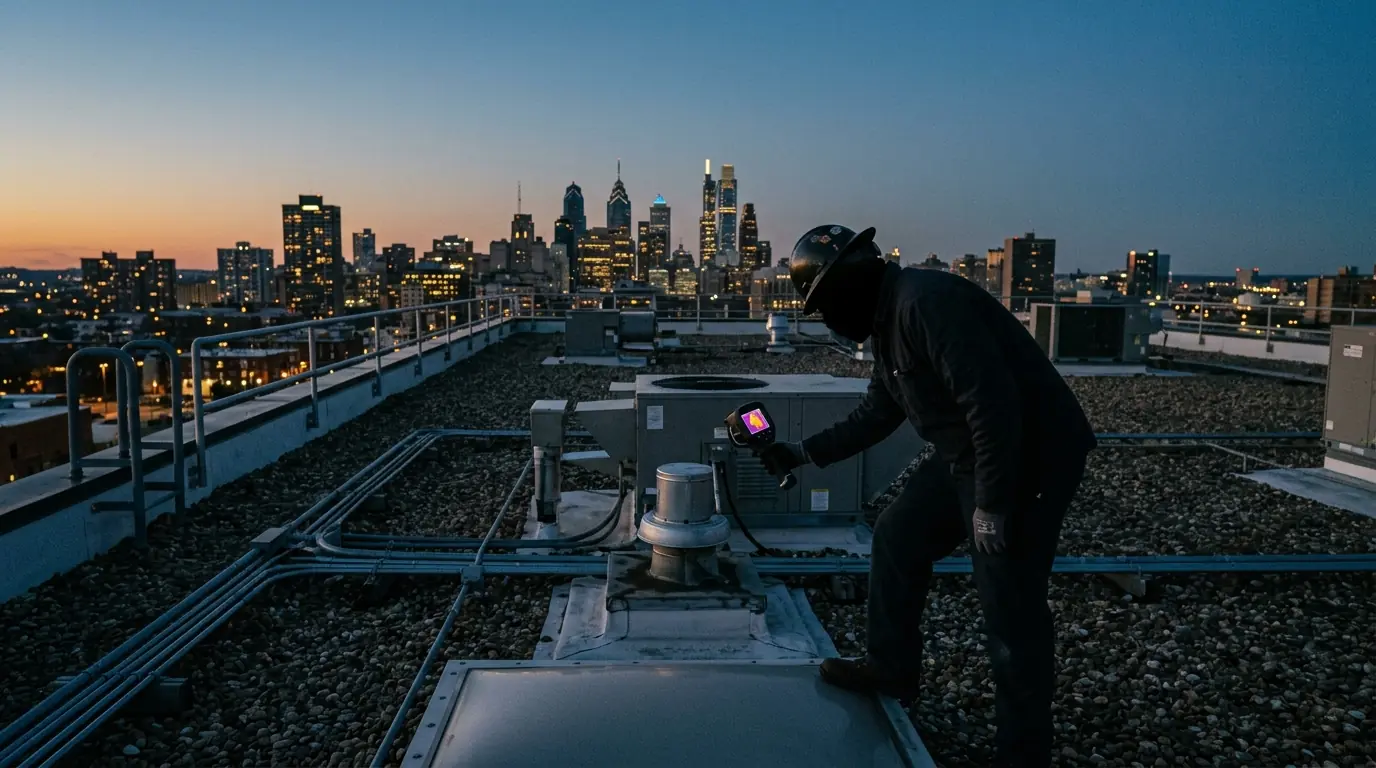
An infrared roof moisture survey uses a thermal camera after a sunny day, when wet insulation holds heat longer than dry insulation and shows up warmer at dusk. The warm areas are marked on the roof, a few core cuts confirm they are wet, and the result is a map of what can stay and what must be replaced.
Why Wet Insulation Matters
On a low-slope roof, a small leak can soak the insulation over a wide area while the ceiling below stays dry. Wet insulation loses its insulating value, adds weight, rots wood decks and rusts steel ones, and it rules out a coating or a recover, which must go over a dry roof.
A survey answers the question before money is spent. Scanned at dusk on a clear day, wet areas show up warm because they hold the day's heat longer. We mark them on the roof and on a drawing, confirm with core cuts, and then you can repair, replace part of the roof, or plan a full replacement with real numbers rather than guesses.
What a Moisture Survey Includes
Every survey report from us contains these.
- Infrared scan of the full roof
- Wet areas marked on the roof
- Thermal and normal photos
- Roof plan with measured areas
- Core cuts to confirm readings
- Layer and insulation record
- Same-day core patches
- Repair, recover or replace advice
- Report you can share with bidders
How a Moisture Survey Runs
- 1
Plan the night
Wait for a clear, sunny day and dry roof.
- 2
Scan at dusk
Thermal camera walked across the roof.
- 3
Mark wet areas
Painted on the roof and photographed.
- 4
Core cuts
Readings confirmed the next day.
- 5
Patch the cores
Same-day repairs to each cut.
- 6
Report
Map, photos and recommendations delivered.
Infrared Scans of Flat Roofs
Scans are done on a dry evening after a clear, sunny day, with the roof free of standing water. We walk the roof with a thermal camera, mark warm areas with paint and photograph each one in infrared and normal light. On larger buildings the scan is laid out on a roof plan so every wet area is measured. Weather decides the night, so surveys are scheduled with a little flexibility. We also note any leaks visible at the surface, such as open seams or punctures, while we are walking the roof.
Core Cuts to Confirm Wet Areas
A thermal image shows heat, not water, so we confirm it. Small core cuts in suspected wet areas and in dry areas for comparison show the layers, the insulation type and whether it is wet. Each cut is patched the same day with matching membrane. The cores also show how many roofs are already on the building, which decides whether a recover is even allowed. Core results are logged with depth, materials and moisture readings, so a later contractor can see exactly what is under the roof without cutting it open again.
Reports Before Recover or Coating
Before a roof is coated or recovered, the wet insulation has to come out, or the new layer traps the water. Our report lists the wet areas with measurements, photos and core results, and a recommendation: repair and replace the wet sections, coat or recover the dry roof, or replace it entirely. Owners and property managers use it to budget and to compare bids on the same scope. If a recover is planned, the report also notes whether code allows another layer over what is already there, since some roofs already carry the maximum number.
What We See on Philadelphia Roofs
The main climate condition for Philadelphia commercial roofs is snow load risk combined with thermal cycling and seasonal moisture, which is exactly the mix that drives water into insulation unseen. Multi-family buildings up to three stories also follow the commercial code provisions on a Philadelphia re-roof, so apartment owners face the same recover-or-replace decision and benefit from the same survey.

Planning a coating or recover?
Call and we survey for wet insulation first.
How Long a Survey Takes
The scan itself takes a few hours on one evening for most buildings, plus a daytime visit for core cuts. The report follows within a few days. Weather sets the date, since the scan needs a clear, sunny day and a dry roof.
What Sets the Price of a Moisture Survey
- Roof areaLarger roofs take longer to scan and map.
- Number of coresEach core is cut, logged and patched.
- AccessRoof hatches, ladders or lifts.
- Report detailSimple marked roof or full roof plan.
- SchedulingEvening work on a suitable night.
Surveys are priced by roof size and the number of cores, and the cost is small next to a recover laid over wet insulation.
Moisture Survey Questions
Low-slope membrane and built-up roofs scan well; ballasted roofs are harder.
Wet insulation stays warm after sunset while dry areas cool.
No. Each cut is patched the same day.
Yes. Coatings must go over a dry roof.
It shows where water has spread; the entry point is then traced.
More Inspection & Maintenance Work in Philadelphia
From our guides: Repair or Replace Your Roof?
Know What Is Wet Before You Spend
Call and we scan the roof and map the wet areas.