Emergency Roof Tarping Across Philadelphia
A tarp is a short-term fix done right: secured so wind cannot lift it, laid so water runs off it, and fastened without punching new holes in sound roofing. On flat rowhome roofs a tarp is often the wrong tool entirely.
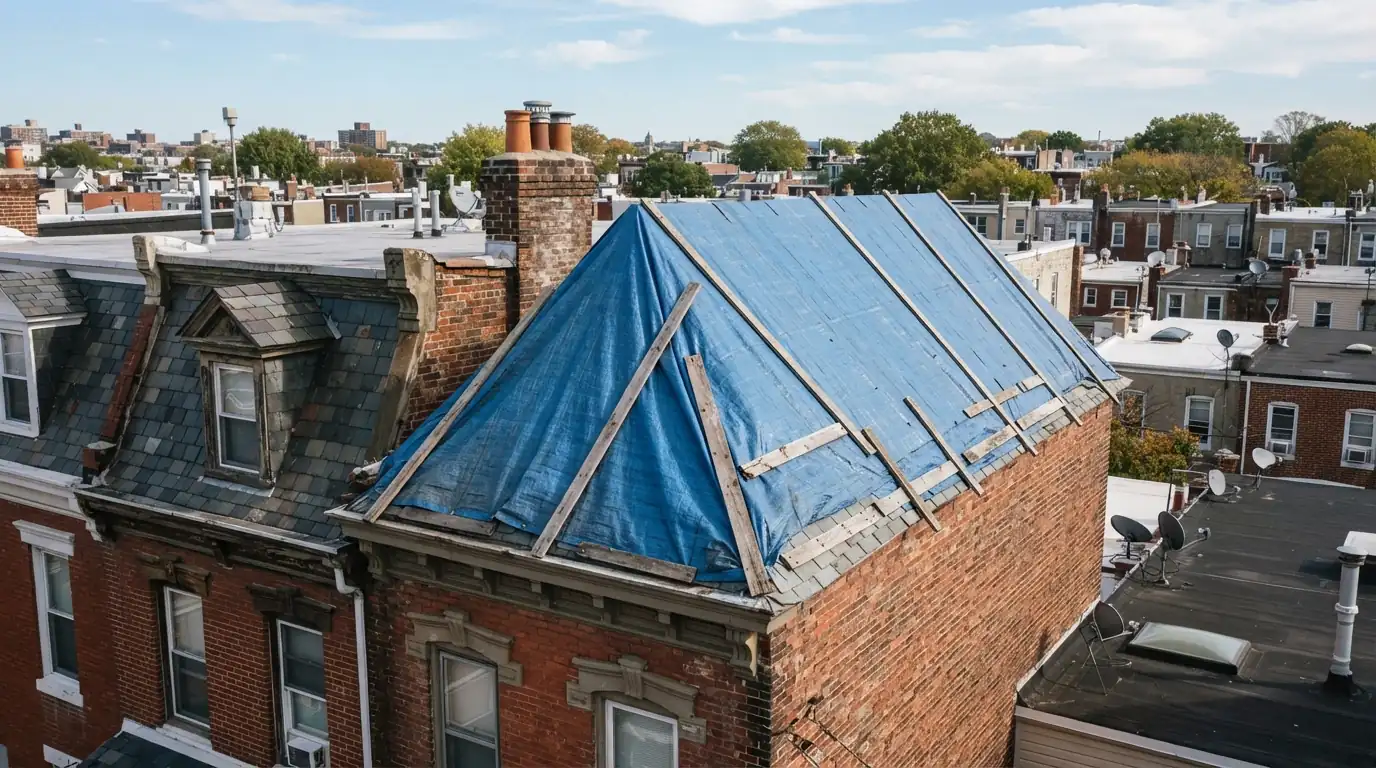
Emergency roof tarping in Philadelphia covers an opening until a permanent repair can be made. On pitched roofs we lay a heavy tarp over the ridge and secure it with battens and straps rather than nails through good shingles. On flat rowhome roofs, where a tarp would hold water, we use a temporary membrane patch instead. The phone is answered 24 hours a day.
Doing a Tarp Right
A badly placed tarp can make things worse. Laid below the damage instead of over the ridge, it funnels water into the hole. Nailed through intact shingles, it adds new leaks. Left loose, it flaps, tears and scours the roof around it.
A proper emergency tarp runs over the ridge and past the damage on the downhill side, is held by wood battens or straps along its edges, and is checked so it sheds water rather than collecting it.
How an Emergency Tarp Call Runs
- 1
A person answers
Day or night, with the address and the damage.
- 2
Check it is safe
Wires, limbs and wet surfaces assessed first.
- 3
Photograph the damage
Before anything is covered.
- 4
Cover or patch
Tarp on pitched roofs, membrane patch on flat ones.
- 5
Secure and inspect
Edges fastened, water path checked.
- 6
Book the repair
Permanent work scheduled as soon as possible.
How Long a Tarp Should Stay On
A well-secured tarp is meant to hold for days to a few weeks, not a season. Sunlight breaks down the plastic, and wind works at every fastener. If a claim or parts delay the repair, the tarp should be checked after every storm and refastened or replaced as it wears. The longer it stays, the more the roofing under it suffers, so the permanent repair is always the goal.
Storm Tarp Installation
On a pitched roof we use a heavy reinforced tarp sized to run from past the ridge on the far side to below the damage, so water cannot run under its top edge. The edges are rolled around wood battens that are fastened where they do the least harm, or strapped where fastening is not an option. Around chimneys and vents the tarp is cut and sealed rather than bunched. Before we leave, the tarp is checked for flapping edges and low spots that would hold water.
Temporary Membrane Patching
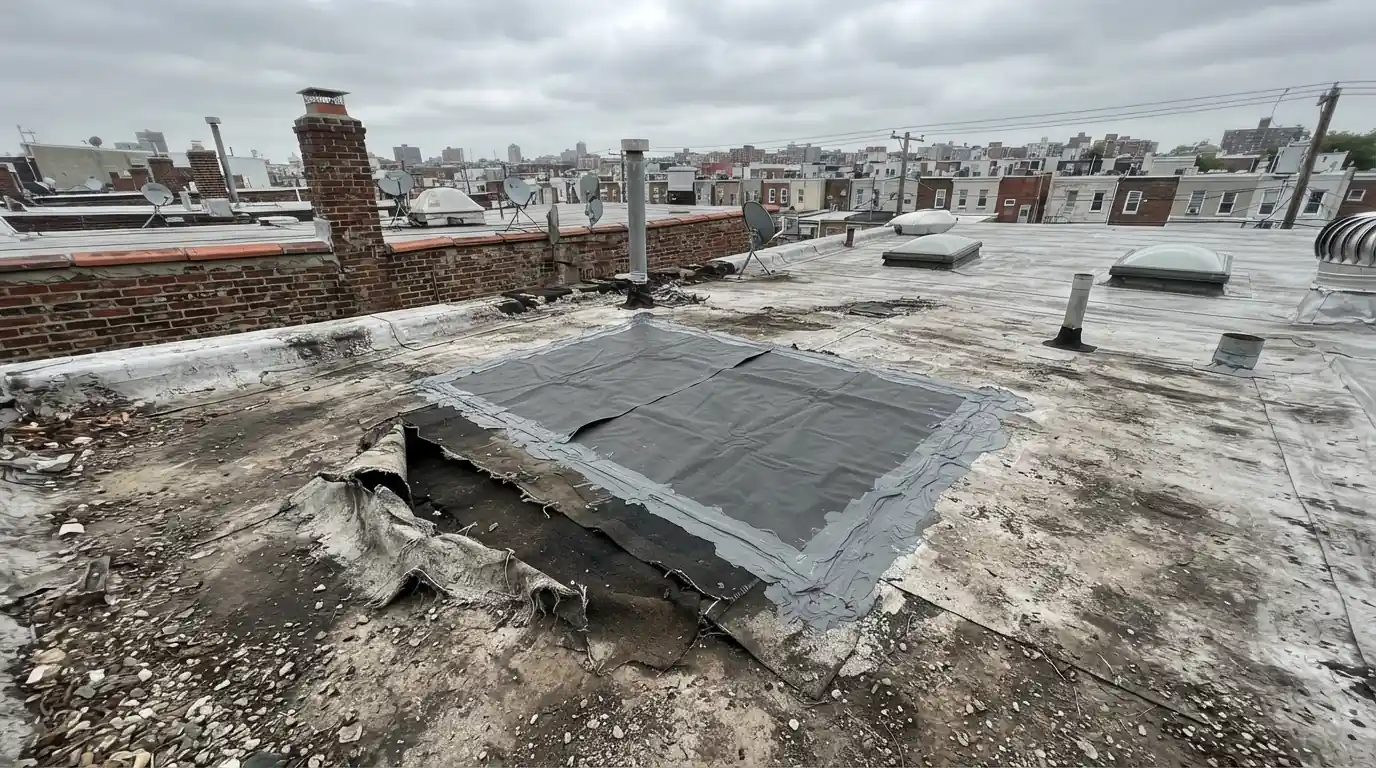
Flat rowhome roofs drain slowly, and a tarp on one simply fills with water and adds weight. Here the temporary fix is a membrane patch: the surface around the tear or puncture is cleaned and dried as much as conditions allow, and a self-adhered or taped patch is applied over it. It is not a permanent repair, but on a flat roof it keeps water out far better than plastic and does not have to be removed before the permanent patch goes on.
Tarp-to-Repair Scheduling
A tarp is protection, not a repair, and the plastic wears quickly in strong sun and wind. We book the permanent repair as soon as the roof is dry and materials are in hand, and we photograph the damage before it is covered so you have a record for your insurer. If the permanent repair has to wait for an adjuster, we check and refasten the tarp in the meantime so it keeps working until the roof can be closed properly.
What We See on Philadelphia Roofs
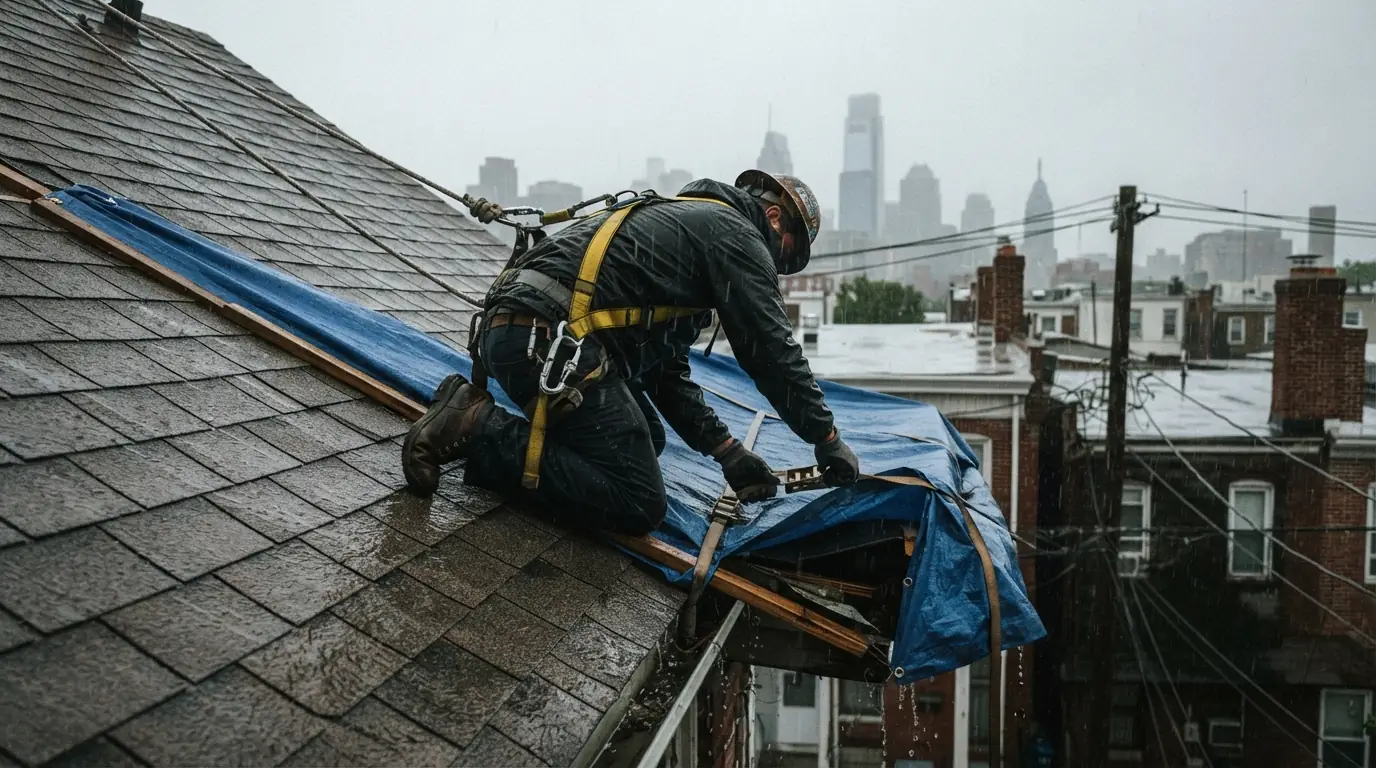
Severe thunderstorms in the Philadelphia area bring damaging winds of 58 mph or more, and a tarp has to be secured for gusts at that level, not for a calm night. Most city rowhome roofs are flat and run roughly 800 to 1,400 square feet, close to the footprint of the house, so on those roofs the emergency fix is usually a membrane patch rather than a tarp.

Roof open to the weather?
Call now and we cover it before the next rain.
What Affects the Cost of Emergency Tarping
- Size of the openingLarger damage needs larger tarps and more battens.
- Roof pitch and heightSteep and tall roofs need more safety setup.
- Flat or pitchedMembrane patches and tarps use different materials.
- Debris removalLimbs have to come off before anything is covered.
- Time of the callNight and storm conditions slow the work.
No published local range covers emergency tarping on its own, so we price the protection and the permanent repair separately.
Roof Tarping Questions
It is risky, especially on a wet or steep roof. If you do, never nail through good shingles and run it over the ridge.
A properly secured tarp should not. Nails through sound shingles and flapping edges are what cause damage.
Many policies expect reasonable steps to prevent more damage. Check your policy and keep the invoice and photos.
A tarp on a flat roof holds water and adds weight. A temporary membrane patch works better.
We send a crew as soon as one is available and conditions are safe to work.
More Storm & Emergency Work in Philadelphia
From our guides: After a Storm: Your Roof and Your Insurance Claim
Cover the Roof Before It Rains Again
Call any hour. We secure the opening so wind and rain stay out until the repair.