By Fern Goddard, Roofing Guides EditorUpdated September 2026
After a Philadelphia storm, check for damage from the ground, photograph everything with dates, and protect the house from further water. Have a roofer inspect and document the whole roof. In Pennsylvania a roofer can inspect, estimate and meet your adjuster, but only a licensed public adjuster or an attorney can negotiate your claim or interpret your policy.
First Checks, From the Ground
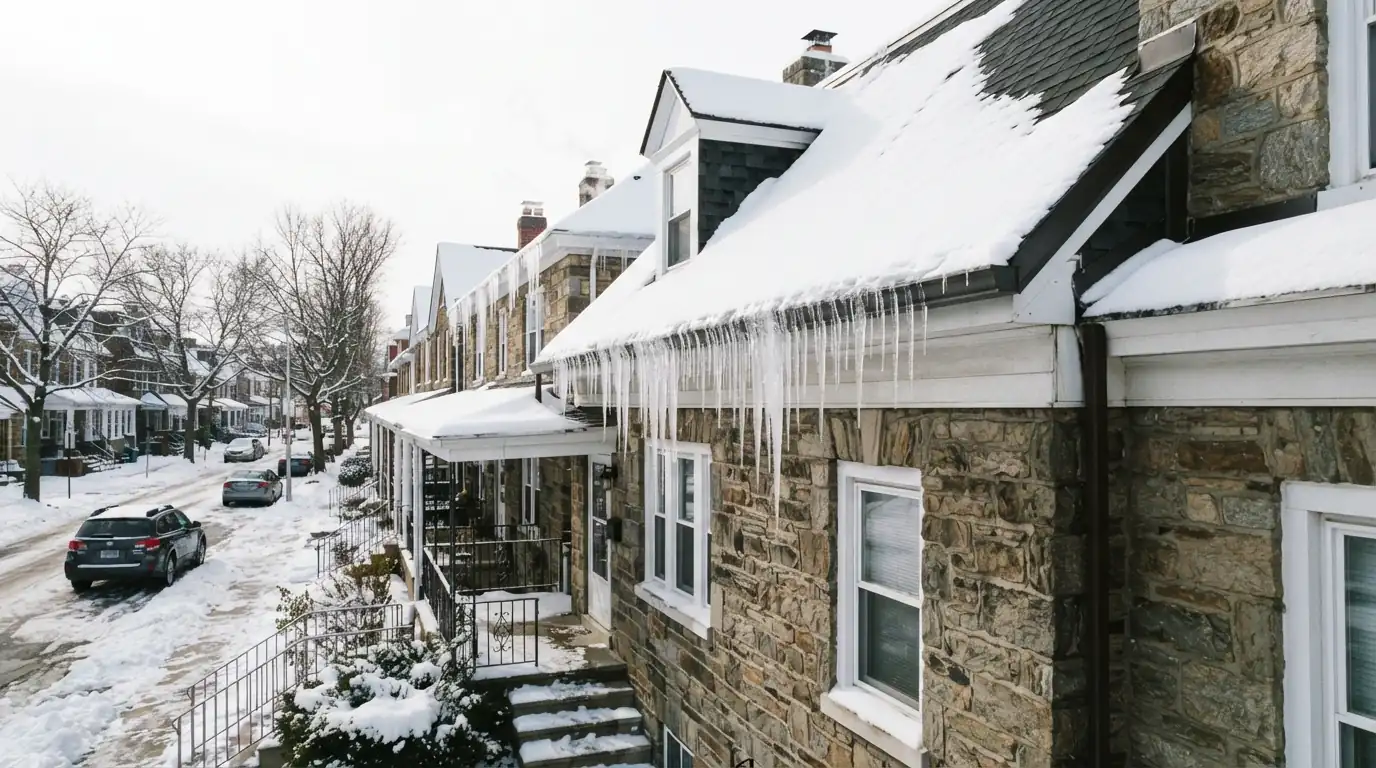
Stay off the roof. From the yard and the street, look for missing shingles, pieces in the yard or gutters, lifted flat roof edges at the parapet, dented gutters and vents, and branches on the roof. Inside, check top-floor ceilings and the attic, if you can reach it safely, for new stains or drips.
The National Weather Service office covering Philadelphia treats winds of 58 mph or more and hail an inch or larger as severe. If a storm like that passed over, damage is worth checking even when nothing is leaking yet, because lifted shingles and bruised granules turn into leaks with the next rain.
Protect the House and Document Everything
If water is getting in, protect the room and get the opening covered. Most policies expect you to take reasonable steps to prevent further damage, and emergency tarping or a temporary patch is that step. Keep the invoice. See emergency roof tarping.
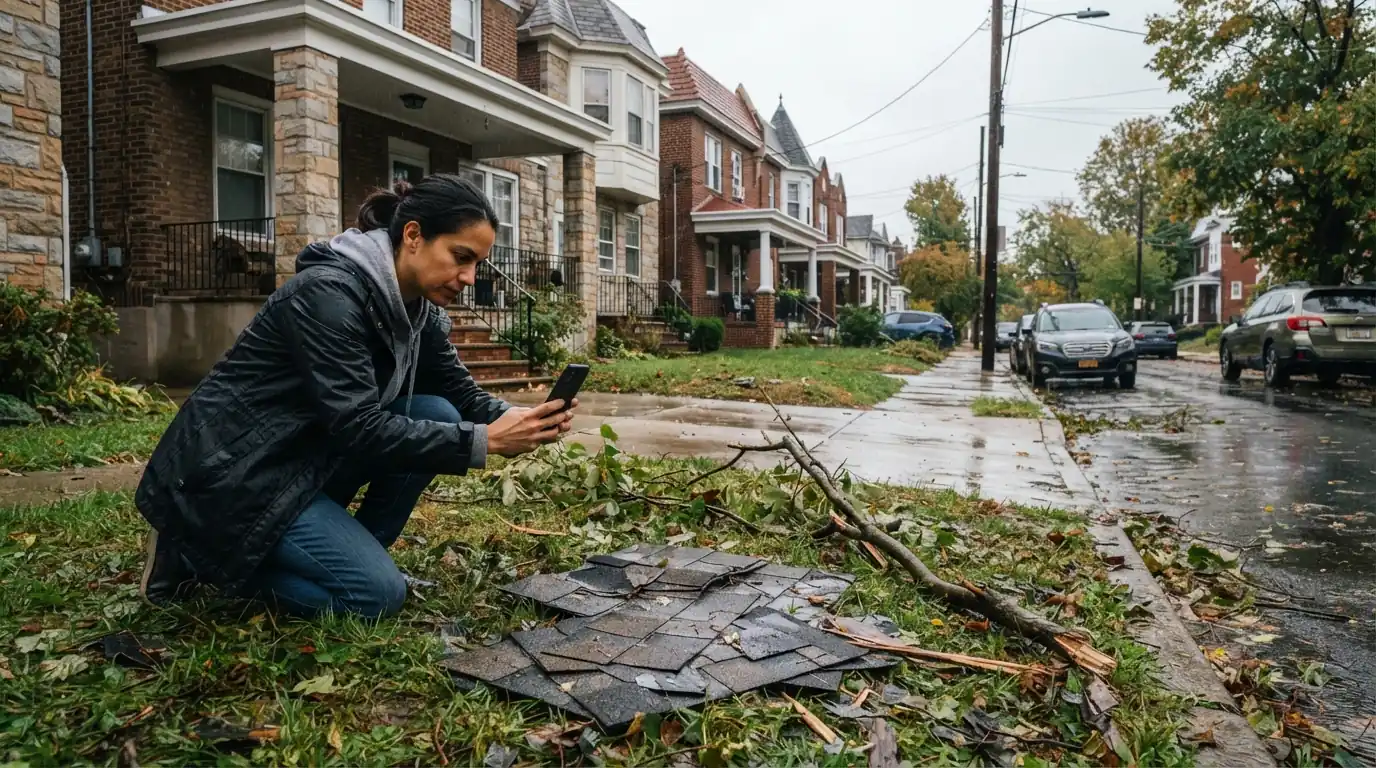
Photograph damage before anything is moved or repaired: the roof from the ground, debris, dented metal, and every interior stain, with dates. Write down when the storm happened. Clear records are what most disputed claims are missing.
What a Roofer Can and Cannot Do
Under Pennsylvania's public adjuster law, a roofer can inspect the roof, document the damage, write a repair estimate, and meet your insurer's adjuster on the roof to point out what was found. A roofer cannot negotiate your claim, interpret your policy, or tell you what your settlement should be. Only a licensed public adjuster or an attorney can do that.
A contractor who also acts as your public adjuster needs two separate contracts with you and cannot begin repairs until the insurer has decided the claim. Be wary of anyone who promises that insurance will pay for a new roof, or who asks you to sign over your claim at the door. Our claim assistance stays on the construction side.
The Adjuster Visit
Your insurer sends an adjuster to inspect the damage. Having your roofer there helps make sure nothing is missed, especially on steep or high roofs an adjuster may not climb. The roofer's dated photo report and estimate give the adjuster a documented starting point. After the visit, the insurer decides coverage; if damage is found later during repairs, the roofer documents it and sends an updated estimate.

Storm just went through?
Call and we inspect and document the roof before you file.
A Simple Storm Record
Keep a short record from the first day. It makes every later conversation easier:
- Date and time the storm passed
- Photos of the roof, yard debris and dented metal
- Photos of every interior stain, with dates
- Receipts for tarping or emergency repairs
- Names and dates of every call with your insurer
- The roofer's photo report and written estimate
Public Adjuster, Attorney or Neither?
Most straightforward storm claims are settled between the homeowner and the insurer, using the roofer's documentation. If the insurer disputes the damage or the scope and you want someone to negotiate for you, that is the role of a licensed public adjuster, who is usually paid a share of the settlement. If a claim is denied or handled in bad faith, an attorney is the stronger option. Either way, the roof documentation you gathered at the start is what they will work from.
Choosing Who Does the Repair
After big storms, crews from outside the area knock on doors. Before you sign anything, check that the company is local and reachable after the job, that the scope is in writing, and that nothing you sign hands over control of your claim. A roofer who will still be here to answer the phone next year is worth more than a fast signature today. See storm damage repair for how we handle it.
Common Questions
Protect the house first, then have the roof documented so you know what you are reporting.
No. In Pennsylvania only a licensed public adjuster or an attorney can do that.
That depends on your policy and the damage. Your insurer decides.
Your policy sets the rules; prompt reporting with good documentation helps.
Emergency protection, yes. Permanent repairs usually wait so the damage can be seen.
Share the roofer's photo report with your insurer, and consider a licensed public adjuster for representation.