Roof Leaks Traced and Fixed in Philadelphia
The stain is rarely under the hole. Water can travel along rafters or under a flat membrane before it drips, so we find the entry point first and repair that detail.
Roof leaks in Philadelphia homes most often enter at a flashing, a vent pipe boot, a valley or an opened flat-roof seam, not directly above the ceiling stain. We trace the water to where it gets in, repair that detail, and check drains and parapets while we are up there. The phone is answered 24 hours a day.
Why the Stain Is Rarely Under the Hole
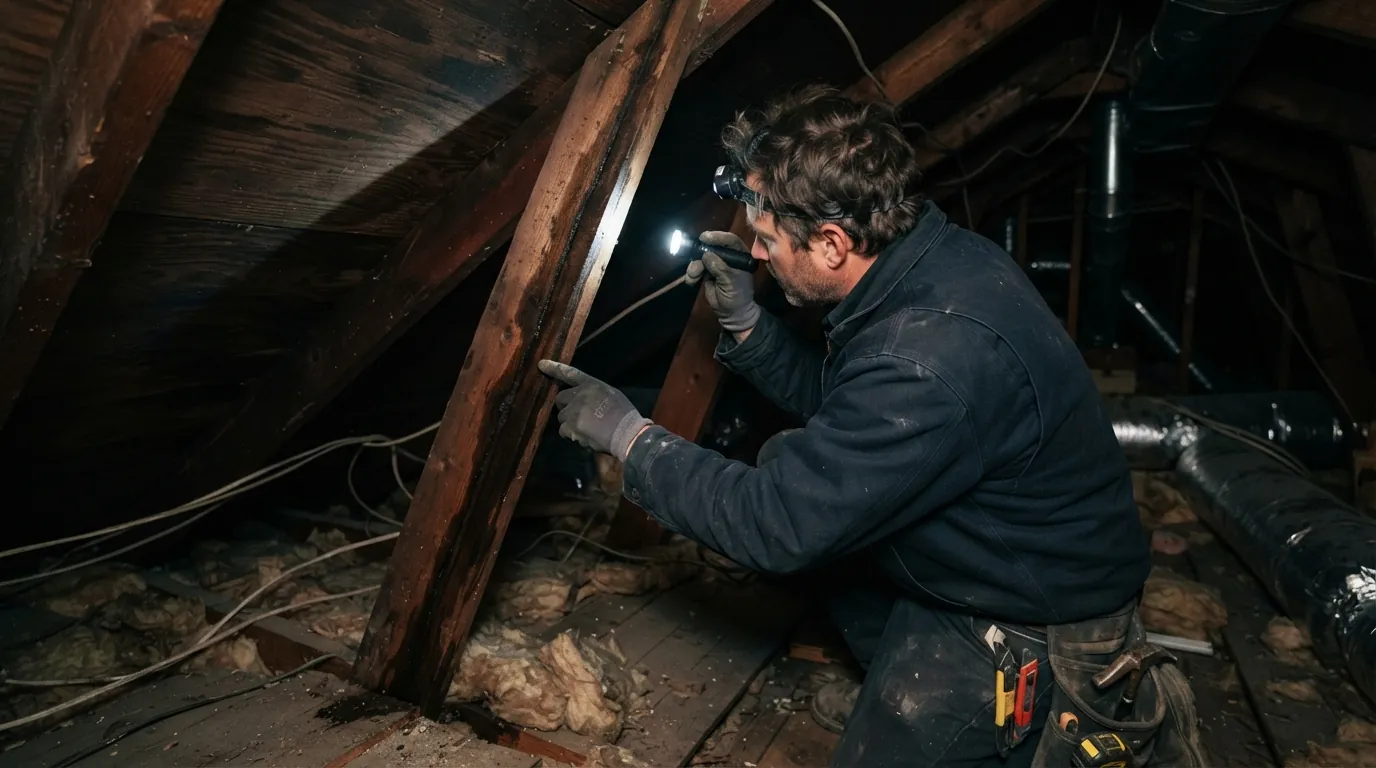
Water that gets past a roof covering follows the easiest path. On a pitched roof it runs down the decking or along a rafter. On a flat roof it spreads under the membrane until it finds a gap in the ceiling below.
A real leak repair starts on the roof and works through the likely entry points in order: flashing at walls and chimneys, rubber boots around vent pipes, valleys where two slopes meet, and membrane seams. We repair the detail that is actually failing.
Signs Water Is Getting Into Your Roof
A ceiling ring that grows
Spreading after each storm means water still gets in.
Bubbling or peeling paint
Moisture is sitting in the plaster behind it.
Drips at a light fixture
Water follows wiring. Switch that circuit off.
Dark rings on attic decking
A slow leak shows here before the ceiling.
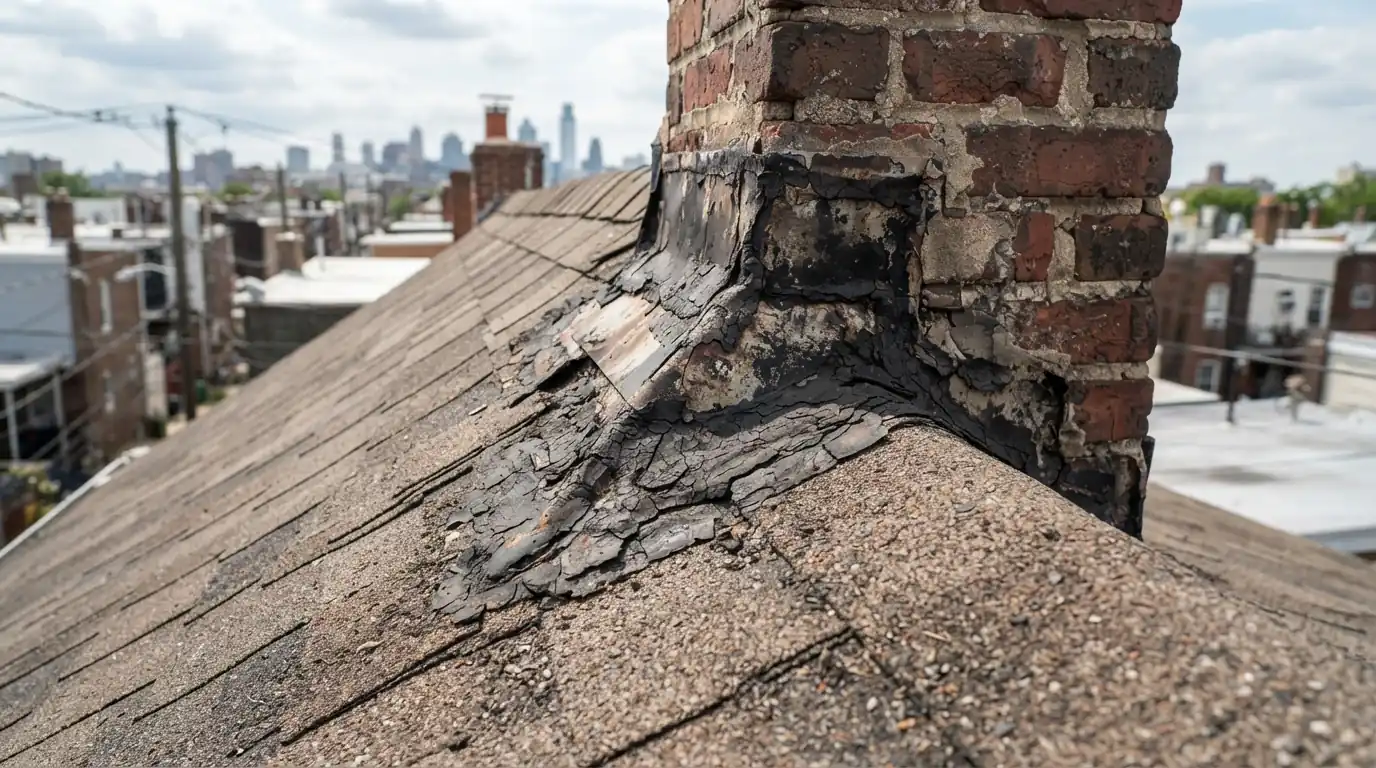
A damp chimney breast
Usually failed flashing or a cracked crown.
A musty smell after rain
Wet insulation smells before it stains.
From Your Call to a Dry Ceiling
- 1
Call and describe it
Where the stain is and whether water is coming in now.
- 2
Contain it inside
We tell you what to move and what to switch off.
- 3
Trace the entry point
Flashing, boots, valleys and seams, in that order.
- 4
Show you the failure
Photos of the failed detail and your options, before any cutting.
- 5
Repair that detail
New flashing, boot or membrane patch, with soft decking under it replaced.
- 6
Watch the next storm
Watch that ceiling through the next heavy rain.
Ceiling Stain Leak Tracing
A brown ring on the ceiling, bubbling paint or a drip at a light fixture tells you water is inside, not where it got in. We map the stain against the roof above, then check the attic or the membrane surface for the first wet spot upslope. When a dry day hides the source, a section-by-section hose test reproduces the leak so the repair lands on the right detail. Valleys, where two roof planes meet, get checked here too, because they carry the most water on a pitched roof.
Flashing Leak Repair
Flashing seals the joint where a roof meets a wall, chimney or dormer, and it fails at the edges first: sealant dries out, counterflashing pulls out of the mortar joint, or an old tar patch cracks in a hard freeze. The leak shows up on the wall side of a room or beside the chimney breast. The fix runs from resetting counterflashing to replacing step flashing course by course, covered in detail on our chimney flashing repair page. Tar smeared over the joint only hides it.
Pipe Boot and Vent Leak Repair
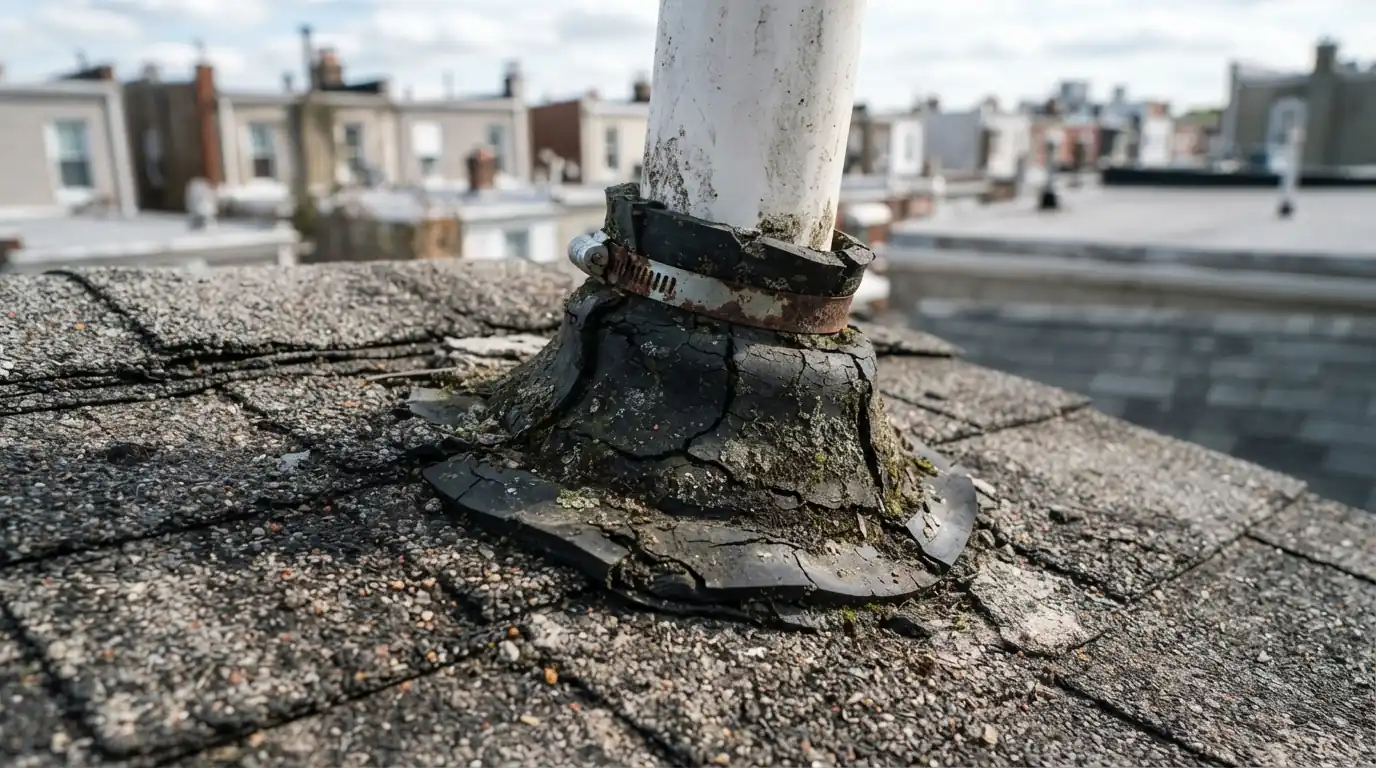
Every plumbing vent, bath fan and attic vent passes through the roof inside a boot or collar. The rubber gasket on a standard pipe boot cracks in sunlight long before the shingles around it wear out, so a stain lined up with the bathroom or the plumbing stack often traces to one. On shingle roofs the boot is replaced and the shingles relapped over its flange. On a flat roof the pipe gets new membrane flashing welded or adhered around it, which outlasts a coat of roof cement by years.
What We See on Philadelphia Roofs
On attached rows across Philadelphia, a leak in your back bedroom can start at the shared parapet or coping on the neighbor's side, because the roofs meet at a party wall. About four in ten city homes were built before 1940, and many of those roofs carry several old layers, so water can travel between them before it reaches plaster. That is why we check the party-wall tie-in and cut a small core when the layer count is unclear.

Leak getting worse tonight?
Call and we talk you through containing it while a roofer is sent.
What You Can Safely Do Before We Arrive
A few steps help. Climbing a wet roof with a tub of cement does not.
What a homeowner can safely do
- Catch the drip and move furniture and electronics
- Photograph the stain and the water for your records
- Note which rooms and which storms bring the leak
Where it needs a roofer
- Anything that means walking a wet, icy or steep roof
- Opening flashing, boots or membrane seams
- Any leak running near wiring or fixtures
What Moves the Cost of a Leak Repair
- Where the water entersA pipe boot and a rebuilt chimney flashing are very different jobs.
- Roof typeMembrane repairs and shingle repairs use different materials and methods.
- Height and accessThree-story rows and tight alleys add ladder time.
- Damage behind the leakSoft decking or wet insulation has to be replaced before the new covering goes on.
- Layers on the roofOpening an old multi-layer roof to reach the entry point takes longer.
Published Philadelphia figures put roof leak repairs at $300 to $3,500, depending on the entry point. That is a market planning range, not our price; we quote after seeing the roof.
Roof Leak Questions We Answer Most
Move belongings, catch the drip, and switch off any light the water is near. If the ceiling bulges, a small hole at the low point lets it drain instead of collapsing. Then call.
Usually. Stains and failed sealant show where water has been, and a controlled hose test reproduces a hidden leak.
Yes, the phone is answered 24 hours a day. A night leak gets a temporary seal first, then the permanent repair once the roof is dry.
Wind direction. Sideways rain gets behind wall and chimney flashing that stays dry in a straight-down shower.
No. One failed boot or flashing on a sound roof is a repair. Several leaks or brittle membrane point toward replacement.
More Roof Repair Work in Philadelphia
From our guides: Flat Roof Leaking? What to Do in the First Hour
Stop the Leak at the Source
Tell us where the stain is and when it appears. We find where the water gets in and fix that.