Dormer Roof Repair in Philadelphia
Dormers break a roof into small pieces: a little roof, two side walls, two valleys and a window. Each joint is a place water can get in, and dormer leaks often show up far from where they start.
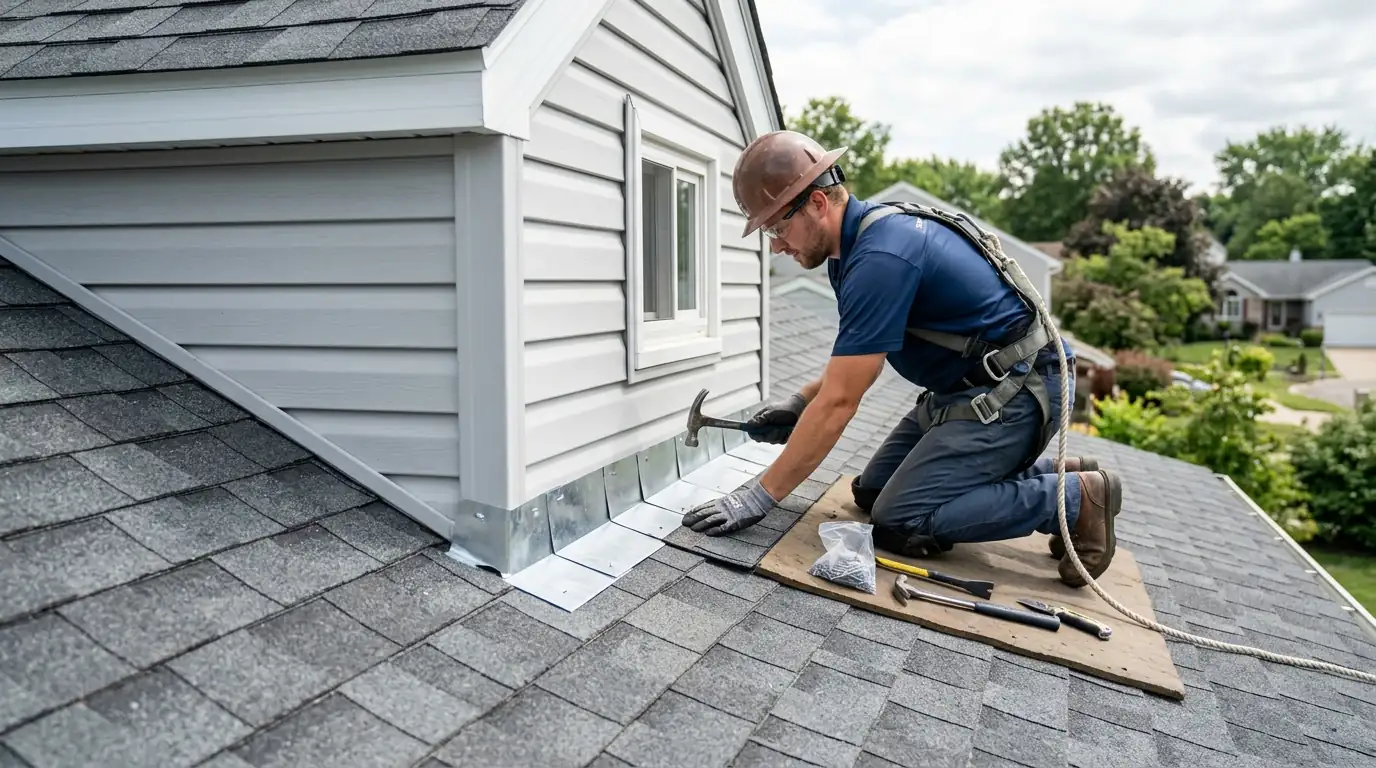
Dormer leaks usually come from the step flashing where the dormer's side walls meet the main roof, the valleys where its roof joins the main roof, the dormer's own small roof, or the window flashing. Repair means tracing the water to the joint, then rebuilding that flashing properly rather than sealing over it.
Where Dormers Let Water In
A dormer's side walls, called cheeks, sit on the main roof, and the joint between them is sealed with step flashing woven into each course of shingles or slate. When that flashing is missing, rusted or replaced with caulk, water runs behind the siding and down inside the wall. The valleys where the dormer roof meets the main roof carry a lot of water and wear quickly.
The dormer's own roof is often low-sloped and covered in whatever was cheapest at the last re-roof, and the window in the dormer face needs its own head and sill flashing. Because water travels along framing before it shows, we test each joint in turn, from the bottom up, before opening anything.
Signs a Dormer Is Leaking
Stain beside the dormer
Ceiling or wall stain near the dormer sides.
Wet window sill
Water inside below the dormer window.
Caulk at the joints
Sealant where metal flashing should be.
Rot in the cheek wall
Soft siding or trim on the dormer sides.
Worn valley
Granules gone or metal rusted where roofs meet.
Peeling paint inside
Paint lifting on the dormer walls.
How We Fix a Dormer Leak
- 1
Look inside
Stains and wet framing traced.
- 2
Water test
Each joint tested from the bottom up.
- 3
Open the joint
Siding and roofing removed where it failed.
- 4
Re-flash
New step, valley or window flashing.
- 5
Repair the wood
Soft sheathing and trim replaced.
- 6
Close and match
Cladding and roofing reset to match.
How Long a Dormer Repair Takes
Most dormer flashing repairs take a few hours to a day. Rebuilding both cheeks, the valleys and the window flashing on one dormer usually takes a day, longer on slate or mansard roofs where the slate is lifted and reset by hand.
Dormer Cheek and Side Wall Leaks
Leaks along the side of a dormer usually mean the step flashing has failed or was never installed. The fix is to remove the siding and shingles along the joint, install new step flashing course by course, and lap new counterflashing or the siding back over it. Where the cheek walls are clad in slate, shingles or metal, the cladding is reset to match so the dormer looks unchanged. Where the sheathing behind has rotted, it is replaced while the wall is open, so the new flashing has something sound to sit on.
Dormer Roof and Valley Repair
Small dormer roofs are often low-sloped and patched many times. We replace a worn dormer roof with a membrane or shingles suited to its slope, and rebuild the valleys where it meets the main roof with new metal or woven shingles. On slate roofs the slate along each valley is lifted and reset over new copper so the main roof is not disturbed beyond the valley. Small dormer roofs are also checked for proper drip edge and a path for water to leave without washing down the window below it, which is a common source of rot on the dormer face.
Dormer Window Flashing
The window in the face of the dormer needs a head flashing above it and a sill that sheds water out, not in. Old windows and replacement windows installed without flashing let water into the wall below the sill. We open the trim, add proper head and sill flashing, seal the side joints, and repair or cap the wood trim so the window and the dormer face stay dry. If the window itself is failing, we can coordinate with a window installer so the new window and its flashing go in together and the job is done once.
What We See on Philadelphia Roofs
Philadelphia has Second Empire rowhouses whose slate mansard roofs are pierced by dormer windows, including examples in Germantown and West Philadelphia, and the newer twins and singles farther out often gained dormers over the years. Both bring the same weak points: side walls, valleys and window heads, where flashing matters more than the roofing itself. On a slate mansard the dormer cheeks are often clad in slate too, so each repair is reset slate by slate rather than covered over.

Leak near a dormer?
Call and we trace it before opening anything.
What Sets the Price of a Dormer Repair
- Which joints failedCheeks, valleys, roof or window.
- Roofing materialSlate and mansards take longer.
- Siding and trimCladding removed and reset.
- Wood repairsRotted sheathing or framing.
- Number of dormersSeveral dormers share setup costs.
Dormer repairs are priced after a leak test, because the joint that leaks decides the work.
Dormer Roof Questions
Only briefly. Flashing is what keeps the joint dry.
Usually the side wall flashing or the window head.
Yes, including slate cheeks and window flashing.
We reset the cladding and roofing to match.
Not if the roof is sound. Dormer joints are repaired on their own.
More Roof Repair Work in Philadelphia
From our guides: Repair or Replace Your Roof?
Stop the Leak at the Dormer
Call and we test, trace and re-flash it.