New Siding Installed on Philadelphia Homes
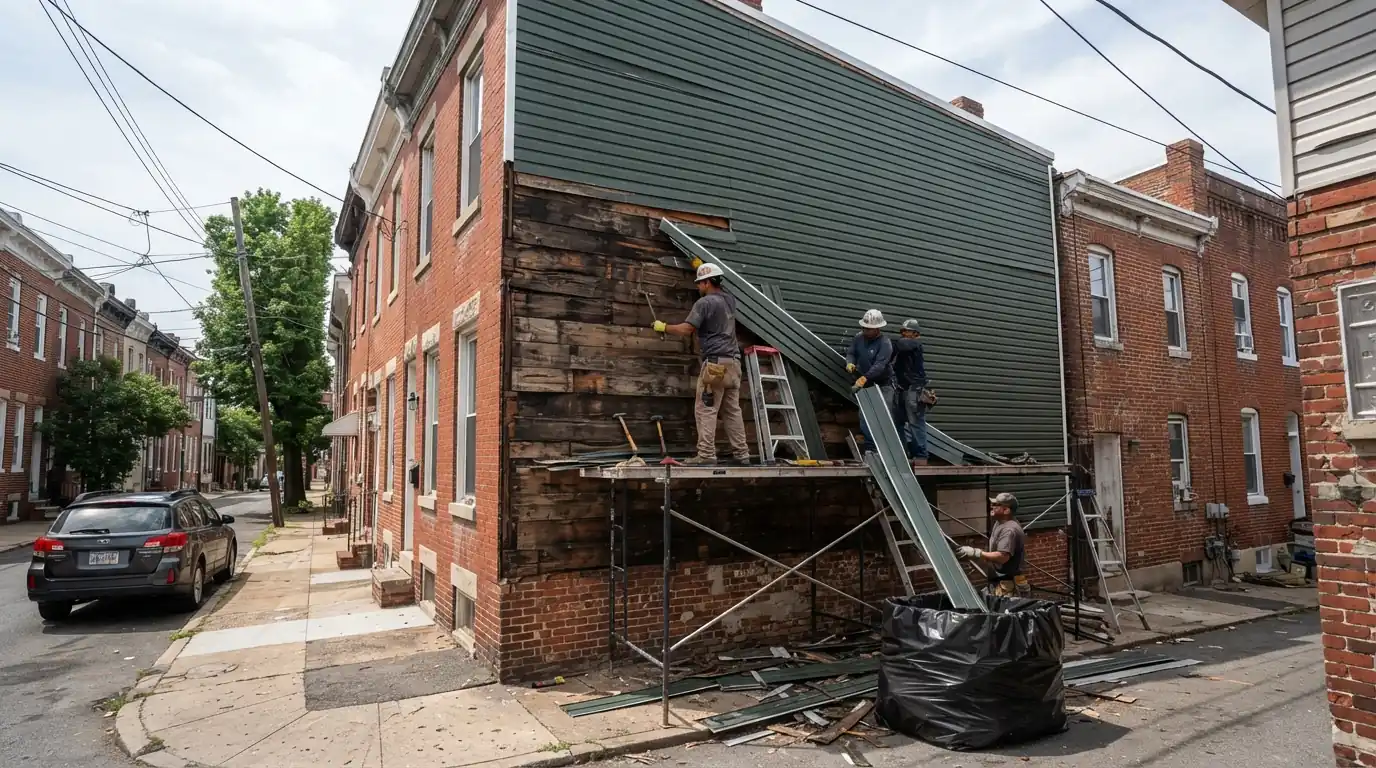
New siding only lasts as long as the wall behind it. We strip the old cladding, fix the sheathing and flashing it was hiding, wrap the wall, and then install siding suited to the house and the street.
Siding installation in Philadelphia is mostly vinyl, which published local figures put at $2 to $9 per square foot installed, with fiber cement at $10 to $14 per square foot in Pennsylvania. Old siding removal adds $1.25 to $3 per square foot. On a historic-listed property, exterior changes need Historical Commission approval first.
Why the Wall Behind the Siding Matters
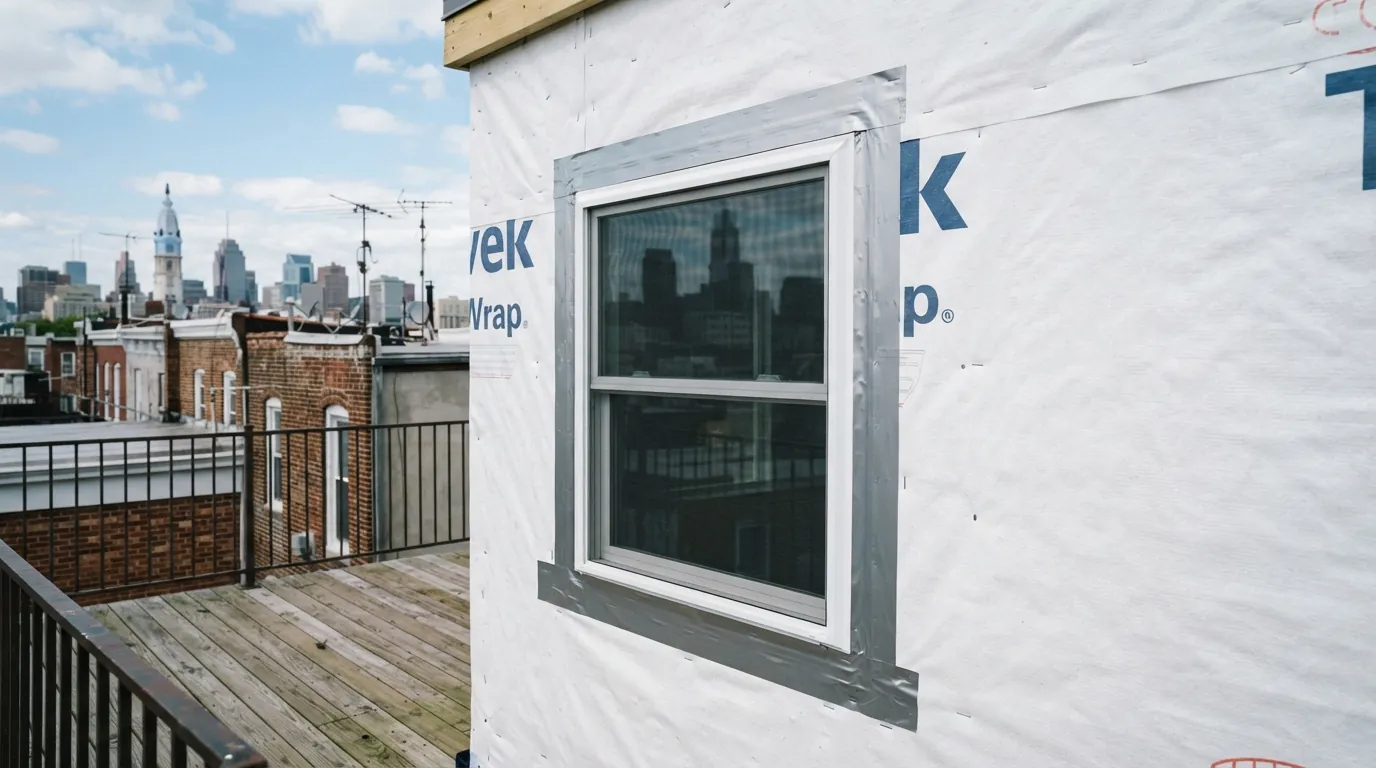
Siding is a rain screen, not a waterproof skin. Water gets behind every siding system, and what keeps the wall dry is the housewrap, the flashing at windows and doors, and a path for that water to drain out at the bottom.
When old siding comes off we often find the reasons it failed: missing window flashing, soft sheathing, or no wrap at all. Fixing those is part of the job, not an extra. When the roof is done at the same time, the drip edge and flashings tie into GAF, Owens Corning or CertainTeed roofing above the wall.
What Sets the Price of New Siding
- Wall areaSiding is priced by the square foot of wall.
- MaterialVinyl and fiber cement differ widely.
- Tear-offRemoving old siding or Formstone adds labor.
- Sheathing repairsSoft wood found behind old siding is replaced.
- Trim and heightWindow trim, corners and upper-story access.
Published Philadelphia figures put old siding removal at $1.25 to $3 per square foot. All figures here are planning ranges, not our quote.
Vinyl or Fiber Cement?
Both work in Philadelphia. The choice usually comes down to budget, look and the street.
| Question | Vinyl | Fiber cement |
|---|---|---|
| Installed cost | $2 to $9 per square foot | $10 to $14 per square foot |
| Painting | None needed | Factory finish or paint every several years |
| Fire and impact | Can melt or crack | Non-combustible and rigid |
| Look | Many profiles, visible seams | Closest to painted wood |
| Historic properties | Often not approved | More often accepted |
Vinyl Siding Installation
Vinyl is the most common siding on Philadelphia twins, singles and rowhome rears because it is affordable, needs no paint, and comes in many profiles and colors. Installed well, it hangs loose on its nails so it can expand and contract; nailed tight, it buckles in the first summer. Heavier panels resist wind and dents better and lie flatter on uneven older walls. CertainTeed is one of the vinyl siding lines we install most often, alongside several other major brands we can source.
Fiber Cement Siding Installation
Fiber cement is a heavy, rigid board made from cement and wood fiber. It resists fire, rot and insects, holds paint well, and looks more like painted wood than vinyl does, which is why it is often the better choice on older or historic-looking fronts. It costs more and takes more labor to cut and install, with specific clearances from roofs and the ground. We install it to the manufacturer's instructions so the warranty stays valid, then finish it with factory or field paint.
Trim, Wrap and Housewrap Details
The details decide whether new siding keeps water out. Every wall gets housewrap lapped like shingles, windows and doors get flashing tape and head flashing, and trim is set so water drains away rather than into the wall. Where siding meets a roof, a step flashing or kick-out flashing directs water into the gutter instead of down the wall. Corners, soffit edges and the bottom starter strip are finished so the wall can drain and breathe the way it was designed to.
Brands we install and service
What a Siding Job Includes
Siding quotes differ most in what happens behind the panels.
- Permit or Historical Commission check where required
- Old siding removed and disposed of
- Sheathing inspected and repaired
- Housewrap lapped over the whole wall
- Window and door flashing
- Kick-out flashing at roof walls
- Starter strip and corner posts
- Siding and trim installed
- Nails, scraps and debris cleared

Ready to replace the siding?
Call and we measure the walls and price both materials.
What We See on Philadelphia Roofs
Across South Philadelphia and much of the city, mid-century owners covered rowhouse walls with Formstone, aluminum siding and later vinyl, often hiding the original cornices and window trim. On a property listed on the Philadelphia Register, whether alone or in a historic district, any exterior change needs Historical Commission approval, and staff have steered owners toward wood or composite siding rather than vinyl, so we check a home's status before we plan the material.
How a Siding Installation Runs
- 1
Measure and check status
Wall areas measured, historic status checked.
- 2
Choose material and color
Vinyl or fiber cement, profile and trim.
- 3
Strip the old siding
Old cladding off, wall exposed.
- 4
Repair and wrap
Sheathing fixed, housewrap and flashing on.
- 5
Install siding and trim
Panels hung, corners and trim finished.
- 6
Clean up
Scraps and nails cleared from the yard.
Siding Installation Questions
Sometimes, but we prefer removal so the wall and flashing can be checked.
If the property is on the Philadelphia Register, yes, from the Historical Commission.
It can be removed, but it may damage the brick beneath. We look before advising.
It depends on the panel grade and exposure; heavier panels hold up better.
Yes. Many rowhome jobs are rear walls and additions only.
More Exterior & Water Management Work in Philadelphia
Re-Side the House the Right Way
Call for a measured quote. We fix what is behind the old siding before the new goes on.