Attic and Roof Ventilation for Philadelphia Homes
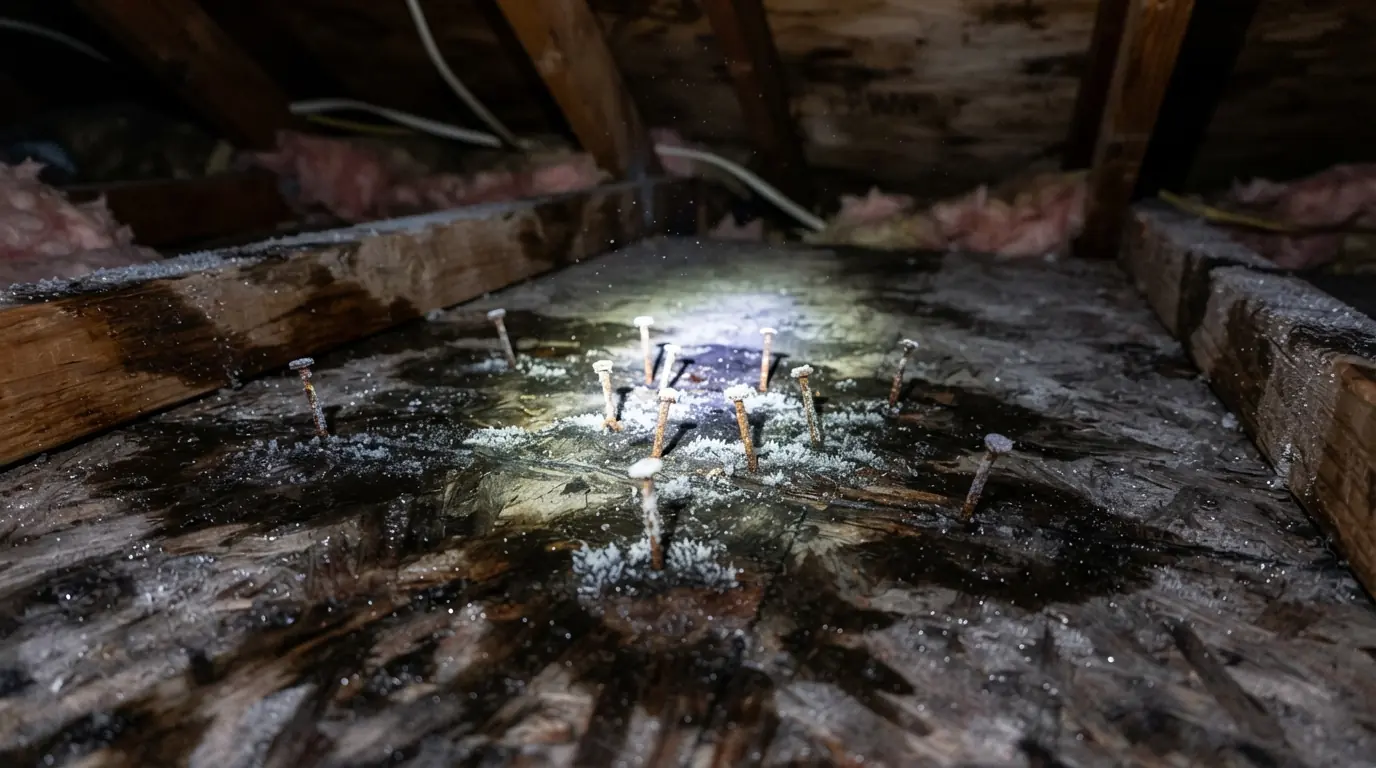
An attic that cannot breathe cooks the shingles from below in July and grows frost on the nails in January. Balanced ventilation, air in at the eaves and out at the ridge, fixes both.
Roof ventilation on Philadelphia pitched roofs works by pulling outside air in through soffit vents at the eaves and letting warm, moist air out through a ridge vent at the peak. When one half is missing or blocked, attics overheat in summer and trap moisture in winter, shortening shingle life and feeding ice dams. We check intake and exhaust together before adding anything.
What Good Attic Ventilation Does
In summer, a ventilated attic stays closer to outdoor temperature, which keeps heat off the shingles and out of the rooms below. In winter, moving air carries off the moisture that rises from the house before it condenses on cold decking and nails.
Ventilation only works as a system. A ridge vent with no soffit intake pulls air from the living space instead, and mixing a ridge vent with gable fans or turbines can short-circuit the airflow entirely. Ridge vents and intake products from GAF, CertainTeed and Owens Corning are among those we install.
What Sets the Price of Ventilation Work
- Ridge lengthRidge vent is priced by the linear foot.
- Intake workVented soffit or edge vents and baffles.
- Removing old ventsBox vents and turbines patched over.
- Attic accessTight attics slow baffle installation.
- Done with a new roofAdding vents during replacement costs less.
Ventilation work is priced from the ridge length and intake needed, and it costs least when done during a roof replacement.
Which Vents Fit Your Roof
The right exhaust depends on the roof shape. Intake at the eaves is needed with all of them.
| Vent type | Best for | Watch out for |
|---|---|---|
| Ridge vent | Most pitched roofs with a long ridge | Needs matching soffit intake |
| Box vents | Hip roofs with a short ridge | Several needed for even airflow |
| Turbine vents | Older roofs already cut for them | Seize and leak as they age |
| Powered attic fan | Roofs with no usable ridge | Can pull air from the house |
Ridge Vent Installation
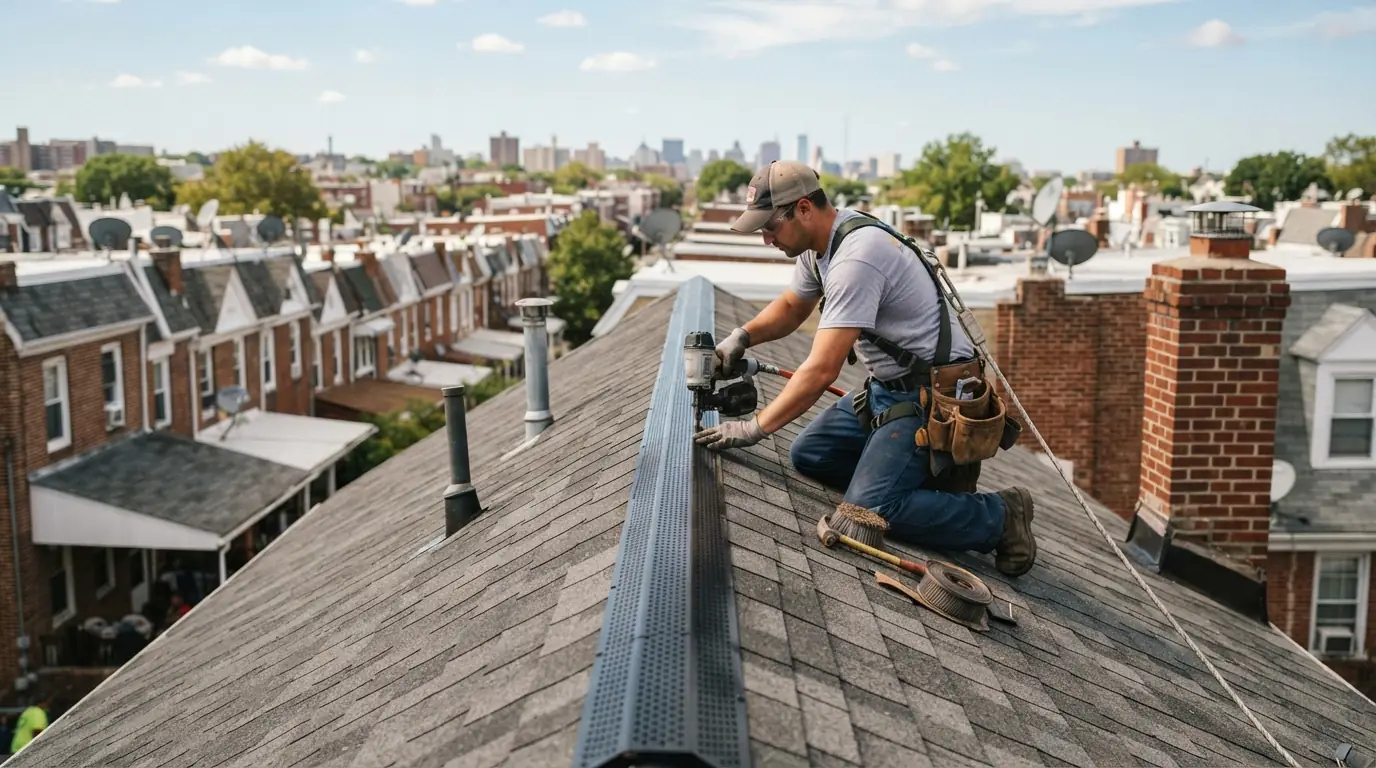
A ridge vent is a continuous slot cut along the peak of the roof, covered by a vented cap that sheds rain and lets hot, moist air escape along the whole ridge. It is the most even exhaust for most pitched roofs and nearly invisible once capped with shingles. We cut the slot back from the ridge board, install the vent with its baffles and filter, and cap it. Older box vents and turbines are removed and patched so they do not compete with the ridge.
Soffit Intake Vent Installation
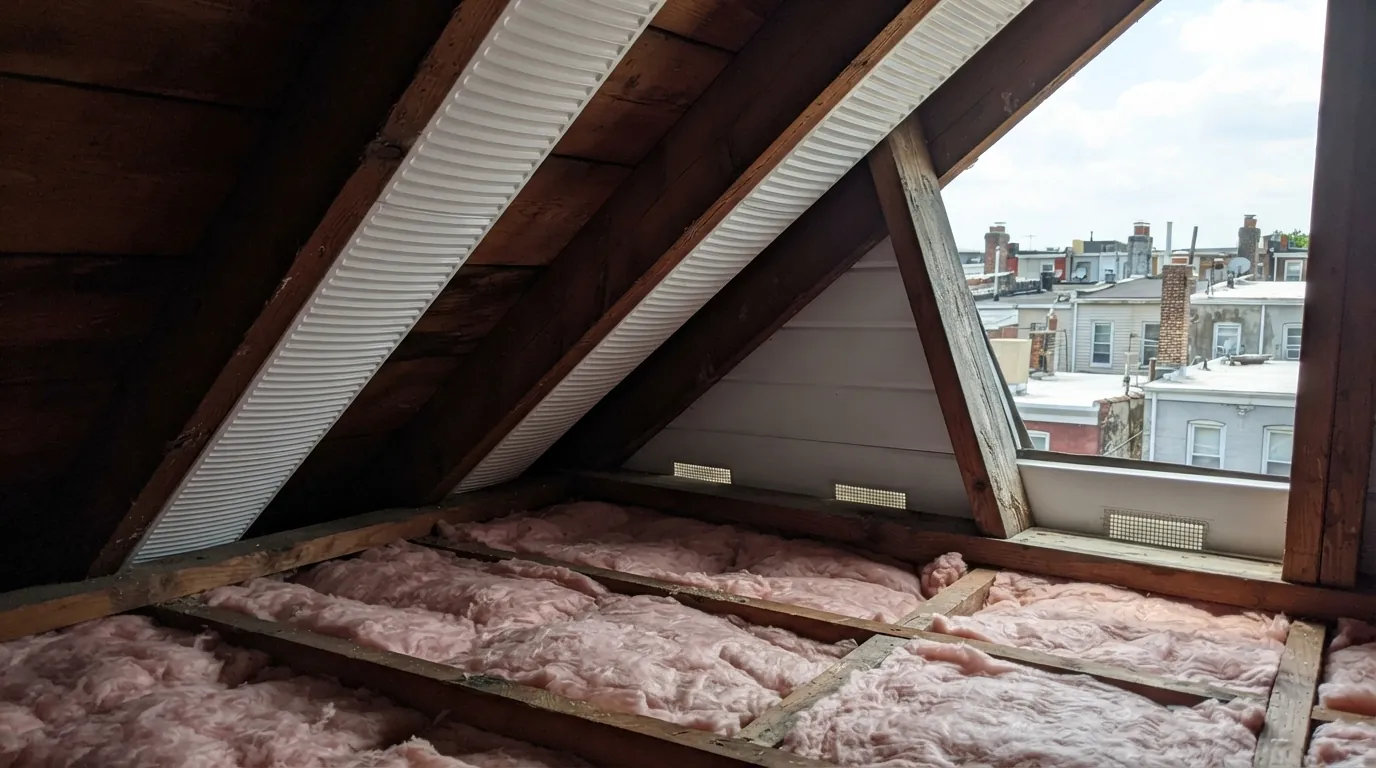
Intake is the half of ventilation most houses are missing. Air has to enter low at the eaves before it can leave at the ridge. We install vented soffit panels or cut intake vents into existing soffit, then check the attic side: insulation stuffed to the roof deck blocks the intake, so baffles are fitted between the rafters to keep a clear channel from the soffit into the attic. On houses with little or no overhang, drip-edge style intake vents at the roof edge can do the job.
Attic Fan and Turbine Vent Replacement
Powered attic fans and wind turbines were common fixes on older roofs, and many now rattle, leak at the base, or have seized. A powered fan can also pull conditioned air out of the house through ceiling gaps. Where a fan or turbine has failed, we usually replace it with passive ridge and soffit ventilation. Where a fan is still the right tool, such as a roof with no usable ridge, we replace it with a new unit and a sealed flashing base.
Brands we install and service

Attic hot as an oven or damp in winter?
Call and we check intake and exhaust together.
What We See on Philadelphia Roofs
Much of Parkwood was built in the late 1950s by the Korman Corporation as the planned community Parkwood Manor, so its pitched roofs sit over attics that are now more than sixty years old. When one of those roofs comes due for replacement, we check the attic for real soffit intake and a clear path to the ridge, because a new roof over a poorly vented attic ages far faster than it should.
How a Ventilation Upgrade Runs
- 1
Check the attic
Temperature, moisture, frost and insulation noted.
- 2
Measure intake and exhaust
Existing vents counted and compared.
- 3
Plan a balanced system
Intake at the eaves, exhaust at the ridge.
- 4
Install intake
Soffit vents and baffles fitted.
- 5
Install exhaust
Ridge vent cut and capped, old vents removed.
- 6
Recheck airflow
Paths confirmed clear from eave to ridge.
Roof Ventilation Questions
Mixing vent types can short-circuit airflow. Balanced intake and exhaust matters more than adding vents.
Installed with a baffled, filtered vent and proper cap, it sheds wind-driven rain.
Some do, depending on how the roof is built. Many are unvented assemblies designed with insulation above the deck.
It helps by keeping the roof cold, together with air sealing and insulation.
Often not. Passive ridge and soffit ventilation is quieter and does not pull air from the house.
More Exterior & Water Management Work in Philadelphia
From our guides: Ice Dams on Philadelphia Roofs: Causes and Fixes
Let the Attic Breathe
Call for an attic check. We balance intake and exhaust instead of just adding vents.