By Fern Goddard, Roofing Guides EditorUpdated September 2026
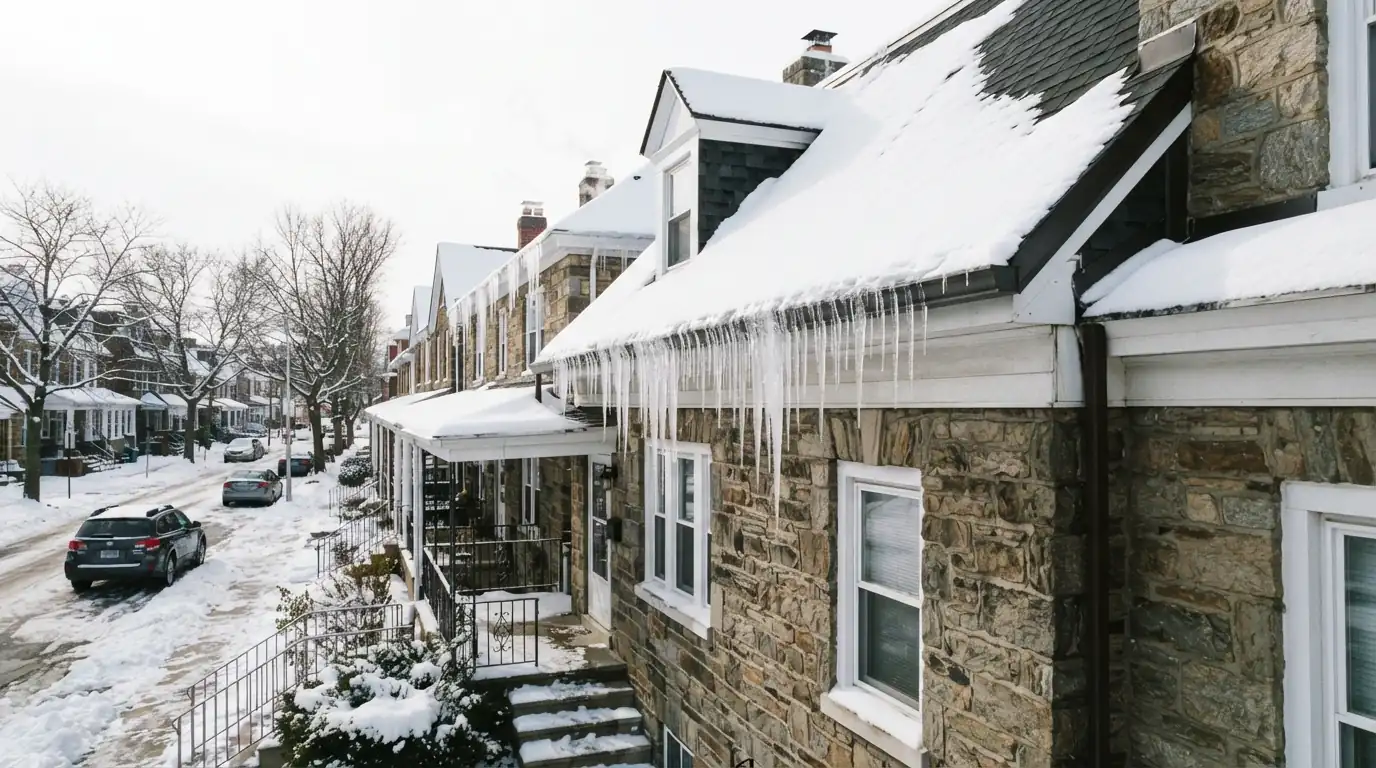
Ice dams form on Philadelphia pitched roofs when heat escaping into the attic melts roof snow that refreezes at the cold eaves, trapping water that backs up under the shingles. Remove them with low-pressure steam, not hammers or salt, and stop them with attic air sealing, insulation, balanced ventilation and ice and water barrier at the eaves.
How an Ice Dam Forms
An ice dam needs snow on the roof, a roof deck warmed from below, and cold eaves. Warm air from the house leaks into the attic, warms the deck, and melts the bottom of the snow. The water runs down to the eave, which sits over the cold outside wall, and freezes. Each thaw adds another layer until a ridge of ice holds back a pool of water.
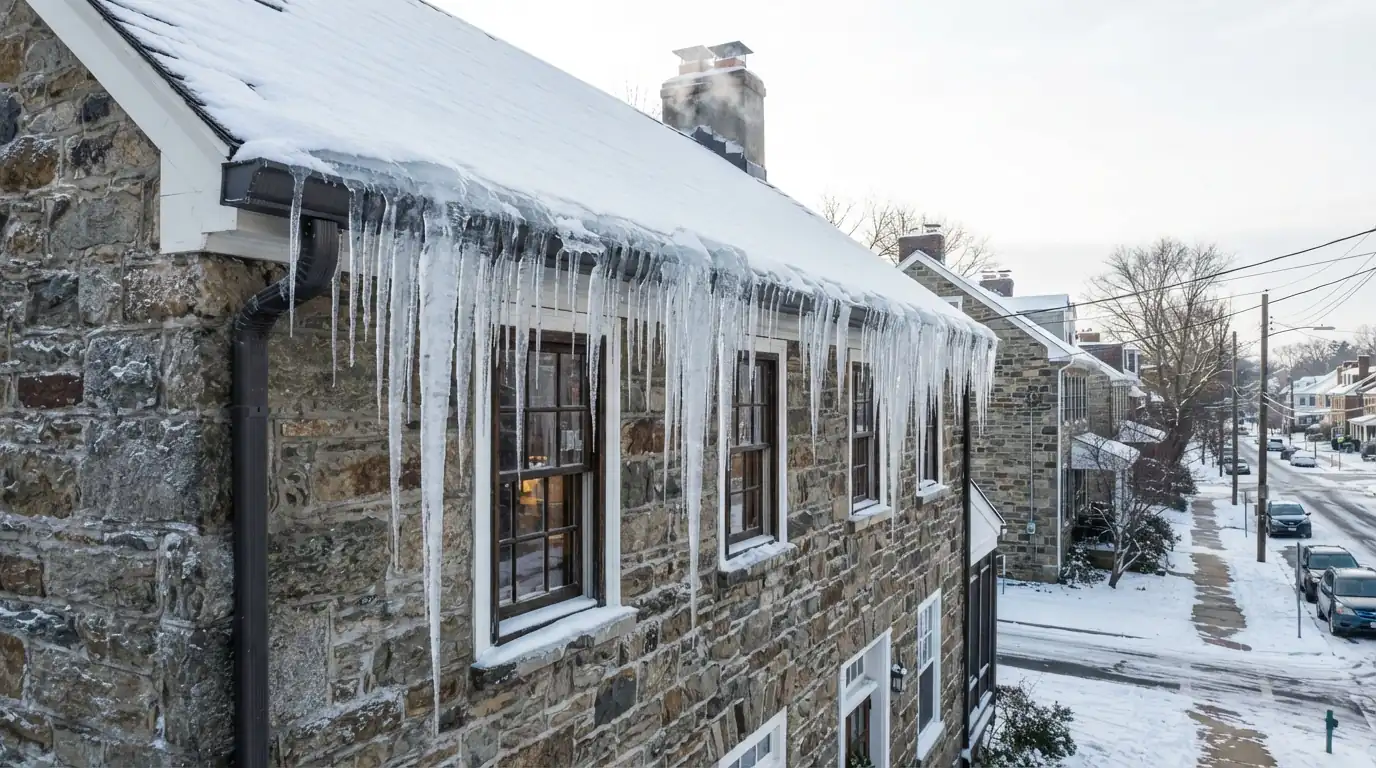
Shingles shed water running downhill; they are not built to hold back standing water. The pool behind the dam works under the shingle courses and into the house, usually showing as a stain along the top of an exterior wall.
Why It Happens on Some Philadelphia Roofs
Philadelphia averages about 22 inches of snow a year, and freeze-thaw cycles run from November through March, which is exactly the cycle ice dams feed on. They form on pitched roofs, so they are a Far Northeast, Northwest and suburban problem more than a rowhome one; flat roofs have their own winter issues with drains and scuppers.
Houses with finished rooms under the slope, recessed lights in top-floor ceilings, or attics without clear ventilation from soffit to ridge get them first, because that is where the most heat reaches the deck.
Removing an Ice Dam Safely
Low-pressure steam cuts channels through the ice so water drains, then the dam is removed in blocks without touching the shingles. Hammers, picks and pressure washers break shingles and tear gutters loose, and salt or chemicals stain siding, kill plants and corrode metal. Heat cable can keep a channel open but treats the symptom.
From the ground, you can safely rake snow off the lower few feet of the roof with a long-handled roof rake, which removes the fuel for the dam. Anything on a ladder over ice is a job for a roofer. See ice dam removal for how steaming works.
Stopping Them Coming Back
The long-term fix is keeping the roof deck cold. That means sealing the air leaks from the living space into the attic, adding insulation on the attic floor, and giving the attic balanced ventilation: intake at the soffits and exhaust at the ridge, with baffles so insulation does not block the soffit vents.
On the roof itself, a self-adhered ice and water barrier along the eaves stops backed-up water from reaching the deck. Many older roofs were built without it; it goes in during a replacement or as a retrofit of the lower courses. Our roof ventilation page covers the attic side.

Ice at the eaves and a wet wall inside?
Call and we steam the dam open safely.
What Ice Dams Do to Gutters and Walls
Ice is heavy. A gutter packed with ice pulls on its hangers and the fascia behind them, and it is common to find gutters bent, pulled loose or split after a hard winter. Meltwater that gets behind the gutter soaks the fascia and soffit, and water that gets past the shingles runs down inside the wall, where it can stain plaster, soak insulation and feed mold before anyone sees a drip.
After an ice dam winter, have the gutters and the roof edge checked in spring. See gutter repair for the fixes.
A Winter Checklist for Pitched Roofs
Before and during winter, a few habits keep ice dams small:
- Clean gutters in late fall so meltwater can drain
- Keep a roof rake for the lower few feet of snow
- Look in the attic for frost on nails or damp decking
- Seal air leaks around attic hatches, lights and pipes
- Keep snow off vents and away from skylights
- Call before ice builds to the point of leaking
What to Do If Water Is Already Inside
Protect the room, catch the drips, and photograph the stains and the ice from outside. Do not climb onto an icy roof. Call to have the dam steamed open; once water can drain, the leak usually stops. Wet insulation and ceilings are then dried or replaced, and many homeowners policies treat interior water damage from an ice dam differently from the dam itself, so check your policy.
Common Questions
Not always, but long icicles along the eave usually mean meltwater is refreezing there.
No. It damages shingles and gutters and is dangerous on a ladder.
It can keep a channel open, but it does not fix the heat loss causing the dam.
Only if ice barrier goes in at the eaves and the attic heat loss is fixed as well.
Not in the same way. Flat roofs need clear drains and scuppers through winter instead.
Air sealing and ventilation work best done before the next winter.