White TPO Flat Roofs Installed in Philadelphia
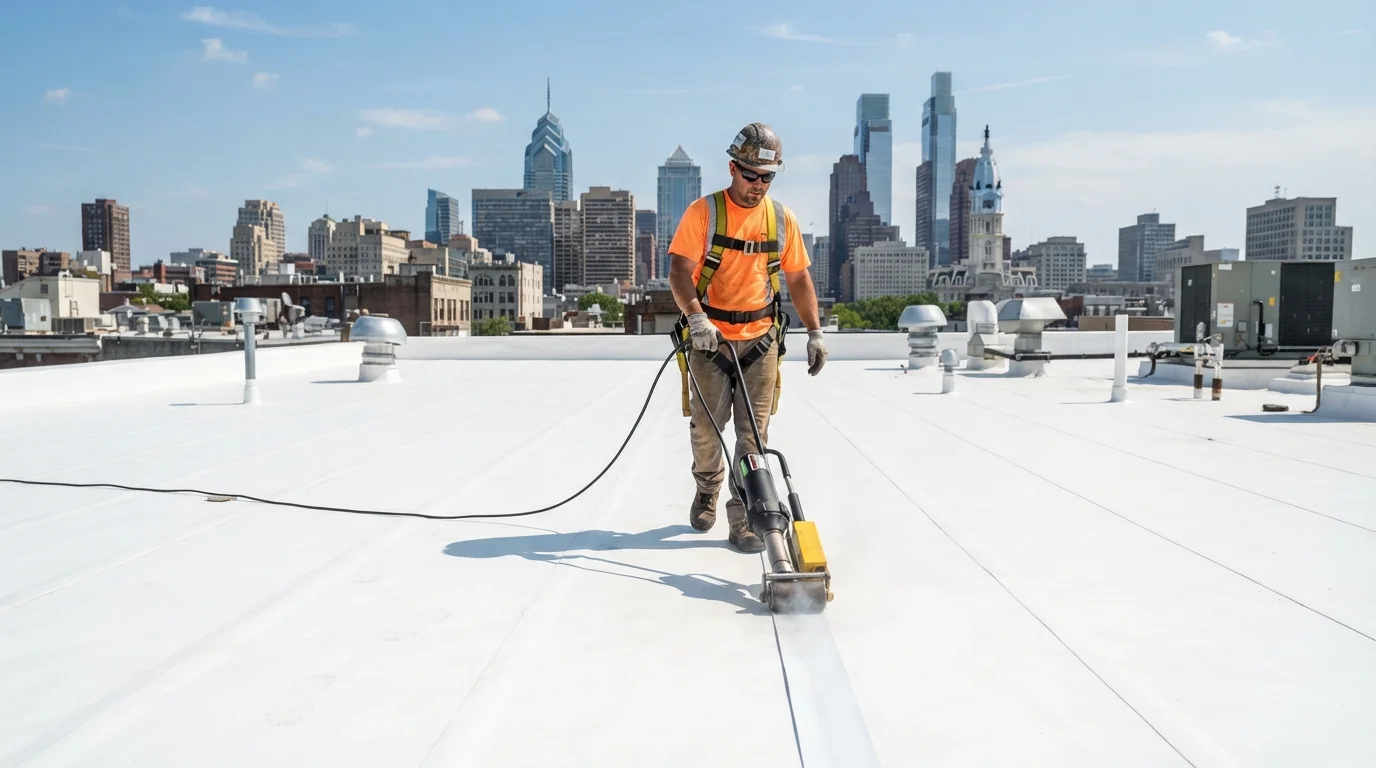
TPO is a white single-ply membrane with seams welded by hot air instead of glued. On a sunny rowhome roof it keeps the top floor cooler, and on commercial roofs it is the most common choice.
TPO roofing in Philadelphia costs about $7 to $10 per square foot installed on a typical rowhome, according to 2026 local figures. It is a white, heat-welded membrane that reflects summer sun, and it suits flat roofs with good drainage. We install it fully adhered or mechanically fastened, depending on the deck and the building.
What Makes TPO Different From Other Flat Roofs
TPO, thermoplastic polyolefin, comes in wide white sheets. Where two sheets overlap, a hot-air welder melts them together, so the seam becomes part of the membrane rather than a glued joint. That welded seam is TPO's main advantage over EPDM.
The white surface reflects sunlight instead of absorbing it, which matters on a flat roof sitting directly over a bedroom. The tradeoff is that TPO needs careful detailing at every penetration and edge, and it is less forgiving of sloppy work than modified bitumen.
What Moves the Price of a TPO Roof
- Membrane thicknessThicker sheets cost more and resist punctures better.
- Attachment methodFully adhered uses more adhesive; fastened uses more labor on the deck.
- Insulation and slopeTapered board to fix ponding adds material.
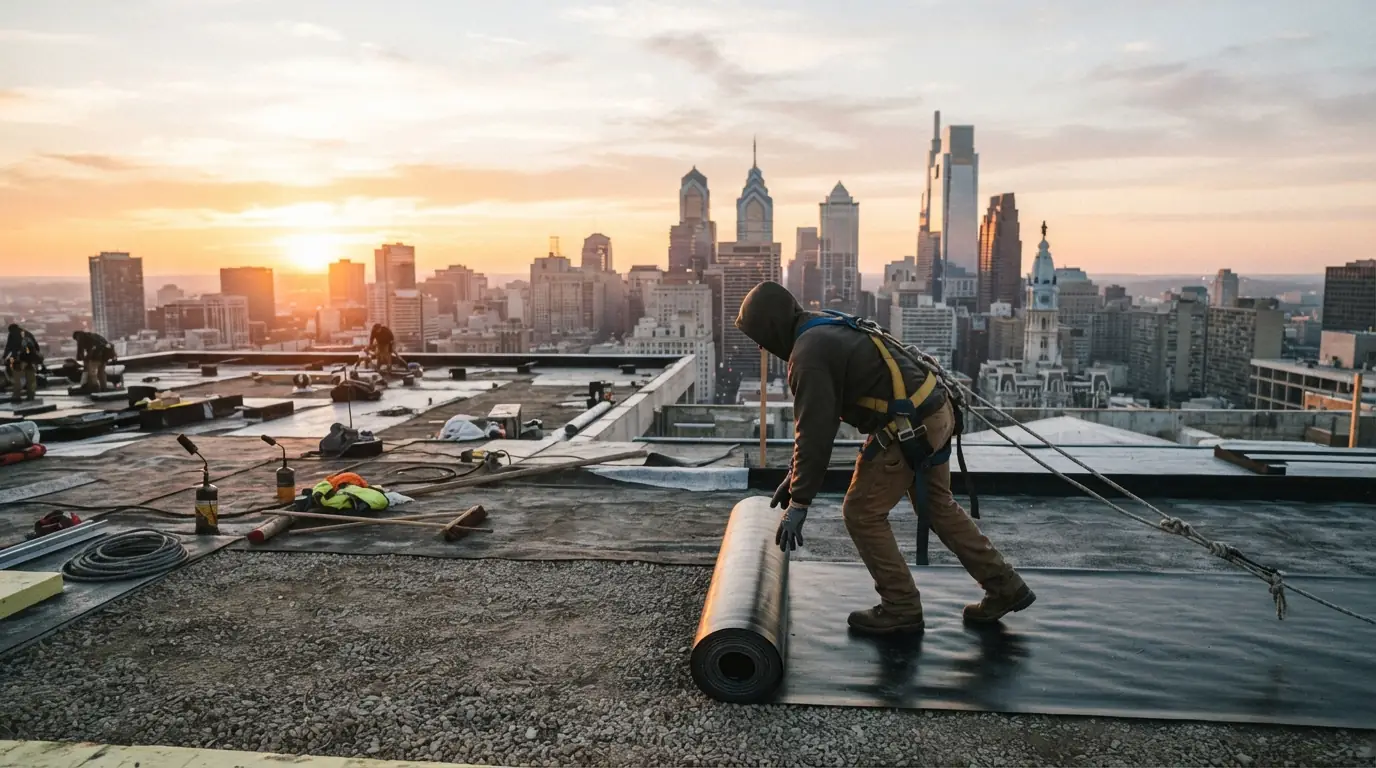
- Tear-offOld layers have to come off before TPO goes down.
- Penetrations and edgesPipes, units, skylights and parapets add detail time.
For commercial roofs, a 2026 Philadelphia guide puts 60 mil TPO at $6.64 to $10.26 per square foot installed. These are market planning figures, not our quote.
Fully Adhered TPO Installation
In a fully adhered system the TPO sheet is glued to a cover board or insulation across its whole surface. The result is a smooth roof with no flutter in the wind and no fastener lines, which suits rowhome roofs with foot traffic and roof decks. It takes more adhesive and a dry, warm enough day to cure, so it is scheduled around the weather. Most residential TPO we install in the city is fully adhered, over tapered insulation where the roof needs slope.
Mechanically Attached TPO
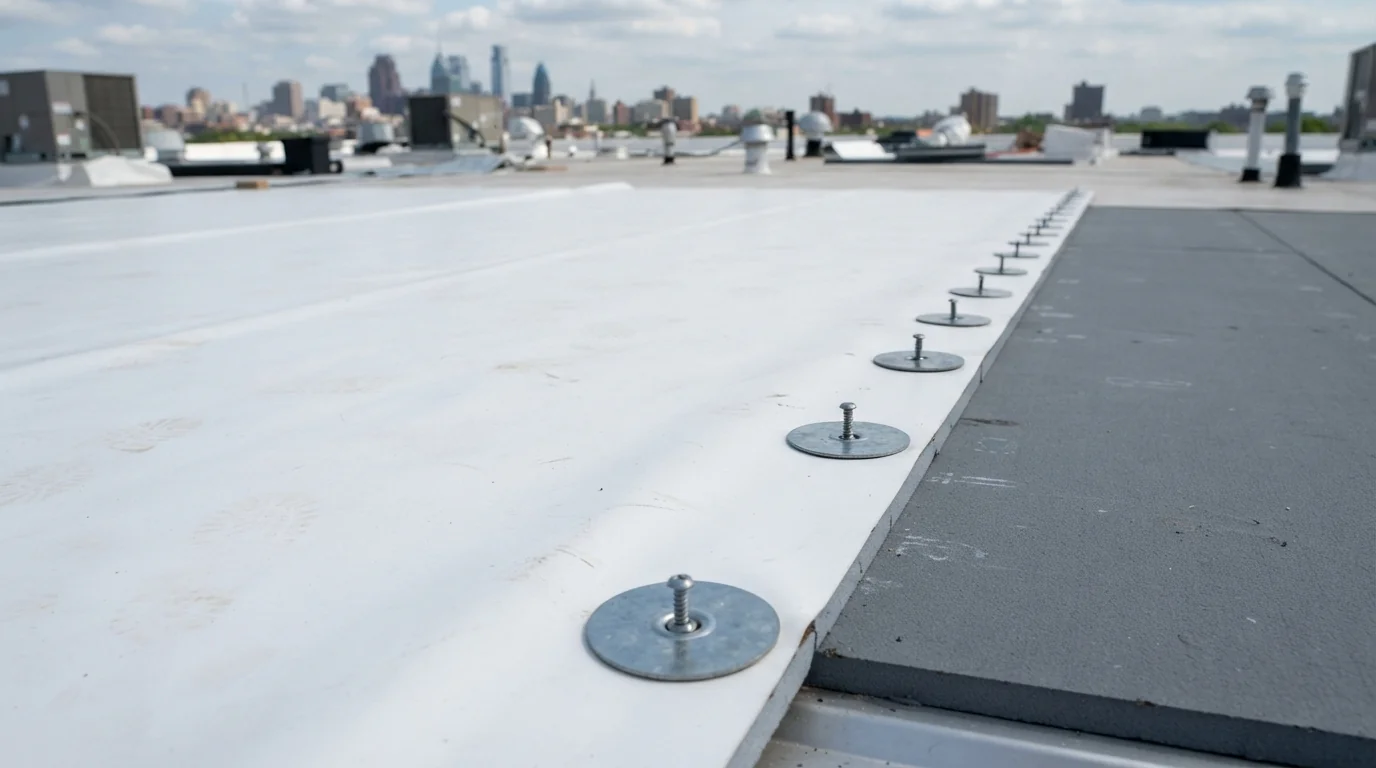
In a mechanically attached system the sheet edges are screwed to the deck through plates, and the next sheet overlaps and is welded over the fasteners. It installs faster, works in cooler weather, and is common on larger commercial and warehouse roofs with steel or concrete decks. On small residential roofs the savings are small and the adhered method usually gives a better finish. The deck has to hold screws well, so we check how well it holds a fastener before choosing this route.
TPO Seam Welding and Detail Work
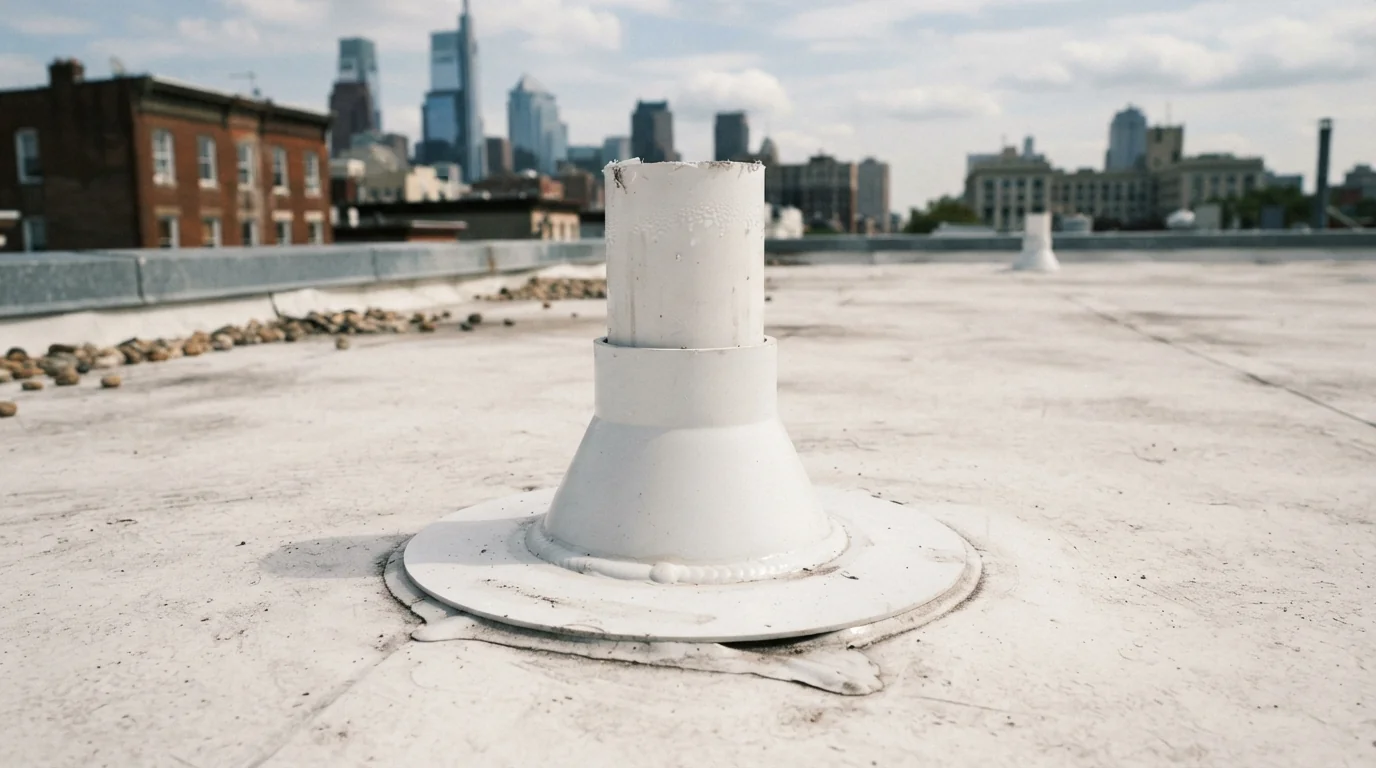
Seams and details are where TPO roofs succeed or fail. Every seam is hot-air welded and then probed along its full length with a hook tool to find cold spots the welder missed. Pipes get prefabricated TPO boots, corners get molded pieces, and parapets are flashed with membrane welded to the field sheet and run under the coping. Brands we install include GAF, Carlisle, Firestone and Johns Manville, each with its own detail requirements, which we follow so the manufacturer's warranty stays valid.
Brands we install and service
What a TPO Roof Installation Includes
TPO bids vary most in what they leave out. Ours includes all of this.
- Permit filed before work starts
- Tear-off to the deck where required
- Soft decking replaced
- Tapered insulation where water ponds
- Cover board under the membrane
- Hot-air welded, probed seams
- Prefabricated boots and corners
- Parapet flashing under the coping
- Edge metal, scuppers and cleanup
Want a cooler top floor next summer?
Call and we price a white TPO roof for your house or building.
What We See on Philadelphia Roofs
A typical Philadelphia rowhome roof runs roughly 800 to 1,400 square feet, and because the roof is flat its area is close to the footprint, so a TPO job here is small by commercial standards. City work also carries costs the suburbs do not: tight rowhome access, permitting, disposal and parking all add labor, which is why published city prices run higher than in Montgomery County or Bucks County.
How a TPO Roof Gets Installed
- 1
Measure and inspect
Area, deck, drainage and every penetration noted.
- 2
Choose thickness and method
Adhered or fastened, and the membrane thickness.
- 3
Permit and delivery
Permit filed, rolls and board hoisted to the roof.
- 4
Tear-off and insulation
Old roof off, deck repaired, tapered board laid.
- 5
Membrane and welding
Sheets laid, seams welded and probed.
- 6
Details and cleanup
Boots, corners, coping, edge metal, then cleanup.
TPO Roofing Questions
Not always. TPO has welded seams and a white surface; EPDM has a longer local track record and forgiving repairs. Drainage matters more than the label.
It reflects much of the sun a black roof absorbs, so the top floor runs cooler in summer. The effect is largest on flat roofs directly over living space.
Yes, with care. For regular foot traffic we add walkway pads along the path to units or a roof deck.
It dulls with city grime over time. A gentle wash restores much of the reflectivity.
Yes. Clean TPO can be patched by welding new membrane over the damage, which is one of its strengths.
More Replacement & Installation Work in Philadelphia
From our guides: TPO, EPDM or Modified Bitumen for a Rowhome Roof?
Get a White Flat Roof Done Right
Call for a TPO quote. We measure, check the deck and plan the drainage before we price it.