By Fern Goddard, Roofing Guides EditorUpdated September 2026
On a Philadelphia rowhome, modified bitumen is the traditional choice and handles foot traffic best, EPDM rubber is the lowest-cost single-ply with few seams, and TPO is a white heat-welded membrane that keeps the top floor cooler. Published local figures put EPDM at $6 to $9 and TPO at $7 to $10 per square foot installed.
Modified Bitumen: The Rowhome Standard
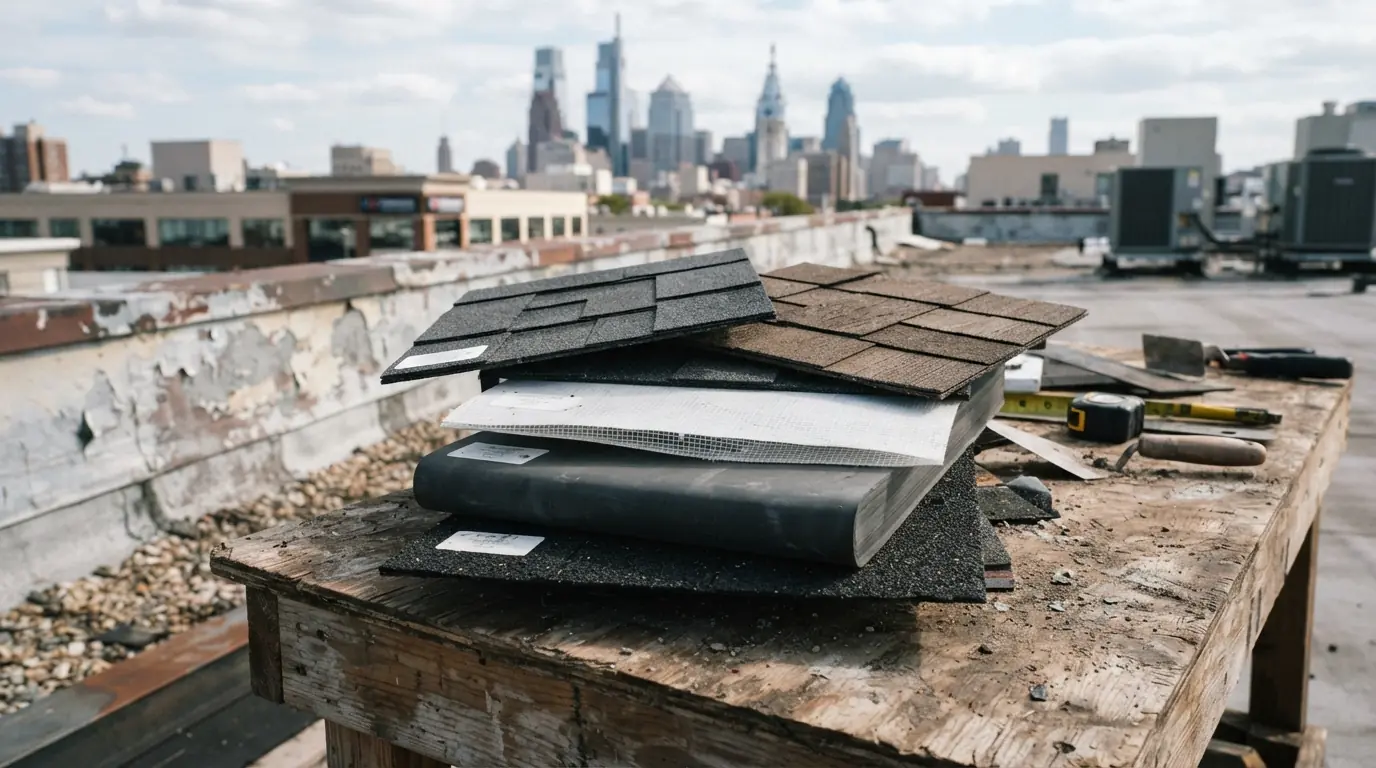
Modified bitumen is asphalt reinforced with polymers and fabric, laid as a base sheet and a cap sheet, and finished with a silver coating or granules. It is the standard residential membrane on Philadelphia rowhomes, with a typical 15 to 20 year service life, and published local figures put it at $3.50 to $4 per square foot installed.
Its strengths are toughness underfoot and familiarity: almost every roofer in the city can repair it. Its weakness is seams, since it comes in narrow rolls, and the torch-down version needs care near wood and neighboring roofs. See modified bitumen roofing for the details.
EPDM Rubber: Few Seams, Easy Repairs
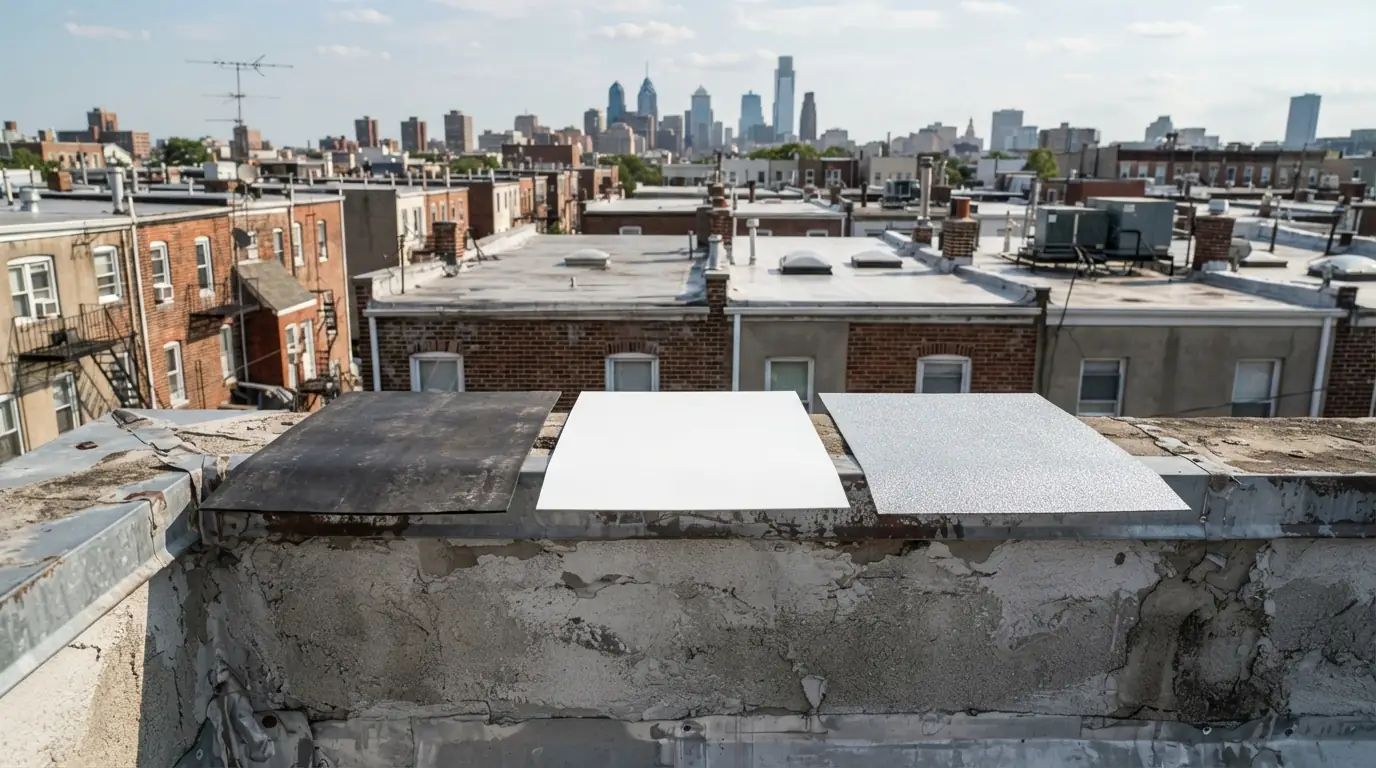
EPDM is a black synthetic rubber sheet that comes in wide pieces, so a narrow rowhome roof may need only one or two seams, closed with seam tape. Published Philadelphia figures put it at $6 to $9 per square foot installed. It stays flexible in cold weather and is one of the easiest membranes to patch later.
The tradeoffs are heat and traffic. A black roof absorbs sun over the top floor, and EPDM is softer underfoot than modified bitumen, so roof decks need pavers or sleepers on protection pads. Our EPDM page covers installation.
TPO: White, Welded and Cooler
TPO is a white single-ply sheet whose seams are melted together with hot air, so each seam becomes part of the membrane. Published Philadelphia figures put it at $7 to $10 per square foot installed for rowhomes. The white surface reflects sun, which matters on a flat roof sitting directly over a bedroom.
TPO demands careful detailing at every pipe, corner and parapet, and it shows city grime over time. It is also the most common choice on commercial roofs, so parts and repair skills are widely available. See TPO roofing.
What Matters More Than the Label
Drainage decides how long any of the three lasts. A roof that holds water for days will fail at its seams whatever the membrane, so a replacement should include tapered insulation or drain work where water ponds. The details at the parapets, scuppers and the neighbor's roof matter as much as the sheet in the middle.
Think about use, too. If you walk the roof to a deck or a condenser, modified bitumen or walkway pads on single-ply make sense. If the top floor overheats every summer, TPO earns its price. If budget is tight and the roof drains well, EPDM is a solid choice.
Pricing all three for your roof?
Call and we measure it and price each membrane side by side.
How Each One Is Repaired Later
Repairs matter because every roof needs them eventually. EPDM is patched with primer and seam tape, which is quick and forgiving on a clean surface. TPO is repaired by heat-welding a new piece of TPO over the damage, which bonds well while the old membrane is still clean and supple. Modified bitumen takes new plies torched or adhered over the damaged area, and it is the membrane most roofers in the city know best.
Roof cement is the wrong repair for all three. On rubber and TPO it does not bond; on modified bitumen it buys a season at most.
Questions to Ask Before You Choose
Put these to any roofer quoting a rowhome membrane:
- How will you fix the spots where water ponds today?
- How will you tie into each neighbor's roof at the party wall?
- How will the parapets be flashed and capped?
- What thickness of membrane, and is it fully adhered?
- Will the old roof come off to the deck, and how many layers are there?
- What will you do if you find soft decking?
Mixing Membranes on Attached Rows
Your roof will meet your neighbors' roofs, and they may be different membranes. That is normal, but the joint needs a compatible transition, often a strip of modified bitumen or a flashing detail designed for both materials. Ask how the roofer plans to tie in at each party wall before you choose; it is one of the most common places for a new roof to leak.
Common Questions
It depends more on drainage and installation than the label. A well-drained roof of any of the three lasts well.
If the top floor overheats in summer, often yes. Otherwise EPDM is a sound, lower-cost choice.
Only over a single dry, sound layer. With two layers already on, the city requires a tear-off.
It is likely modified bitumen with an aluminum coating that reflects sun and protects the asphalt.
Yes, over a membrane with sleepers or pedestals, if the structure is designed for it.
Many do. Ask which they install most often and how they flash parapets for each.