Commercial Roofs Installed in Philadelphia
A commercial roof has to be installed without shutting the business below it. We plan tear-off sections, rooftop unit work and deliveries around your hours, and install a system suited to the building's use.
Commercial roofing in Philadelphia usually means a single-ply membrane such as TPO or EPDM, modified bitumen, or metal over a low-slope deck. A 2026 Philadelphia guide puts 60 mil TPO at $6.64 to $10.26 per square foot installed. Replacement and recover work goes through permit review, and we phase the job so the building stays open.
What a Commercial Roof Project Involves
Commercial roofs are larger, flatter and busier than residential ones. Rooftop units, exhaust fans, gas lines, drains and hatches all pass through the membrane, and each is a detail that has to be flashed to the manufacturer's specification.
We start with a survey: core cuts to find what is under the current roof, moisture checks, drain locations and a count of every penetration. That decides between a full tear-off and a recover over the existing roof. We install commercial systems from manufacturers including Carlisle, Firestone, Johns Manville and GenFlex.
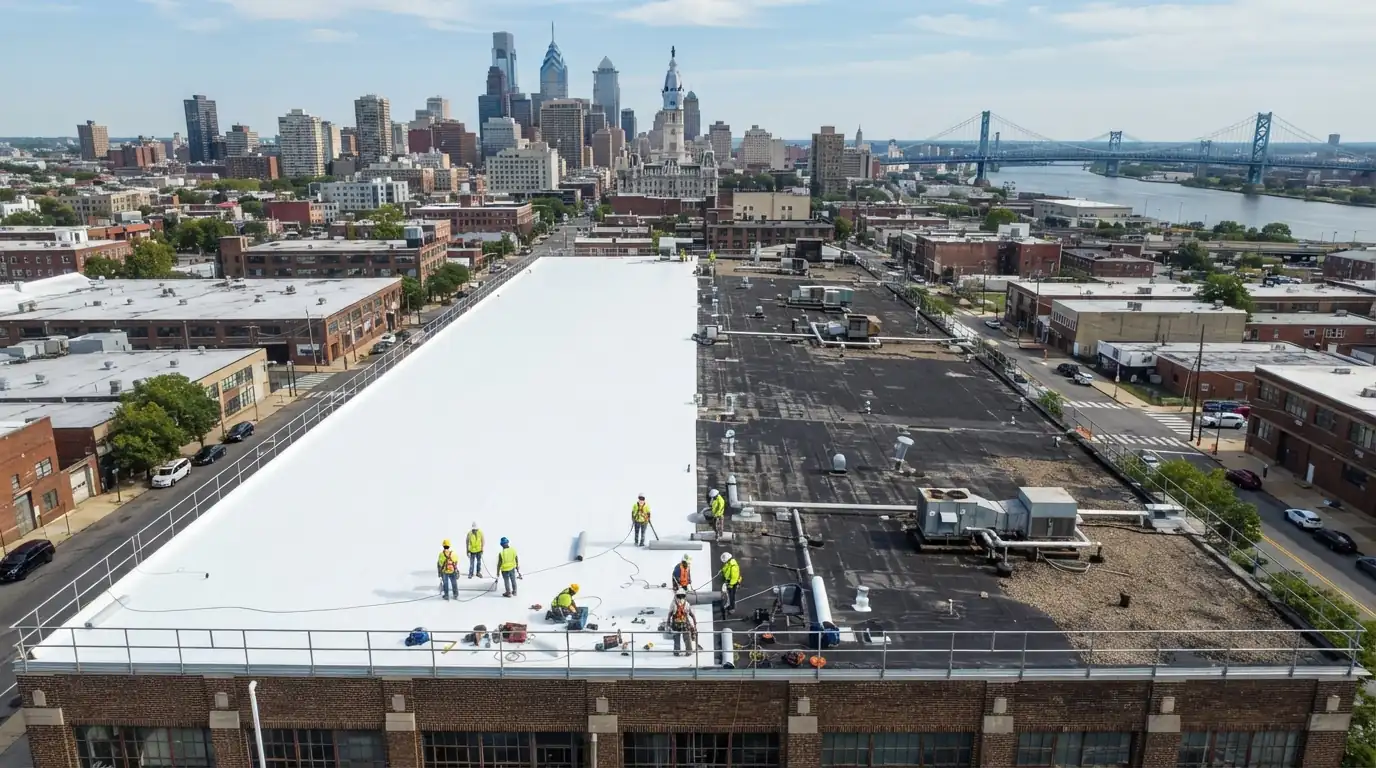
What Sets the Price of a Commercial Roof
- Tear-off or recoverRemoving old layers costs more than recovering a sound roof.
- Membrane and thicknessTPO, EPDM, mod bit or metal, and the specified mil.
- InsulationRequired values and tapered slope add material.
- Penetrations and unitsEach curb, drain and fan is a detail.
- Phasing and accessOccupied buildings and tight city sites need planning.
The 2026 Philadelphia figure for 60 mil TPO, $6.64 to $10.26 per square foot installed, is a market planning range, not our quote.
Retail and Office Roof Installation
Retail and office buildings are occupied while we work, so noise, odors, and access are part of the plan. We schedule tear-off sections that can be closed the same day, keep adhesives and torches away from air intakes when units are running, and route material lifts and dumpsters away from customer entrances and loading areas. Most of these roofs get a TPO or EPDM membrane over new insulation board, with rooftop unit curbs and drains flashed to the membrane manufacturer's details.
Warehouse and Industrial Roofing
Warehouses and industrial buildings have large, simple roof fields, often over steel deck, with skylights, exhaust fans and long runs of edge metal. Mechanically attached TPO is common here because it installs quickly over big areas and in cooler weather. Where the existing roof is dry and sound, a recover over it can avoid a tear-off; core cuts and a moisture survey decide that. We also check that skylights and roof hatches meet current fall-protection needs whenever they are replaced.
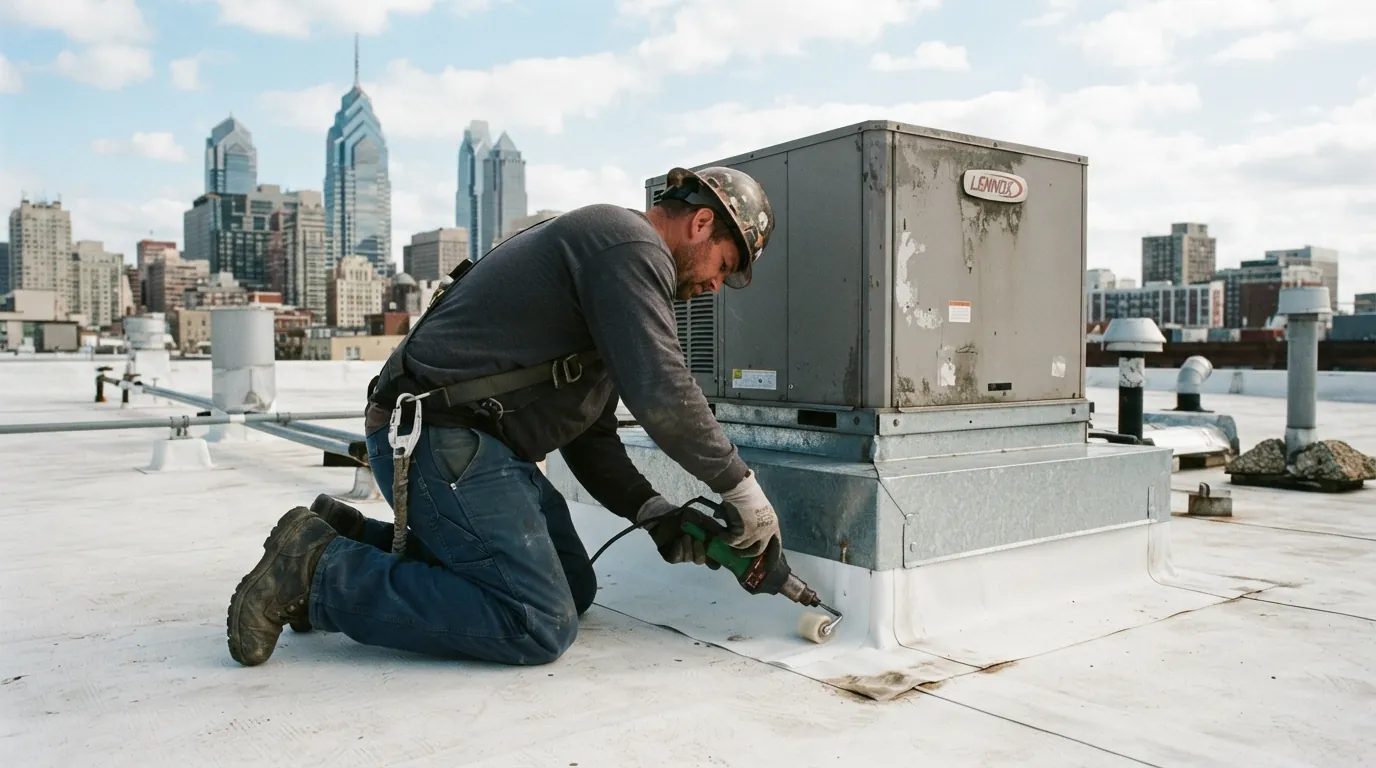
Mixed-Use Building Roofing
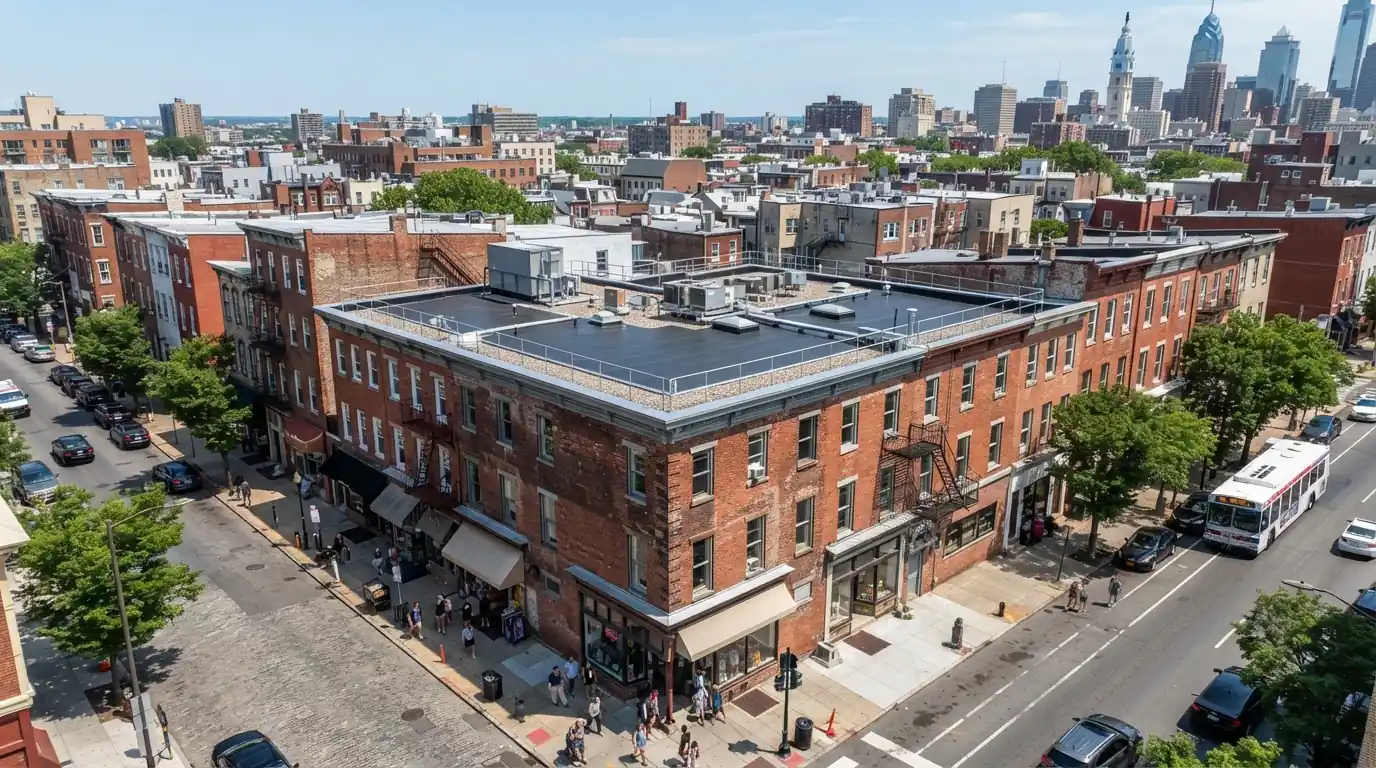
Philadelphia's corner buildings with shops below and apartments above combine commercial and residential needs on one roof. Tenants upstairs are home during the day, the storefronts below need clear access for customers and deliveries, and the roof often carries old parapets, chimneys and a mix of past repairs. We plan the work around both, install a membrane suited to the roof's traffic and drainage, and rebuild the parapet and coping details that usually cause the leaks on these older masonry buildings.
Brands we install and service
What a Commercial Roof Project Includes
Commercial bids vary widely in scope. Ours spells out all of this.
- Core cuts and moisture survey
- Permit and product documentation
- Phased tear-off or approved recover
- Insulation to the specified value
- Tapered slope where water ponds
- Membrane and seam inspection
- Rooftop unit curbs and penetrations flashed
- Edge metal, coping and drains
- Daily cleanup around the building
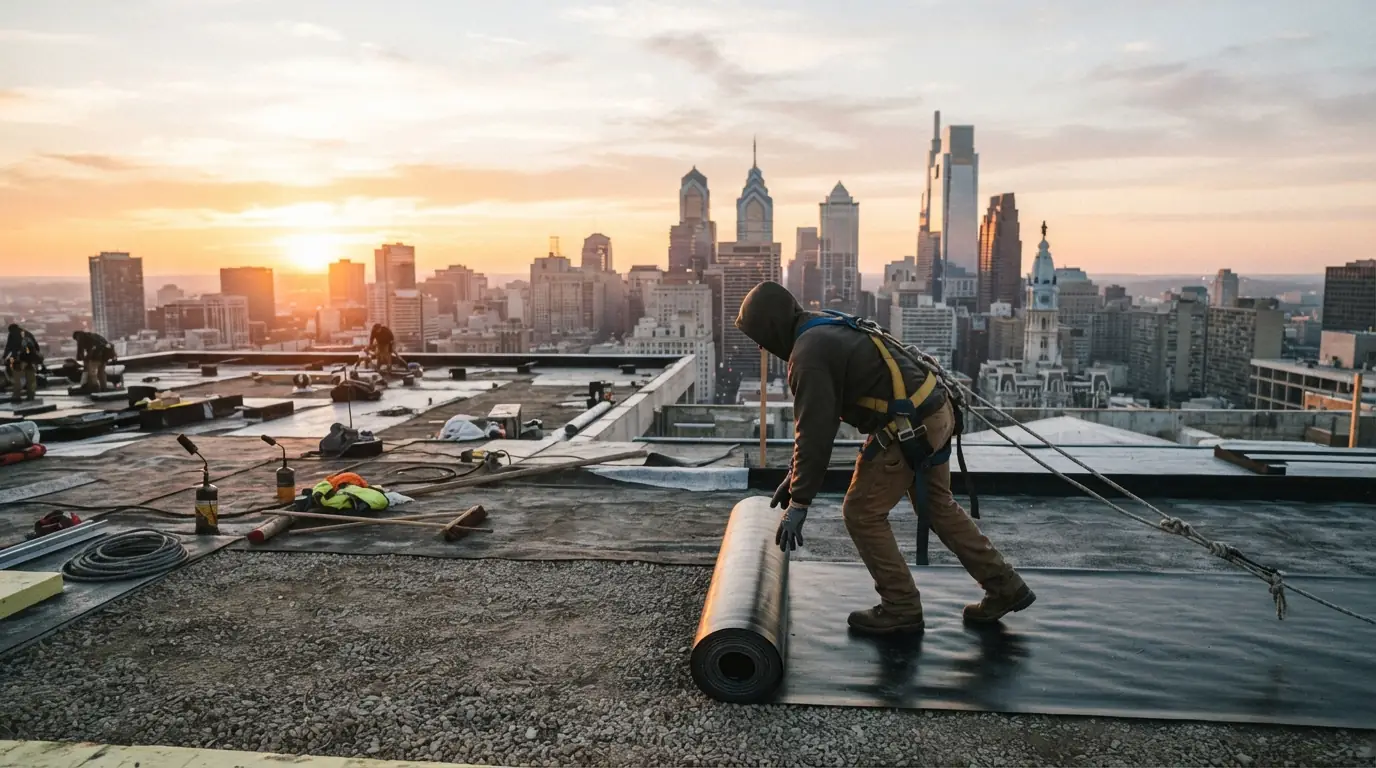
Planning a commercial re-roof?
Call and we survey the roof and scope the options.
What We See on Philadelphia Roofs
For commercial roofs in Philadelphia, the main climate stress is snow load combined with thermal cycling and seasonal moisture, which is why insulation, drainage and seam quality matter more here than in warmer markets. Replacement and recover work generally goes through permit review with product documentation. City jobs also carry access, disposal and parking costs that suburban work avoids, and we plan staging and dumpster placement before the start date.
How a Commercial Re-Roof Runs
- 1
Survey the roof
Cores, moisture checks, drains and penetrations mapped.
- 2
Proposal
System, scope, phasing and schedule in writing.
- 3
Permits and submittals
Permit filed, product data provided.
- 4
Phased installation
Sections torn off and closed the same day.
- 5
Details and inspection
Units, drains and edges flashed, seams checked.
- 6
Close-out
Photos, product details and warranty paperwork.
Commercial Roofing Questions
Usually, yes. We phase the work and close each section daily.
A recover works when the existing roof is dry and within code limits. Core cuts and a moisture survey decide.
It depends on traffic, drainage, deck type and budget. TPO is the most common choice today.
Yes. Units often need lifting or disconnecting, and we schedule around that.
Yes. See our roof maintenance service for scheduled inspections.
More Flat & Commercial Work in Philadelphia
From our guides: Roofing Permits Outside Philadelphia
Re-Roof Without Closing the Building
Call to schedule a roof survey. We scope it around how the building is used.