By Fern Goddard, Roofing Guides EditorUpdated September 2026
In the Pennsylvania suburbs, each municipality administers the state's Uniform Construction Code itself or through a third-party agency, and many townships require a permit for residential re-roofing, often exempting small repairs under a quarter of the roof. In New Jersey, each town's construction office enforces the state code. Structural work, such as replacing rafters, needs a permit almost everywhere.
Why the Rules Change at the Township Line
Pennsylvania's Uniform Construction Code is a statewide code, but it is administered locally. Each township or borough enforces it through its own code officials, a third-party inspection agency or an agreement with neighboring municipalities. That is why the forms, fees and inspection schedules in Bensalem are not the same as in Abington, Norristown or Upper Darby, even though the code behind them is the same.
What the State Code Says About Re-Roofing
Under the Uniform Construction Code alone, a residential re-roof does not need a building permit, but the work still has to meet the code. Structural work is different: replacing rafters, trusses or other framing needs a permit. So the state code sets a floor, and many municipalities build on it.
Why Many Townships Still Require a Permit
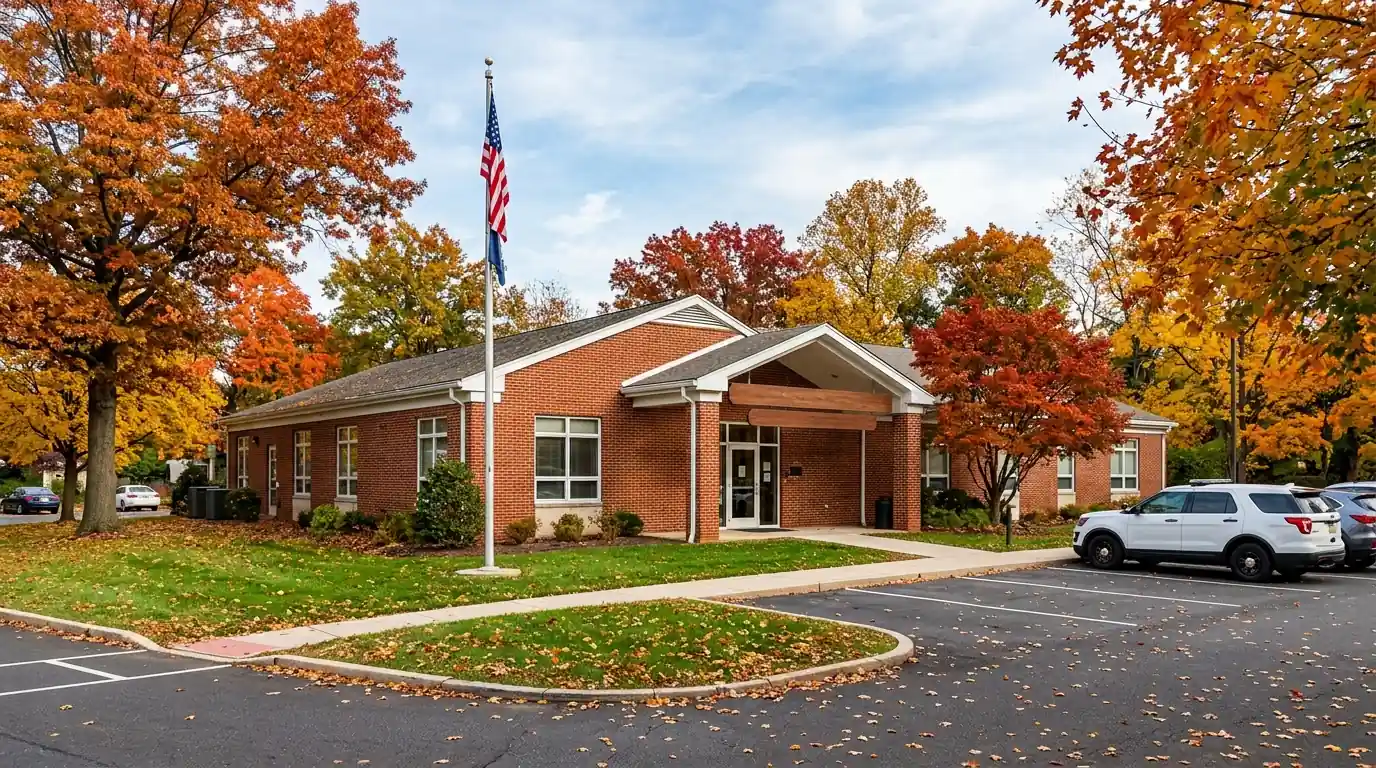
A 2004 change to the law let municipalities require permits for residential work the state code exempts. Many townships in the Philadelphia suburbs did exactly that for re-roofing, while keeping small repairs exempt. A common pattern in township ordinances is that re-roofing less than 25% of the roof needs no permit, while a full re-roof does. The only way to be sure is to check the ordinance for the address.
New Jersey Towns
Across the river, New Jersey's Uniform Construction Code is enforced through each municipality's construction office. Cherry Hill, Camden, Willingboro and Deptford each handle their own permits and inspections. As in Pennsylvania, structural repairs and changes to the roof framing are the clearest cases where a permit is required.
Not sure what your township requires?
Call and we check the permit for your address.
What to Ask Before Work Starts
Ask which office covers the address, whether a full re-roof needs a permit there, whether replacing decking or framing changes that, and whether an inspection is required before or after the new roof goes on. On historic properties, also ask whether visible changes need review. A roofer working in the area should handle the filing, but it is reasonable to ask to see the permit.
Levittown and Other Split Addresses
Some well-known places are not municipalities at all. Levittown, for example, spreads across Bristol, Falls, Middletown and Tullytown townships, and King of Prussia sits within Upper Merion Township. The permit always comes from the municipality the house is actually in, not from the name on the mailing address.
Inside the City, for Comparison
In Philadelphia itself, Licenses and Inspections issues an EZ re-roofing permit for new coverings on existing roofs, with exceptions for historic-listed buildings and for work that goes beyond the covering. Once a roof carries two layers, a full tear-off to the deck is required. The suburbs follow their own versions of these rules, which is why a contractor used to the city still has to check every township.
Common Questions
Not always; it depends on the township's ordinance. Many require one for a full re-roof.
Often. Many townships exempt re-roofing of less than a quarter of the roof.
Replacing framing such as rafters does; decking rules vary by township.
Bristol, Falls, Middletown or Tullytown township, depending on the address.
Each town's construction office enforces the state code and issues its own permits.
Yes. We check the requirement for your address and file what the job needs.