Storm Damaged Roofs Repaired in Philadelphia
After a bad storm the obvious damage is on the lawn. The damage that causes leaks later is harder to see: creased shingles, bruised granules, and flashing lifted just enough to let water in next time.
Storm damage to Philadelphia roofs usually means wind-lifted or torn shingles, peeled flat roof edges, hail bruising, or impact from limbs. The National Weather Service treats winds of 58 mph and hail of 1 inch or larger as severe. We inspect the whole roof after a storm, photograph what we find, and repair it with matching materials.
What a Post-Storm Inspection Looks For
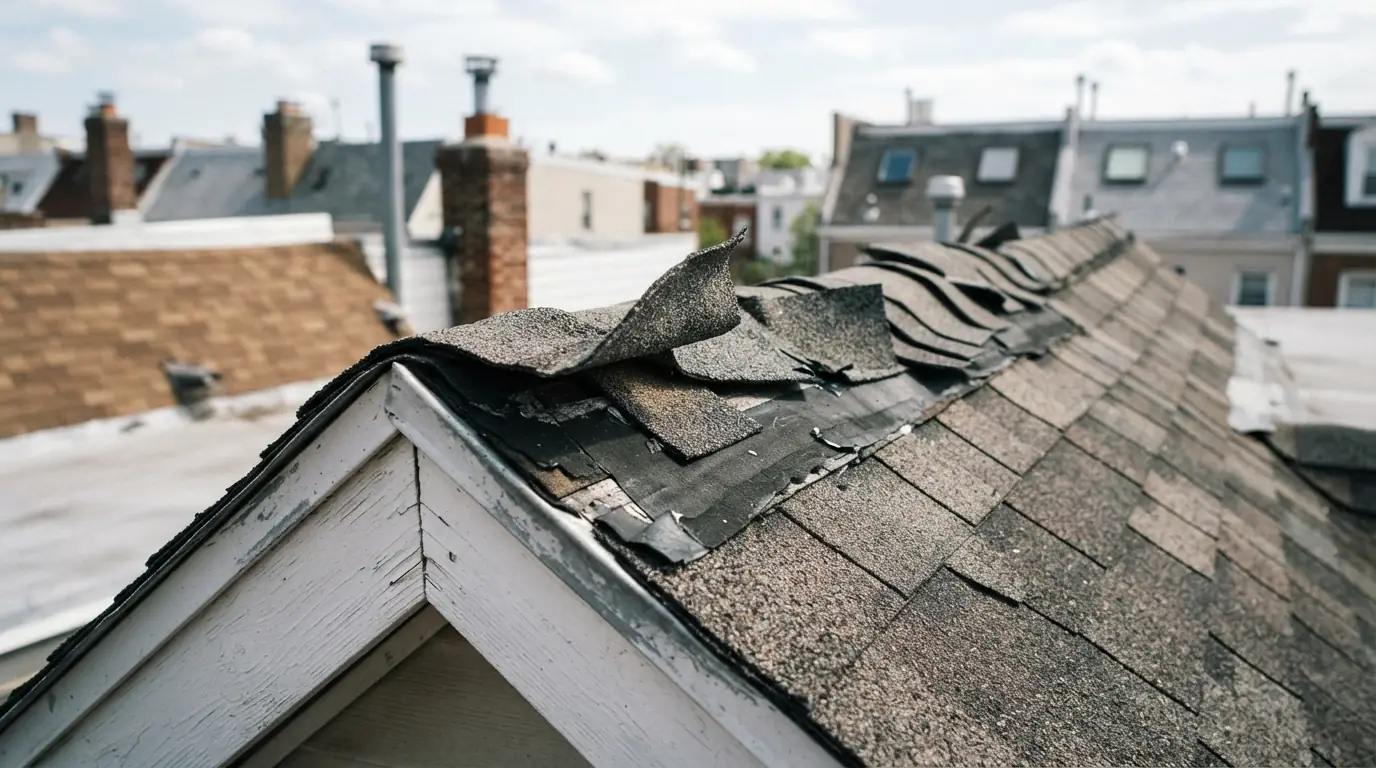
Wind rarely tears a whole roof off. It lifts the edges: shingle tabs along the rakes and ridge, the perimeter of a flat membrane, loose flashing at walls. A tab that lifted and fell back looks fine from the street but has lost its seal.
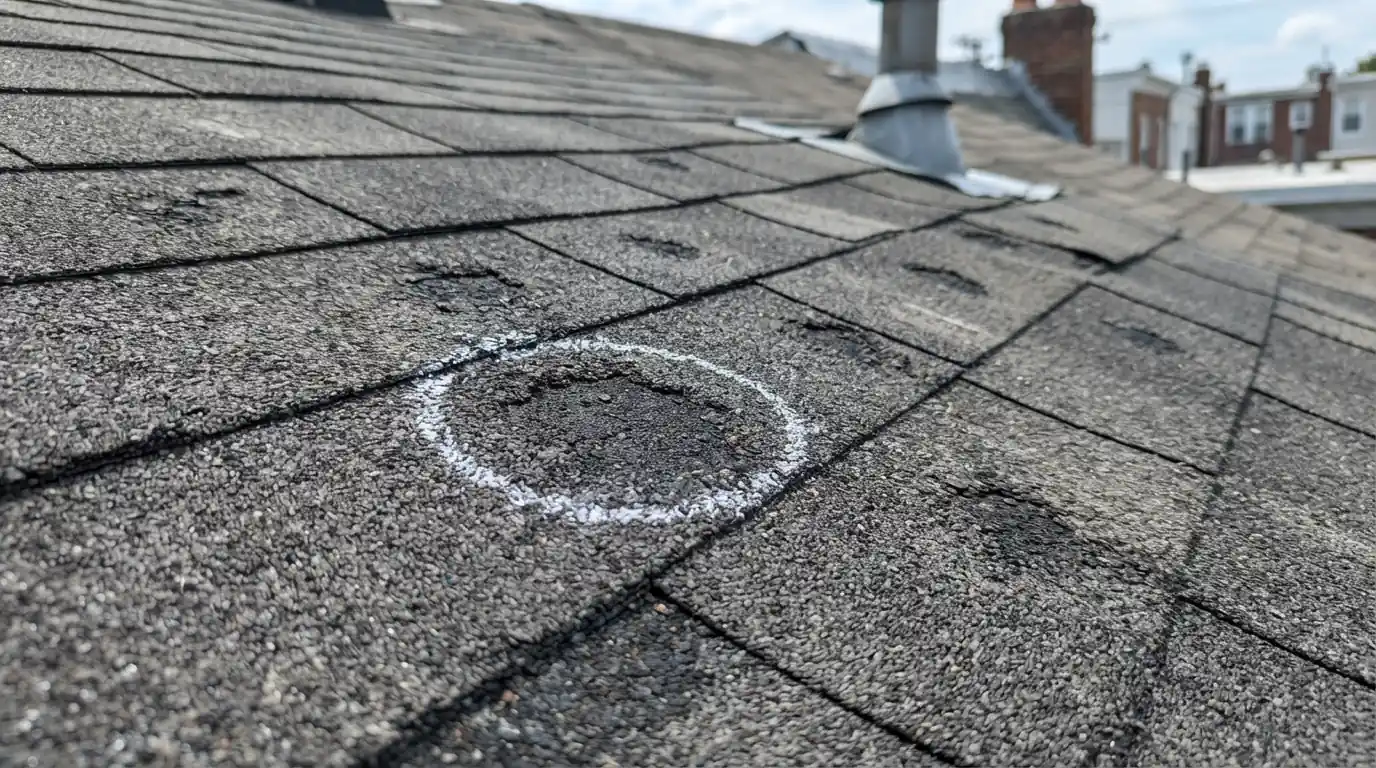
Hail leaves dents in soft metal and bruises in shingles, dark spots where granules were knocked off. We check gutters, vents and flashing for dents first, because they show whether hail was large enough to damage the roof itself.
Signs a Storm Damaged Your Roof
Shingle pieces in the yard
Some tabs came off; others may be loose.
Dented gutters or vents
Hail was big enough to mark metal.
Granules piled at downspouts
Shingles took a beating.
Lifted flat roof edges
Wind got under the membrane.
New ceiling stains
Water found a new way in.
Branches on the roof
Check for punctures before the next rain.
How We Handle Storm Damage
- 1
Call after the storm
Tell us what fell and whether water is coming in.
- 2
Protect first
Openings tarped or sealed if needed.
- 3
Full inspection
Every slope, edge, vent and gutter checked.
- 4
Photo report
Dated photos and a written list of damage.
- 5
Repair
Matching shingles, membrane or metal, as found.
- 6
Final check
Roof rechecked and debris cleared.
Wind Damage Repair
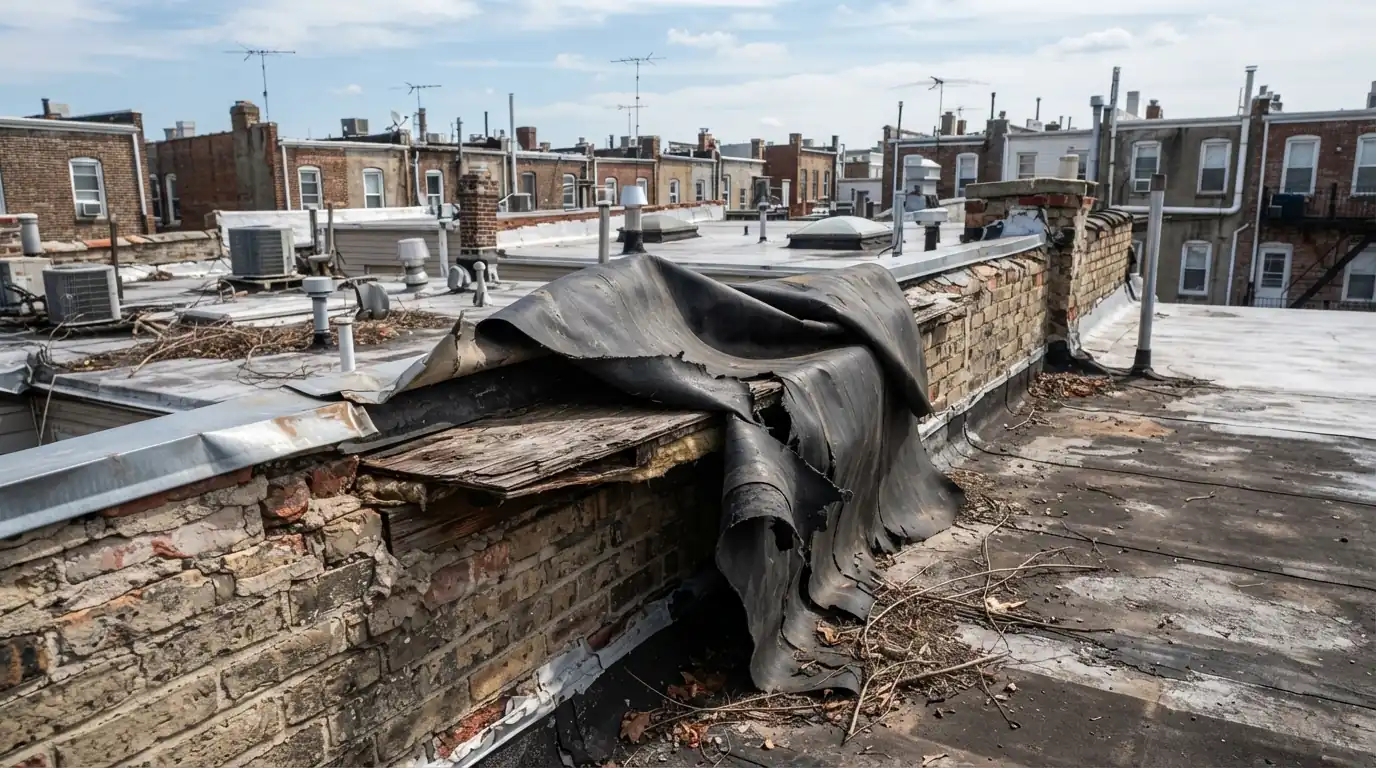
Wind damage shows as missing shingles, creased tabs that bent back and broke their seal, lifted ridge caps and, on flat roofs, membrane peeled back from a parapet or edge. Creased shingles are the ones people miss, and they are the ones that leave next. We replace missing and creased shingles, reseal lifted tabs, renail ridge and rake edges, and on flat roofs reattach and reflash the membrane edge. If wind damage is spread across a whole slope, we tell you that too.
Hail Damage Assessment and Repair
Hail damage is judged, not guessed. We look at soft metals such as gutters, vents and flashing for dents that show hail size, then mark and photograph bruises on each slope, where granules are knocked loose and the mat below is soft or cracked. Cosmetic granule loss and functional damage are different things, and the report says which one we found. Repairs range from replacing damaged shingles to a full slope, and dented metal is replaced where it no longer sheds water.
Tree and Debris Impact Repair
Limbs and flying debris puncture shingles, crack decking and sometimes rafters. Before anyone walks the damaged area we check it from the attic, and large limbs may need a tree crew to lift them off safely. Once clear, the opening is dried in, then the damaged decking, underlayment and roofing are replaced to match, with any broken framing sistered or replaced first. We photograph the limb in place before it is moved, because that is the evidence an insurer wants.
What We See on Philadelphia Roofs
The National Weather Service office covering Philadelphia treats thunderstorm winds of 58 mph or more and hail of 1 inch or larger as severe, and it issued multi-day severe thunderstorm briefings for eastern Pennsylvania as recently as early September 2026. Storms like that tend to come in clusters, so after one we inspect for the damage that did not leak yet, before the next line of storms arrives.

Storm just passed through?
Call and we inspect the whole roof, not just the obvious damage.
What Moves the Cost of Storm Repairs
- Type of damageWind, hail and impact damage are repaired differently.
- How much of the roofA few shingles versus one or more whole slopes.
- Material matchDiscontinued shingles take longer to match.
- Hidden damageCracked decking or rafters found under impacts.
- TimingEmergency protection first, then scheduled repairs.
Storm repairs vary too widely for a single published range, so we price them after inspecting and photographing every slope.
Storm Damage Questions
As soon as it is safe. Lifted shingles and bruises lead to leaks with the next storm.
Hail leaves random bruises and dents in metal; wear is even and follows the sun.
Yes, we can meet the adjuster on the roof to show the damage we documented.
No. Check that they are local and can be reached later, and get the scope in writing.
Often. We say which it needs based on how much of the roof is affected.
More Storm & Emergency Work in Philadelphia
From our guides: After a Storm: Your Roof and Your Insurance Claim
Check the Roof Before the Next Storm
Call any hour after a storm. We find the damage that has not leaked yet.