24/7 Emergency Roof Repair in Philadelphia
When water is coming in, the first job is keeping it out of the house. We answer at any hour, get the roof covered or sealed, and schedule the permanent repair once the weather allows.
An emergency roof call in Philadelphia is answered 24 hours a day and handled in two steps: first the opening is tarped or temporarily sealed so no more water gets in, then the permanent repair is made when the roof is dry. Tell us whether water is entering now, and whether anything fell on the roof.
What Counts as a Roof Emergency
Water actively coming through a ceiling, a section of roof torn open by wind, or a tree limb through the decking are emergencies. A few shingles on the lawn with a dry attic can usually wait for daylight, and we will tell you so on the phone.
The night visit is about protection, not the finished repair. Tarps, temporary membrane and sealant buy time without committing you to a scope nobody has properly inspected in the dark.

What Happens on an Emergency Call
- 1
A person answers
Day or night, we take the address and what is happening.
- 2
Protect the room
We tell you what to move and what to switch off.
- 3
Crew on the roof
Active leaks and open roofs are sent first.
- 4
Cover the opening
Tarp, temporary membrane or sealant, secured for the weather.
- 5
Document the damage
Photos inside and on the roof for your records and your insurer.
- 6
Schedule the repair
Permanent work booked for the first suitable dry day.
How Long Until the Roof Is Closed
Temporary protection is the priority on an emergency visit, and most openings can be tarped or patched once a crew is on the roof. The permanent repair depends on three things: a dry roof, temperatures that suit the material, and parts such as matching shingles or membrane. Small repairs often follow within days; storm-wide damage or an insurance claim can stretch that out.
Active Leak Containment
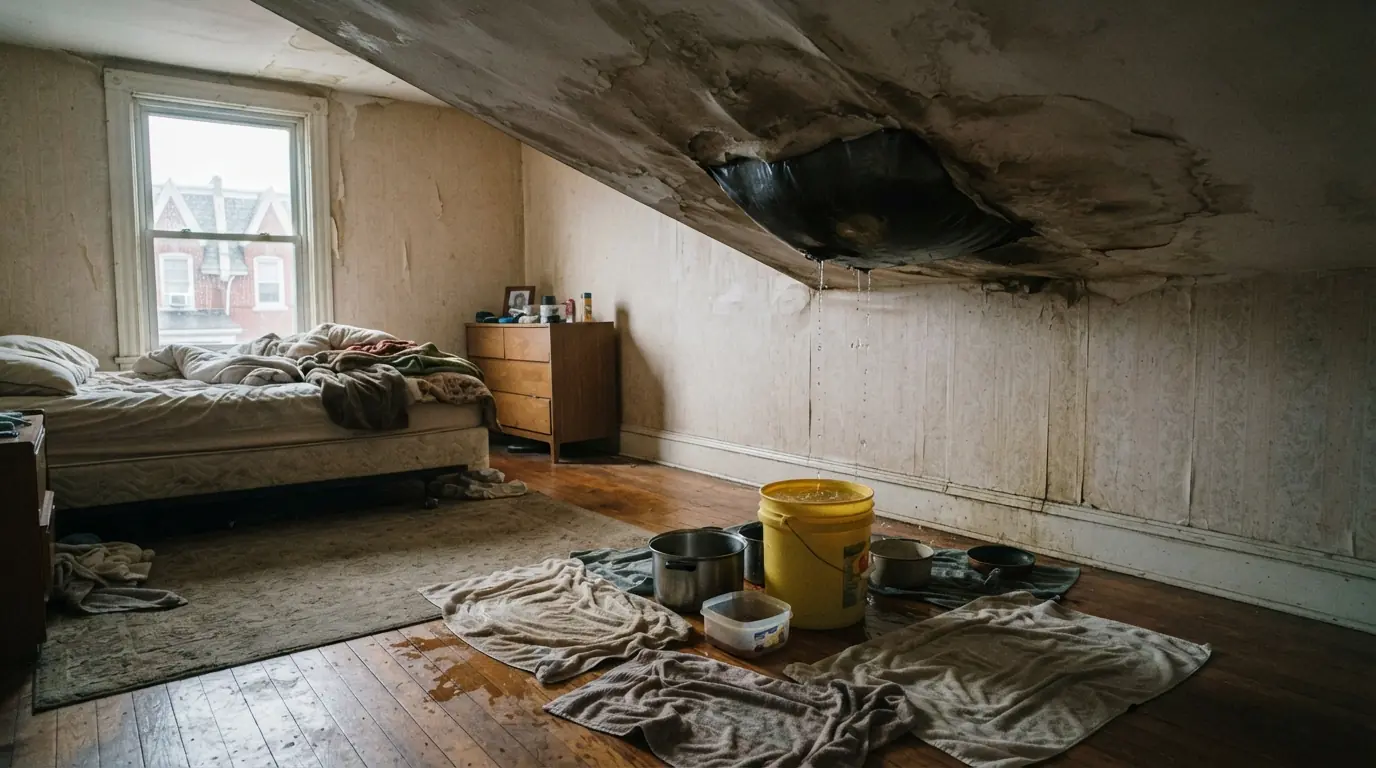
Water through a light fixture, a bulging ceiling or a steady drip into a top-floor room needs a response now. On the phone we walk you through protecting the room and switching off affected circuits. On the roof we find the opening and cover it: a tarp secured over pitched roofs, or a temporary membrane patch on a flat roof where a tarp would just hold water. Once the leak has stopped, the source is traced properly on a roof leak repair visit.
Fallen Limb and Impact Damage
A limb through the roof can crack rafters as well as decking, so we look from the attic side before anyone puts weight on the damaged area. Small branches come off by hand; large limbs may need a tree crew first. The hole is then covered and weather-sealed. The permanent work often means new decking, underlayment and shingles or membrane across the impact zone, and sometimes a rafter repair. We photograph everything before it is moved, because the insurer will want to see it.
After-Hours Storm Calls
Nor'easters and summer thunderstorms bring a burst of calls at once, usually at night or on a weekend. The phone is still answered by a person who takes the address and the symptom and sorts active leaks ahead of damage that can wait until morning. Night calls usually end with the opening covered and a daylight visit booked, when the roof can be inspected properly and the permanent repair priced. Photos taken that night go straight into your claim file.
What We See on Philadelphia Roofs
Philadelphia sees roughly 43 inches of precipitation a year, several nor'easters each winter and summer thunderstorms that bring wind and hail, so emergency calls cluster around a handful of bad nights. Winter adds its own problem: freeze-thaw cycles run from November through March, and shingle sealant needs warmer temperatures to bond. A winter emergency often gets a temporary fix first and a permanent repair on the next mild day.

Water coming in right now?
Call and a person answers, any hour of the night.
Should You Tarp the Roof Yourself?
Tarping looks simple from the ground. On a wet roof at night it is where people get hurt.
What a homeowner can safely do
- Protect the room below and switch off affected circuits
- Photograph damage from the ground and inside
- Keep people out of any room with a sagging ceiling
Where it needs a roofer
- Walking a wet, icy or wind-exposed roof
- Anything near a limb resting on the roof or on wires
- Nailing tarps through sound shingles, which adds new holes
What Affects the Cost of an Emergency Visit
- Size of the openingA few missing shingles and a torn-open slope need very different amounts of tarp and time.
- Roof typeFlat roofs usually get a membrane patch; pitched roofs get a secured tarp.
- Debris on the roofLimbs and storm debris have to come off before anything can be covered.
- Height and conditionsThree-story roofs, wind and ice slow the work and change the setup.
- The permanent repairPriced separately once the roof has been inspected in daylight.
No published market range separates emergency visits from ordinary repairs, so we price the temporary protection and the permanent repair as two separate items after seeing the roof.
Emergency Roof Questions
Yes. The phone is answered 24 hours a day, every day of the year, including holidays.
A properly secured tarp usually holds through normal weather for a short period. It is a stopgap, and we schedule the permanent repair as soon as conditions allow.
Many policies expect you to prevent further damage and treat reasonable tarping as part of the claim. Check your policy; we provide photos and an itemized invoice.
Call 911 if wires are down or anyone is hurt. For a limb through the roof with no immediate danger, call us.
Rarely. Permanent materials need a dry surface and daylight, so the night visit stops the water and the repair follows.
More Roof Repair Work in Philadelphia
From our guides: Flat Roof Leaking? What to Do in the First Hour
Roof Open or Leaking Tonight?
Call now. A person answers, and the first step is keeping the water out of your house.