Parapet and Coping Repair on Philadelphia Rowhomes
The low brick walls around a rowhome roof take weather from both sides and from the top. When the coping or the flashing on them fails, water runs down inside the wall and shows up floors below.
Parapet leaks in Philadelphia rowhomes usually start at the top of the wall, where coping stones or metal caps have loosened, or at the base, where the roof membrane turns up the brick. Water gets into the masonry and travels down, so a stain on a second-floor wall can come from the parapet above it. We repair the coping, flashing and mortar together.
Why Parapets Leak
A parapet is exposed on three sides: the street or alley face, the roof face and the top. Rain soaks into old brick and mortar, freezes, and slowly opens the joints. Coping, the cap on top, is meant to shed that water, and when its joints open, the wall fills like a sponge.
Because the leak is inside the wall, patching the roof rarely stops it. The fix is sealing the top of the wall and the joint where roof and wall meet.
What Sets the Price of Parapet Repair
- Length of wallCoping and flashing are priced by the run.
- Coping materialResetting stone differs from new metal coping.
- Masonry conditionRepointing depth and loose brick add labor.
- AccessStreet-side faces may need staging or a lift.
- Shared wallsParty-wall parapets involve both neighbors' roofs.
No published local range covers parapet and coping work on its own, so we price it after measuring the run and checking the masonry.
Coping Cap Replacement
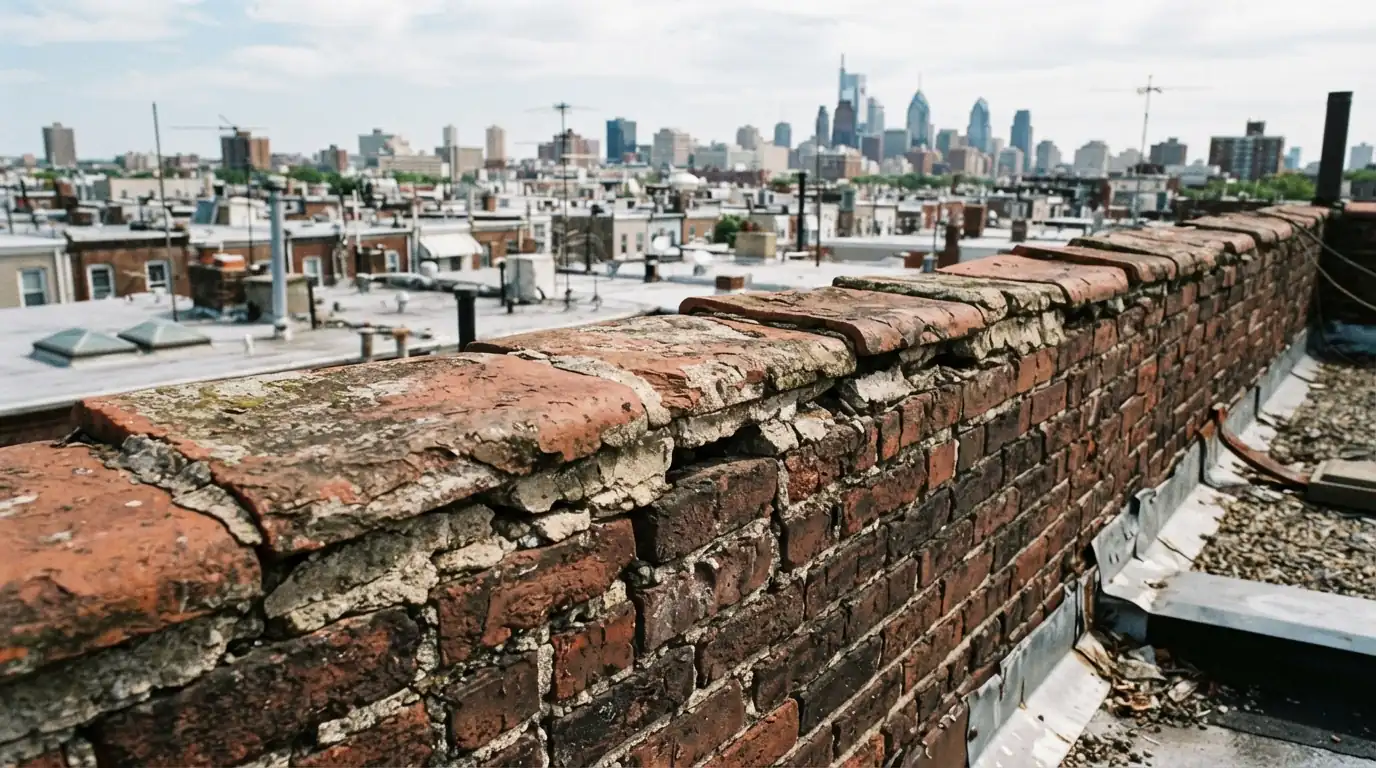
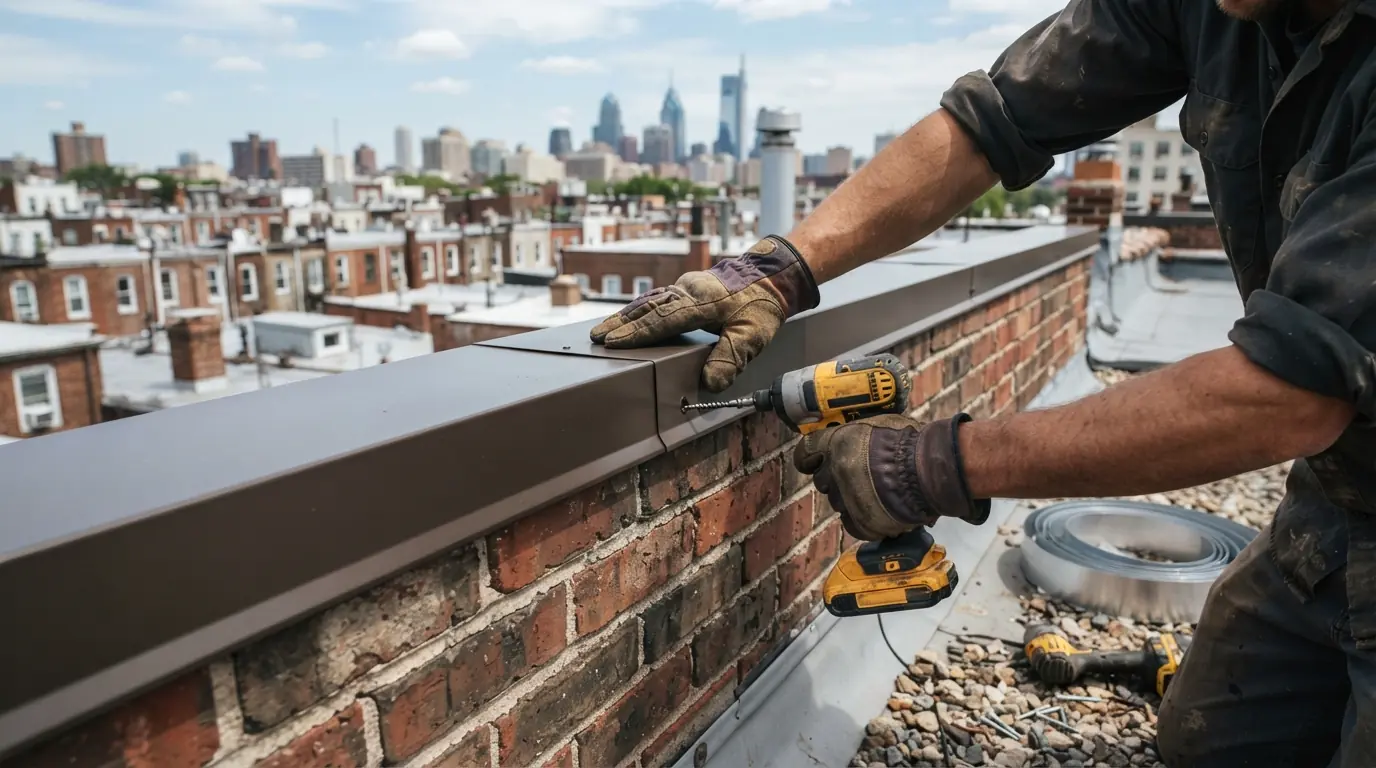
Coping on older rowhomes is usually terra cotta, stone or brick set in mortar, and the mortar joints between the pieces open up over the decades. On newer or repaired roofs it is often sheet metal. Loose or cracked coping lets water straight into the top of the wall. We reset or replace masonry coping with sealed joints, or install new pre-finished metal coping over a membrane wrap, with cleats that let the metal move with the seasons without pulling its fasteners out.
Parapet Flashing and Counterflashing
Where the roof meets the parapet, the membrane runs up the inside face of the wall and is covered by counterflashing or run under the coping. When the membrane has pulled away or the counterflashing has come loose from the mortar, water gets behind the roof at its edge. We strip the failed flashing, run new membrane up the wall to the proper height, terminate it with a bar, and cover it with counterflashing set in a fresh reglet or carried under new coping.
Parapet Brick Repointing at the Roofline
Mortar at the top of a parapet weathers faster than anywhere else on the house. Sandy, recessed joints let water in and let frost push bricks loose. We rake out the failed mortar to a sound depth and repoint with a mortar suited to the old brick, which on most older Philadelphia houses means a softer lime-based mix rather than hard modern cement that can crack the brick. Loose bricks at the top course are reset before new coping goes on.

Stain spreading down a wall under the roof?
Call and we check the parapet and coping above it.
What We See on Philadelphia Roofs
Rowhomes built in Philadelphia before about 1920 used lime mortar, and their front and rear walls tie only to the party walls, so they are prone to moving and bowing over time. Those same party walls rise as shared parapets between neighbors, with one coping line spanning two or three roofs. A failed joint on the shared cap can wet both houses, which is why we check the whole run, not just your side.
How a Parapet Repair Runs
- 1
Trace the water
Wall stains matched to the parapet section above.
- 2
Inspect top and base
Coping joints, mortar and roof-to-wall flashing checked.
- 3
Scope and photos
What fails, what it takes, with pictures.
- 4
Repoint and reset
Failed mortar raked out, loose brick reset.
- 5
New flashing and coping
Membrane up the wall, coping sealed on top.
- 6
Check the neighbor tie-in
Shared sections sealed across the party wall.
Signs the Parapet Is Letting Water In
Stains high on an outside wall
Water is coming down inside the brick.
Loose or rocking coping
The mortar bed under it has failed.
White crust on the brick
Efflorescence means water moving through the wall.
Gaps where roof meets wall
The flashing has pulled away.
Crumbling top-course mortar
Frost is working the joints open.
Bulging or leaning top of wall
Time to have the masonry checked.
Parapet and Coping Questions
Water entering the top of a parapet runs down inside the brick and appears wherever it finds a way into the room.
Metal is lighter and seals well over a membrane. Stone suits historic fronts. Both work when the joints are done right.
Sealers do not fix open joints and can trap moisture. Repointing comes first.
We document it with photos so you can raise it with them; we can price the shared work.
It can be. Loose masonry at the top of a wall needs a prompt look, and serious movement may need a mason or engineer.
More Masonry & Rowhome Details Work in Philadelphia
From our guides: Finding a Leak Between Two Rowhomes
Seal the Top of the Wall
Call if a wall stain or loose coping has you worried. We fix the parapet, not just the roof.