New Gutters Installed on Philadelphia Homes
A roof sheds the water; gutters decide where it goes next. On a rowhome that usually means a short run to a scupper or downspout, and on a twin or single it means carrying a lot of water past a basement wall.
Gutter installation in Philadelphia is mostly aluminum, which published local figures put at $7 to $12 per linear foot, with a typical job running $737 to $1,998. We size the gutters and downspouts for the roof area, pitch them to drain, and route downspouts away from the foundation or into a planter or barrel.
What Makes a Gutter System Work
Gutters fail for predictable reasons: too few downspouts for the roof area, gutters hung level instead of pitched, hangers spaced too far apart, or downspouts that dump water against the house. New gutters that repeat those mistakes overflow like the old ones.
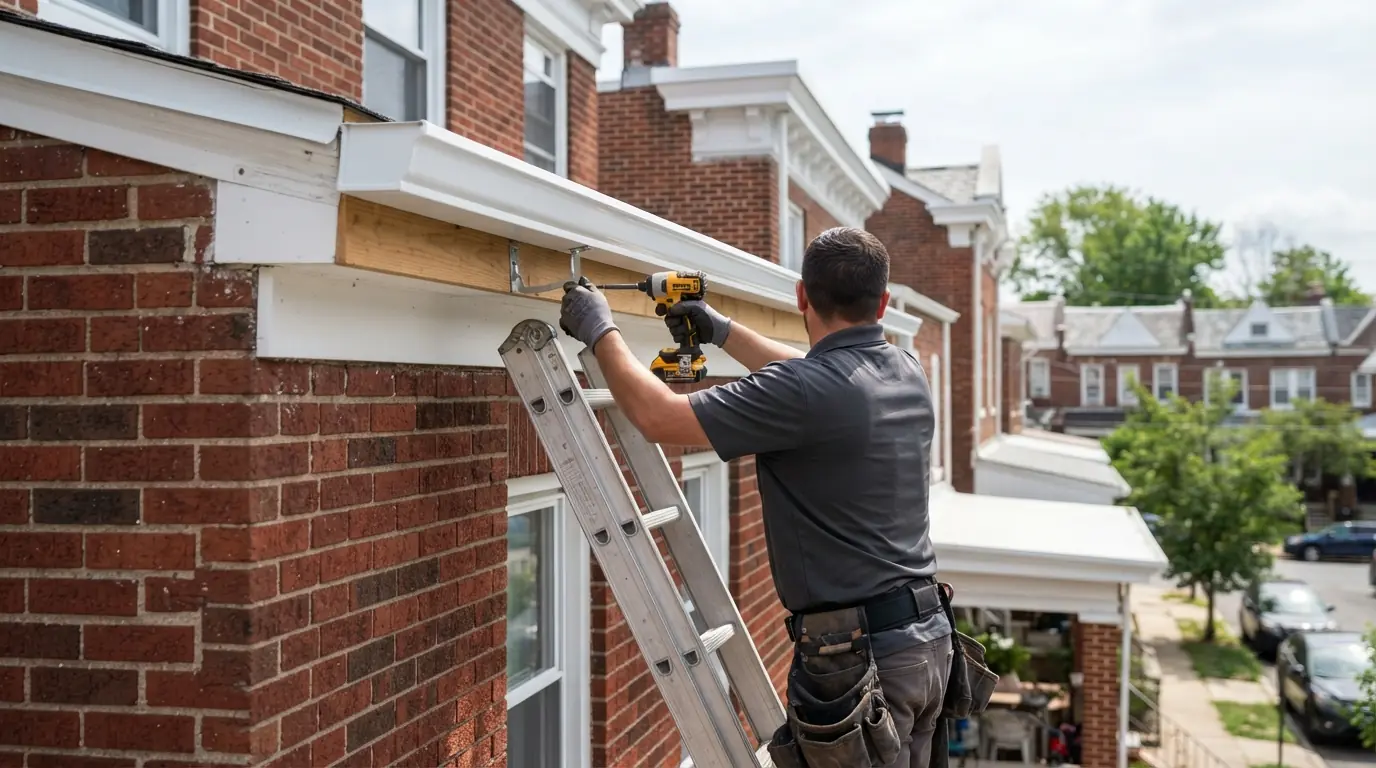
We size each run for the roof above it, pitch it toward the outlets, fasten hangers into solid fascia or masonry, and finish each downspout where the water can actually go.
What Sets the Price of New Gutters
- Linear feetGutters and downspouts are priced by the foot.
- Profile and sizeK-style or half-round, five or six inch.
- Height and accessThree-story walls and tight alleys add setup.
- Fascia conditionRotted boards are replaced before gutters go up.
- Downspout routingExtensions, planters or tie-ins add parts.
Published Philadelphia figures put a typical gutter installation at $737 to $1,998. These are planning ranges, not our quote.
Which Gutter Suits Your House
Most houses here take one of these. Published Philadelphia figures are shown where they exist.
| Gutter | Where it fits | Planning range |
|---|---|---|
| Aluminum K-style | Twins, singles, rowhome rears | $7 to $12 per linear foot |
| Aluminum half-round | Historic stone and brick fronts | Priced per job |
| Gutter guards added | Houses under trees | $4 to $11 per linear foot |
| Removing old gutters | Any replacement | $1 to $2 per linear foot |
Aluminum K-Style Gutter Installation
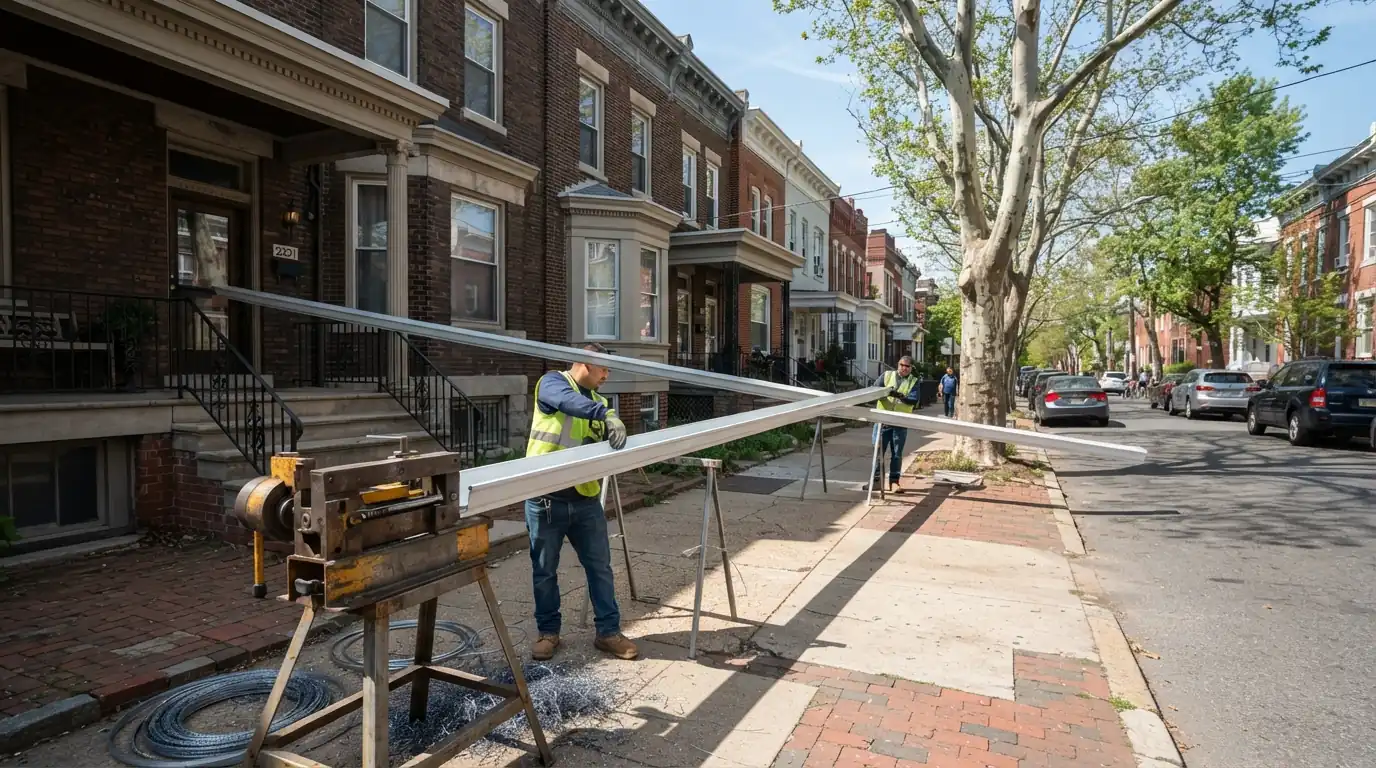
K-style gutters have a flat back and a decorative front that looks like crown molding, and they carry more water than a half-round gutter of the same width. They are the standard on Philadelphia twins, singles and many rowhome rears. We form them in long runs on site where access allows, which cuts down the number of seams, and fasten them with hidden hangers into the fascia. Five-inch gutters suit most houses; six-inch gutters suit large or steep roofs that shed a lot of water.
Half-Round Gutter Installation
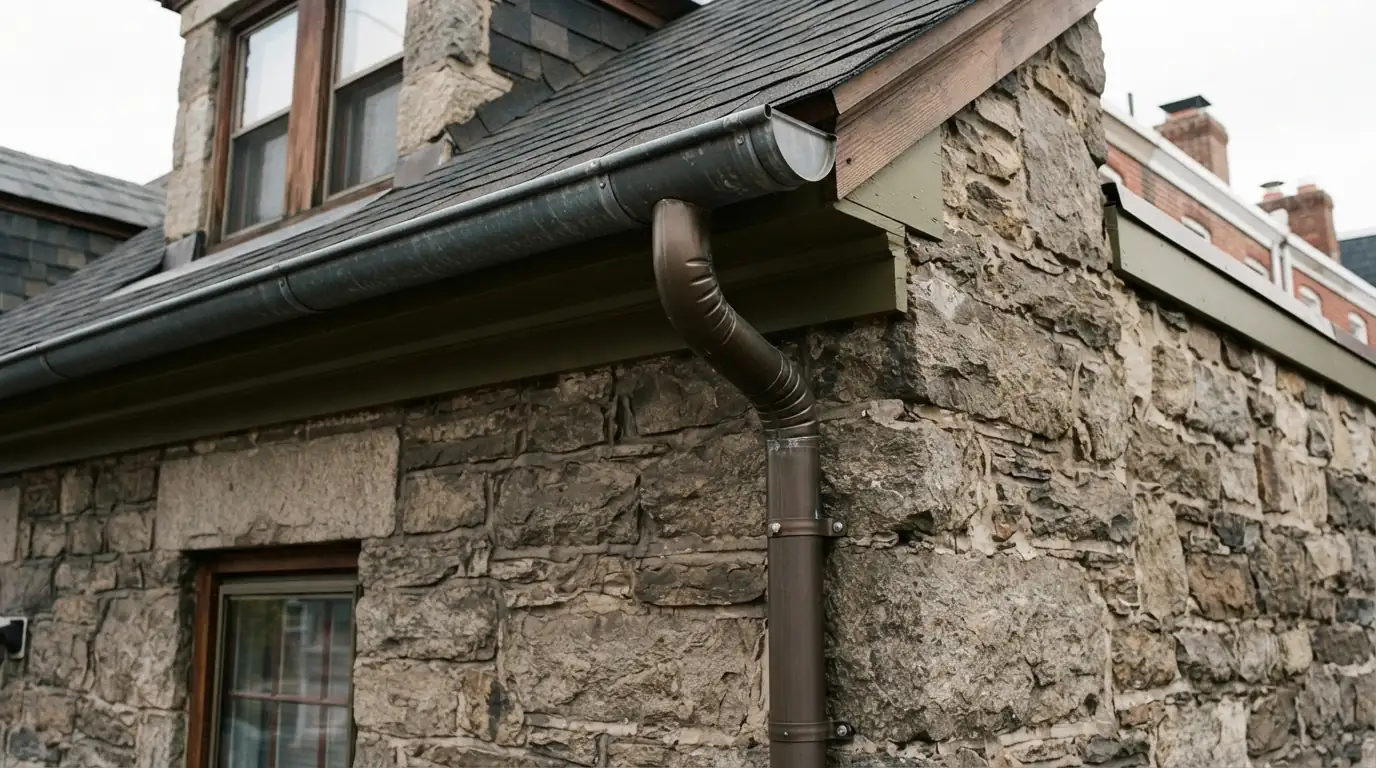
Half-round gutters are the semicircular profile seen on older stone and brick houses, and they are often the right look for a historic front. They hang on exposed brackets rather than hidden hangers, and they pair with round downspouts. They carry a little less water than K-style gutters of the same width, so they are sized up where the roof is large. We install them in aluminum, and match profiles where one side of a twin needs to line up with the other.
Downspout Routing and Extensions
A downspout that drops water against the foundation feeds a wet basement. We place downspouts so no gutter run is overloaded, then carry the water away with extensions, splash blocks, or a connection to an existing underground line after checking that it actually drains. On tight rowhome lots the options are limited, and a downspout planter or rain barrel can hold roof water at the back door instead of sending it across the walkway or onto a neighbor's property next door.

Gutters spilling over the front steps?
Call and we size and hang a system that drains.
What We See on Philadelphia Roofs
Philadelphia's Rain Check program gives residents a free rain barrel and installs metal downspout planters for $100, both fed straight from a downspout, which is useful on rowhome lots where there is nowhere else for the water to go. On older rows the gutter often hangs from a brick wall rather than a fascia board, and pre-1920 walls laid in lime mortar need hangers anchored into sound joints, not crumbling ones.
How a Gutter Installation Runs
- 1
Measure and plan
Roof areas, runs and downspout spots mapped.
- 2
Check the fascia
Rotted boards flagged for replacement first.
- 3
Remove old gutters
Old runs, hangers and fasteners taken down.
- 4
Form and hang
Gutters formed, pitched and fastened.
- 5
Downspouts
Placed and routed away from the house.
- 6
Water test
Runs flushed to confirm they drain.
Gutter Installation Questions
If they are old or sagging, yes. New drip edge and gutters work best installed together.
Long runs formed on site have fewer seams to leak. Corners and outlets still need sealing.
Under trees, guards cut down cleaning. Without trees nearby, they add cost without much benefit.
Only if the underground line drains. We check it first; a clogged line backs water up the downspout.
In historic districts, the Historical Commission may want a profile that matches the original. Half-round is common.
More Exterior & Water Management Work in Philadelphia
Put the Water Where It Belongs
Call for a measured gutter quote. We size, pitch and route the system to drain.