Flat Rowhome Roof Repair in Philadelphia
A flat roof fails at its seams, its drains and its edges long before the whole membrane wears out. We find the failed detail, repair it with the same membrane family, and fix the drainage that caused it.
Flat roof leaks in Philadelphia rowhomes usually come from one of four places: an opened seam, water ponding over a low spot, a blister or split in the membrane, or a clogged scupper. Each is a repair when the rest of the membrane is sound. We match the repair to the membrane already on the roof.
Why Flat Roofs Leak Where They Do
A flat roof is not really flat. It is built with a slight pitch toward a scupper or drain, and the membrane is laid in overlapping sheets. When the pitch sags or a drain clogs, water sits on the laps, and the seams are what give way.
That is why a flat roof repair looks at drainage as well as the hole. Patching a seam under a standing puddle without fixing the puddle puts us back on the same roof next spring.
Signs Your Flat Roof Needs Attention
Puddles two days after rain
Ponding wears the membrane and loads seams.
Lifted seam edges
A dark line along a lap means water is already under it.
Bubbles in the membrane
Blisters crack open in the sun.
Water down the back wall
A clogged scupper is overflowing.
Cracked or bare coating
Exposed mod bit dries out and cracks faster.
Stains on the top-floor ceiling
Water is past the membrane and into the deck.
How We Handle a Flat Roof Repair
- 1
Call with the symptom
Ceiling stain, puddles, overflow or a lifted seam.
- 2
Walk the whole roof
Seams, drains, parapets and the neighbor tie-ins.
- 3
Probe for wet areas
We check how far water has spread under the membrane.
- 4
Show you the options
Photos, repair scope, and replacement only if it is honestly closer.
- 5
Repair with matched material
Same membrane family, bonded the way it was made to be.
- 6
Clear the drainage
Scuppers and drains cleared so water leaves the roof.
Seam Separation Repair
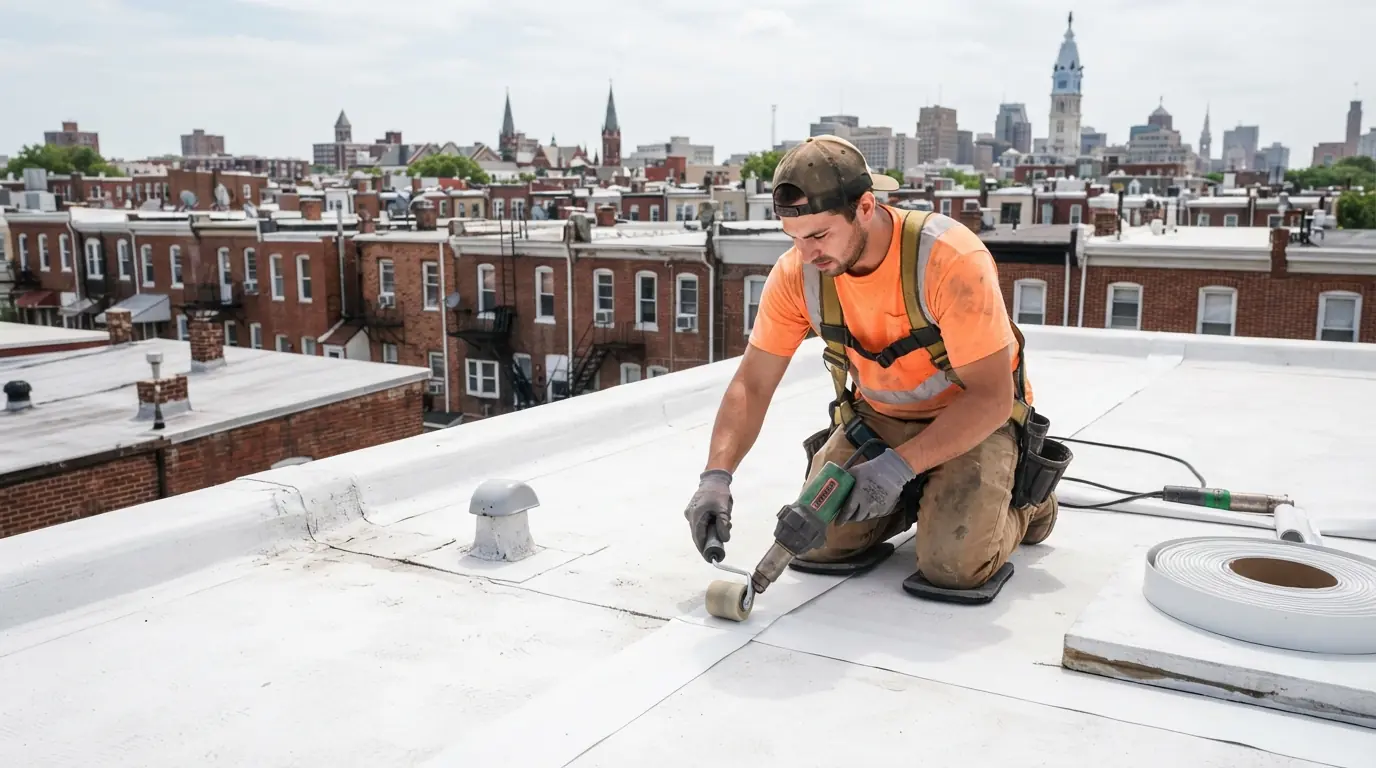
An opened seam shows as a lifted edge where two sheets of membrane overlap, often with a dark line of dirt where water has been getting under it. On modified bitumen we clean back to sound material and torch or adhere a new strip across the lap. On EPDM the seam is cleaned, primed and closed with seam tape and a cover strip. TPO seams are heat-welded, which bonds the sheets into one piece rather than gluing them, so a TPO seam repair holds as well as the original lap.
Ponding Water Correction
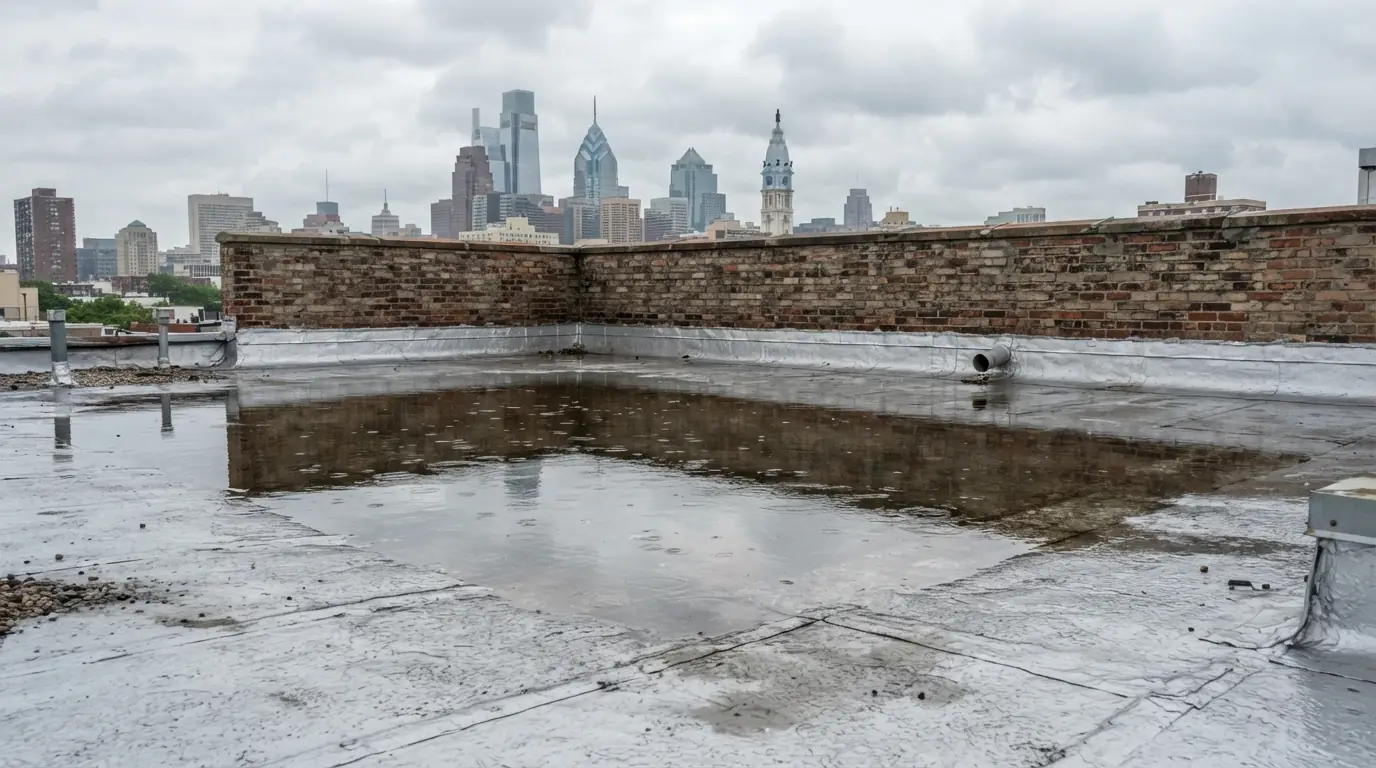
Water still standing on the roof two days after rain is ponding, and it shortens the life of every membrane. The cause is usually a sagging section of deck, compressed insulation, or a drain set higher than the roof around it. Small low spots are built up with tapered insulation or a leveling patch under new membrane. A drain that sits high gets reset. Where the whole roof holds water, the honest fix is a flat roof replacement with a built-in slope.
Membrane Blister and Split Repair
Blisters are raised bubbles where trapped moisture or air has separated the layers of a built-up or modified bitumen roof. Left alone, sun and foot traffic crack them open. We cut the blister, dry and re-adhere the layers, and cover the area with a new patch. Splits, long cracks where the membrane has shrunk and pulled apart, get the same treatment with a wider patch. Materials we work with include GAF, Firestone, Carlisle and Johns Manville systems, matched to what is already on your roof.
Scupper and Drain Repair
Most rowhome roofs drain through a scupper in the rear parapet into a collector box and downspout. Leaves, tennis balls and roofing grit block them, and the membrane flashing around the opening cracks with age. Signs include overflow down the back wall and water pooling at the rear of the roof. We clear the outlet, replace the flashing sleeve, and fit a new collector box where the old one has rusted through. A scupper cut too small for the roof it drains can also be enlarged.
Brands we install and service
What We See on Philadelphia Roofs
More than half of the homes in Philadelphia are attached rowhouses, and most of them sit under a flat or low-slope roof, so flat roof repair is the bulk of the roofing trade in this city rather than a specialty. The standard rowhome membrane here is modified bitumen, often with a silver coating, and it typically lasts 15 to 20 years. When a mod bit roof inside that window leaks, a repair is usually worth it.

Water through the top-floor ceiling?
Call and we get a crew onto the flat roof to stop it.
What Moves the Cost of a Flat Roof Repair
- Membrane typeMod bit, EPDM and TPO each use their own repair materials.
- Size of the damaged areaA single lap is quick; a failed seam run across the roof is not.
- Wet insulation or deckSoaked material under the leak has to be cut out and replaced.
- Drainage workBuilding up low spots or resetting a drain adds material and time.
- AccessRoof hatches and tight alleys add setup time.
Published Philadelphia figures put roof leak repairs at $300 to $3,500. It is a planning figure from market data, not our quote.
Flat Roof Repair Questions We Hear
On rubber or TPO it does not bond and often traps water. On mod bit it can hold briefly. It is a stopgap, not a repair.
Silver or granulated sheets are usually modified bitumen, black rubber is EPDM, and white sheets with welded seams are TPO. We confirm on the roof.
Yes. Some membranes need a dry day and temperatures in their working range, so an emergency gets a temporary seal and the permanent repair on the next suitable day.
No. A coating protects sound membrane from sun. Opened seams and blisters are repaired first, then coated.
We trace where the water enters. If it is on their side, we document it with photos so you can take it up with them.
More Roof Repair Work in Philadelphia
From our guides: Flat Roof Leaking? What to Do in the First Hour
Get Your Flat Roof Draining and Sealed
Tell us what the roof is doing. We repair the failed detail and the drainage behind it.