Brick Pointing for Philadelphia Rowhomes
Mortar is meant to wear out before the brick does. When the joints go sandy or open, water gets into the wall, and repointing them with the right mortar is how an old rowhouse stays dry.
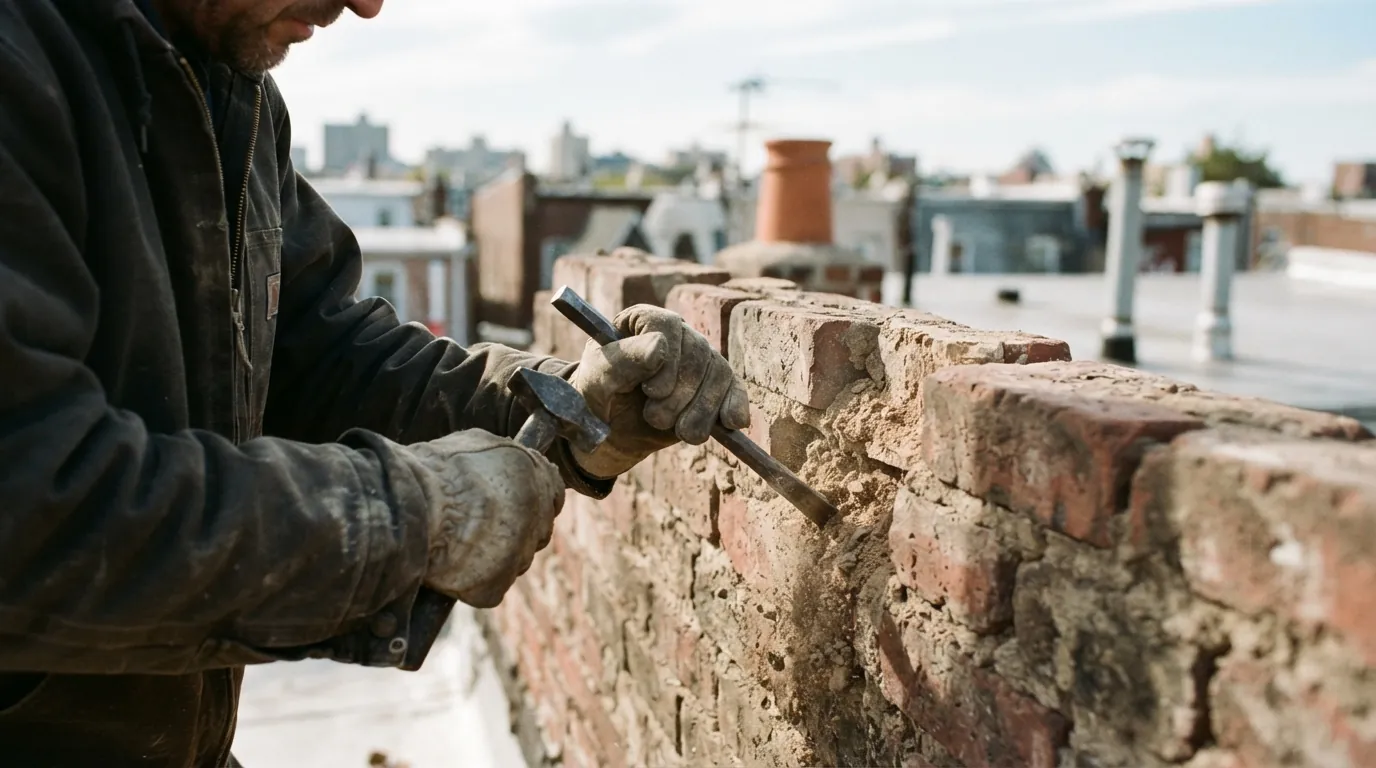
Brick pointing, or repointing, replaces failed mortar in the joints of a brick or stone wall. On Philadelphia rowhomes the old mortar is usually soft lime mortar, so the new mortar has to match it: hard modern cement packed into old brick cracks and spalls the brick. We rake joints out by hand and repoint to the original joint profile.
Why Old Philadelphia Brick Needs Soft Mortar
Old brick has a hard fired skin and a softer core. The mortar around it is meant to be the weaker, sacrificial part of the wall, flexing with the seasons and letting moisture out. When joints erode, water gets behind the brick face, freezes, and pushes it apart.
Repointing with a mortar that is harder than the brick reverses that relationship, so the brick fails instead of the joint. Matching the mortar is therefore the heart of the job, along with removing old mortar without widening the joints or chipping the brick edges.
What Sets the Price of Repointing
- Wall areaRepointing is priced by the area of wall.
- Joint typeThin butter joints take far longer than standard joints.
- Mortar matchingLime mortars and color matching add time.
- Height and accessUpper floors need scaffolding or lifts.
- Brick repairsSpalled or loose bricks replaced before pointing.
Repointing varies too much by wall and joint type for a single published figure to be useful, so we price it after measuring the wall and testing the mortar.
Can You Repoint It Yourself?
The City's own rowhouse guide lists re-pointing among the jobs better left to professionals, for good reason.
What a homeowner can safely do
- Pull ivy and plants off the wall before they root
- Keep gutters and downspouts from spilling onto brick
- Photograph problem areas each year to watch for change
Where it needs a roofer
- Removing mortar without widening joints or chipping brick
- Matching lime mortar to old brick
- Any wall work above the first floor
Front Facade Repointing
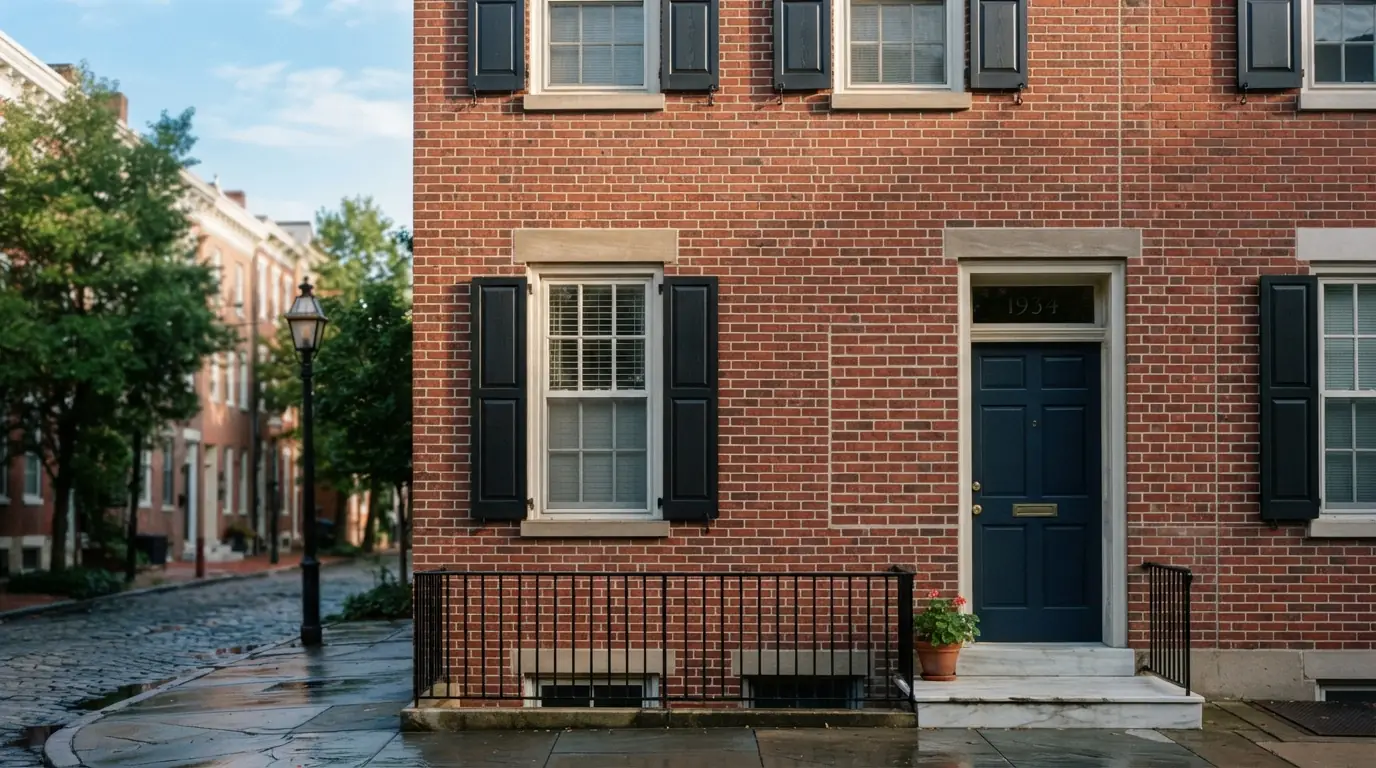
The front wall is the one everyone sees and the one that takes driving rain off the street. Many 19th-century Philadelphia fronts have very thin butter joints that have to be cleaned out by hand, never sawn wider, or the facade loses its look for good. We match the mortar color and texture to the original, test a sample area first, and tool the joints to the same profile. Where only part of a front has failed, we repoint enough that the repair does not stand out as a patch.
Rear Wall and Kitchen Addition Pointing
Rear walls and the lower kitchen additions behind many rowhouses are often in worse shape than the front, because they take runoff from the roofs above and get less attention. Open joints there let water into the back rooms and the kitchen ceiling. We repoint the rear wall and addition, check where their roofs and gutters meet the brick, and fix the flashing at those joints at the same time, since a wall that stays wet will lose its new mortar quickly.
Stone and Schist Wall Pointing
Some Philadelphia houses, especially older ones, have stone fronts, stone foundations or rubble schist walls with wide, irregular joints. Stone pointing follows the same principle as brick: the mortar must be softer than the stone and able to move with an old wall. Joints are cleaned out to sound material, packed in layers so deep joints cure properly, and finished to suit the stone. Loose stones are reset and wedged before pointing rather than being held in place by fresh mortar alone.
Mortar crumbling out of the walls?
Call and we check the joints and match the mortar.
What We See on Philadelphia Roofs
The City's Philadelphia Rowhouse Manual is plain about this work: mortar must behave like the brick it holds, thin butter joints are cleaned out by hand, brick is never sandblasted or acid-washed, and re-pointing is a job for professionals. That guidance matters most on the 19th-century workingman's rows of Center City, South Philadelphia, North Philadelphia, West Philadelphia and Manayunk, where those thin joints are most common.
How a Repointing Job Runs
- 1
Inspect the wall
Joints, bricks, flashing and signs of movement checked.
- 2
Match the mortar
Old mortar examined and a test mix made.
- 3
Test a sample area
Color and profile approved before the full job.
- 4
Rake out by hand
Failed mortar removed to sound depth.
- 5
Repoint in layers
Joints packed and tooled to the original profile.
- 6
Clean and cure
Wall cleaned gently and the mortar kept damp to cure.
Signs Your Walls Need Repointing
Sandy or powdery joints
Mortar rubs out under a fingertip.
Joints recessed behind the brick
Water now sits in the gaps.
Damp patches inside
Moisture is getting through the wall.
Spalling brick faces
Frost is breaking the brick surface.
Loose bricks
The mortar no longer holds them.
Plants in the joints
Roots are widening the gaps.
Brick Pointing Questions
It depends on exposure and the mortar. Well-matched pointing lasts many years; check joints every few years.
Usually closely. A test area lets you see it before the whole wall is done.
Usually not. Old brick needs to breathe, and many sealers trap moisture.
People use both terms for replacing mortar; tuckpointing is also a decorative two-color finish.
Routine repointing usually does not, but historic-listed properties need Historical Commission approval for exterior work.
More Masonry & Rowhome Details Work in Philadelphia
From our guides: Finding a Leak Between Two Rowhomes
Keep Water Out of the Walls
Call and we check the joints, match the mortar and repoint it properly.