Roof Hatch Installation in Philadelphia
On many rowhomes the roof hatch is the only way up to the roof, and it is one of the most common leak points on it. A new hatch with an insulated lid and a properly flashed curb fixes both problems.
A roof hatch is a lidded opening in a flat roof, usually reached by a ladder from the top-floor ceiling. Old rowhome hatches leak at the curb flashing and let heat escape through thin lids. We replace worn hatches with insulated, gasketed units, cut new openings with framing and a permit where needed, and flash the curb into the roof membrane.
Why Old Roof Hatches Leak
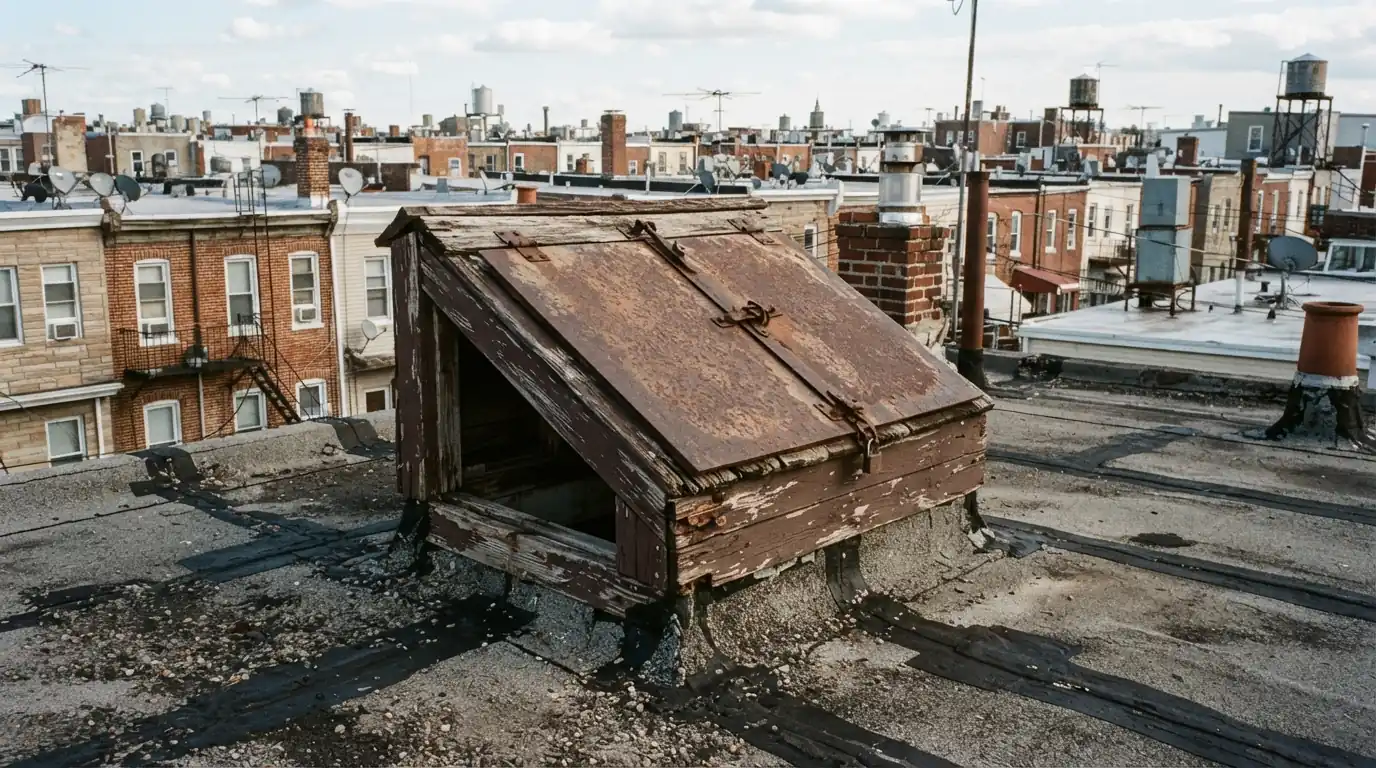
A hatch is a box built up through the roof with a hinged lid on top. The box, called the curb, has to be flashed into the roof covering on all four sides, and the lid has to seal against it. On older rowhomes the curb is often wood patched with tar, the lid is a sheet of metal over plywood, and the seal is long gone.
Water gets in at the curb corners, heat escapes through the lid, and in winter condensation drips from its underside. Repairing the curb flashing helps; replacing the whole unit usually solves all three at once.
What Sets the Price of a Roof Hatch
- Hatch size and typeStandard, larger or ladder-access units.
- New opening or replacementNew openings add framing and permits.
- Roof coveringFlashing into TPO, EPDM or modified bitumen.
- Curb conditionRotted wood replaced before flashing.
- Interior finishCeiling trim and ladder work inside.
Hatch jobs vary with the unit, the opening and the roof around it, so we price them after measuring the opening and checking the framing.
Roof Hatch Replacement
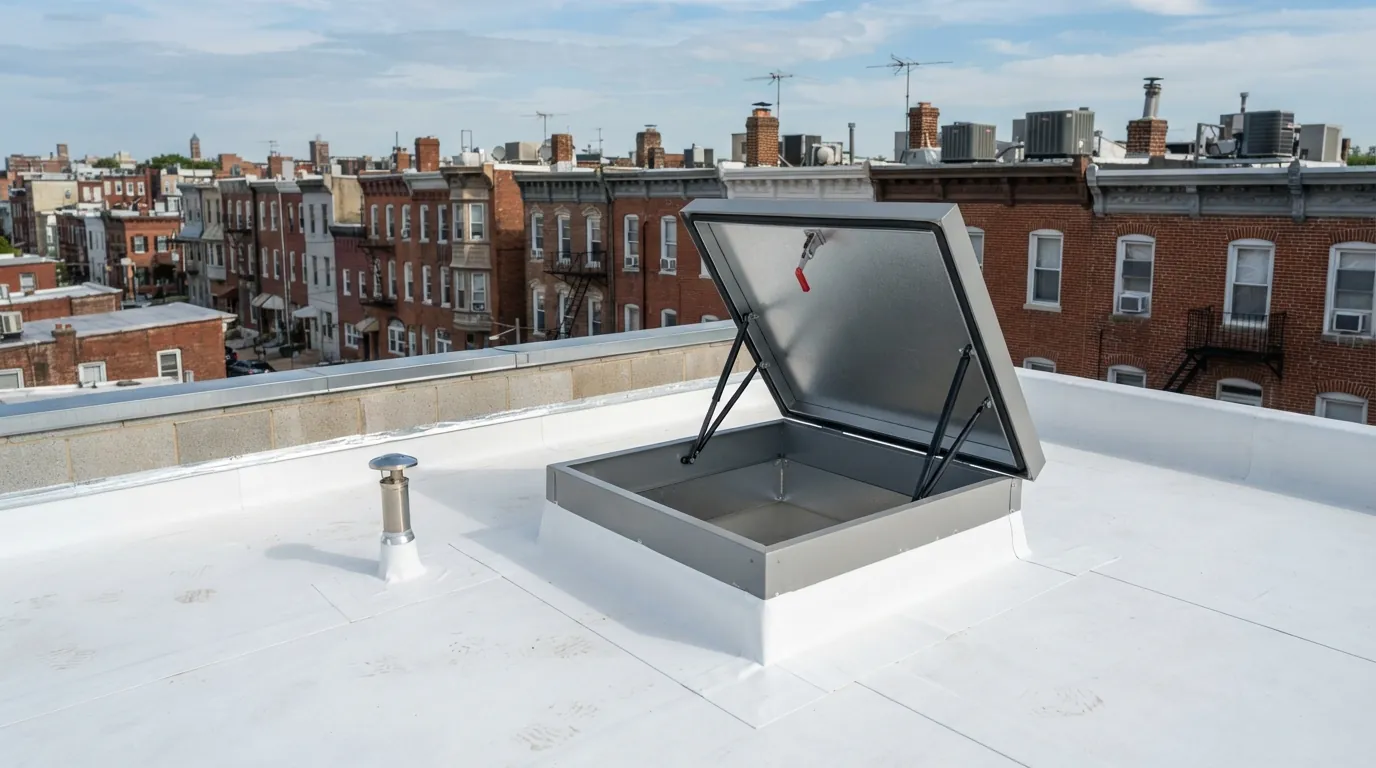
Replacement removes the old lid and curb down to the roof framing and installs a manufactured hatch with an insulated lid, a continuous gasket, gas springs that hold it open, and a latch that works from inside. The new curb is fastened to the framing, and the roof membrane is run up and over it so there are no exposed seams at the corners. Inside, the opening is trimmed and the ladder or ship's ladder checked so getting onto the roof is safe.
New Roof Hatch Openings
A new opening means cutting through the roof deck and the ceiling below, framing around any joists that are cut with doubled headers so the load is carried, and installing the hatch and curb. The ceiling below is protected and the dust contained while the opening is cut. Because it adds a new opening, the work needs a permit outside the city's EZ re-roofing permit, which we handle. New hatches are common when an owner wants safe access to maintain the roof or reach a planned roof deck without a stairway.
Hatch Curb Flashing and Seals
Where a hatch itself is sound but the curb leaks, the flashing can be rebuilt without replacing the unit. We strip the old tar and flashing, repair any rotted curb wood, and flash the curb into the roof membrane with the correct materials for that roof: welded TPO, taped EPDM or modified bitumen plies. The lid gasket is replaced so it seals again. This repair makes the most sense when the roof around the hatch is also in good shape.
What a Roof Hatch Job Includes
The parts that decide whether a hatch stays dry and safe.
- Removal of the old lid and curb
- Framing checked and repaired
- Insulated, gasketed hatch unit
- Curb fastened to the framing
- Membrane flashed up and over the curb
- Inside latch and hold-open springs
- Interior trim at the ceiling opening
- Ladder access checked
- Permit for new openings

Hatch dripping into the top floor?
Call and we reflash it or put in a new one.
What We See on Philadelphia Roofs
The City's Philadelphia Rowhouse Manual notes that some rowhouses have almost flat roofs and no attic at all, so the hatch in the top-floor ceiling is the only way onto the roof. The same guide says a roof deck needs zoning and building permits and a roof in very good condition, which is why new hatch openings for deck access are planned with the deck and the roof together.
How a Roof Hatch Job Runs
- 1
Inspect the opening
Curb, framing, lid and roof around it checked.
- 2
Choose the hatch
Size and features matched to the opening.
- 3
Permit if needed
Filed for new openings.
- 4
Remove and frame
Old unit out, framing repaired or added.
- 5
Install and flash
Hatch set, curb flashed into the roof.
- 6
Finish inside
Ceiling trimmed, latch and ladder checked.
Roof Hatch Questions
Warm air condensing on a thin, uninsulated lid. An insulated hatch fixes it.
Yes, if the unit is sound; the curb flashing and gasket can be renewed.
Yes. A new opening falls outside the EZ re-roofing permit.
Yes, framed and flashed as part of the deck plan.
It is the best time, since the curb can be flashed into the new membrane.
More Flat & Commercial Work in Philadelphia
Get Onto the Roof Without Letting Water In
Call and we reflash, replace or add a roof hatch.