By Fern Goddard, Roofing Guides EditorUpdated September 2026
Repair a Philadelphia roof when the damage is local and the rest is sound: one leak traced and fixed, a few shingles, a flashing joint. Replace it when leaks keep appearing in new places, the material is brittle across the roof, the deck is soft, or two layers are already on, which means the city requires a full tear-off anyway.
Start With What Is Actually Failing
A leak is not a verdict on the whole roof. Water usually enters at a detail: a pipe boot, a chimney joint, a valley, a flat roof seam. If that detail is fixed and the rest of the roof is sound, you have years left. Published Philadelphia leak repairs run $300 to $3,500, far below any replacement.
The first question is therefore where the water comes in and why. A roofer who traces the leak and shows you the failed detail is giving you the information you need to decide. See roof leak repair for how that tracing works.
Signs Repair Still Makes Sense
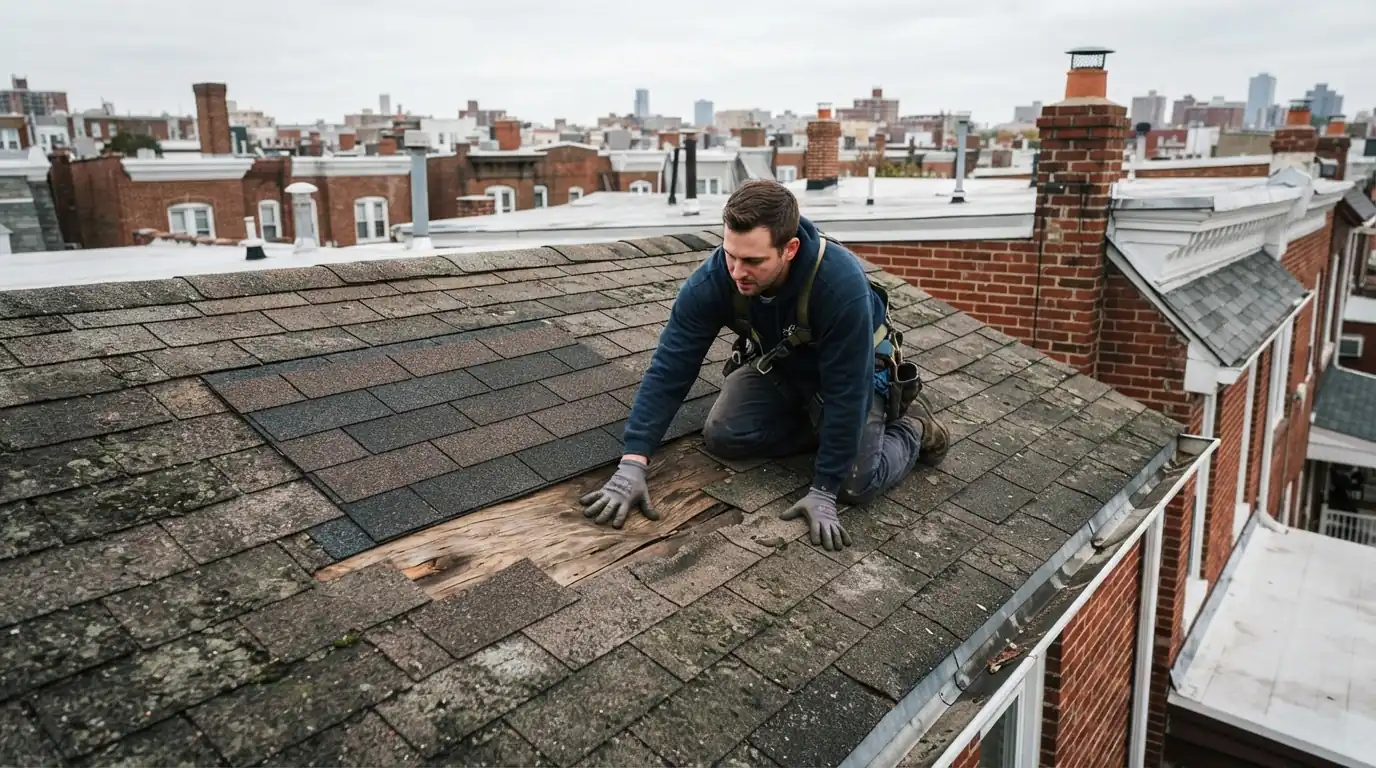
Damage confined to one slope or one section. Shingles that are still flexible, with most of their granules. A flat membrane that is supple, with one open seam or blister. A deck that feels solid underfoot. A single layer of roofing. One leak, found and fixed, that does not come back.
On older pitched roofs, repairs also make sense when the roof is slate. Good slate outlasts its nails and flashing, and replacing slipped slates or a worn valley keeps it going for many more years at a fraction of a new slate roof.
Signs Replacement Is the Better Spend
Leaks in different places every season. Shingles curling or bare across several slopes, or a flat membrane that cracks where you step. Water standing across large areas of a flat roof days after rain. Soft spots in the deck. And the one that settles many Philadelphia cases: two layers of roofing already on the house.
Philadelphia requires a full tear-off once two layers are up. That means the next replacement will include tear-off costs anyway, and repairs to a two-layer roof are fighting trapped moisture and hidden rot. At that point, a roof replacement down to the deck is usually the better use of money.
The Cost Test
A useful rule of thumb from roofers here: when repair bills over a few years start approaching a meaningful share of a replacement, stop repairing. Published Philadelphia figures put a typical replacement at $5,192 to $10,986 and a rowhome shingle roof at $5,500 to $10,000. If you have paid for three leak repairs in two years, add them up and compare.
Timing matters too. If you plan to sell, a certification inspection will surface the roof's condition anyway; knowing it in advance lets you decide between a repair and a credit on your own terms.

Not sure whether to repair or replace?
Call and we price both, with photos of what we find.
A Quick Self-Check From the Ground and the Attic
You can learn a lot before anyone climbs up. From the ground and inside, look for these:
- Shingle pieces or heavy granules in the gutters
- Curling, cupped or bare patches on one or more slopes
- Stains on top-floor ceilings, and when they appear
- Daylight, dark stains or damp wood in the attic
- A sagging line along the ridge or the roof edge
- On a flat roof, puddles still there two days after rain
One or two of these on one slope points to a repair. Several of them across the roof points toward replacement, and it is worth getting a roofer's inspection with photos before deciding.
Planning a Replacement Without a Rush
If the answer is replacement but the roof is not leaking yet, you have time to plan. Get two or three written scopes in the same terms, pick the material, and schedule for mild weather when shingle sealant and membrane adhesives bond best. Replacing on your own schedule, before a winter of leaks, usually costs less than replacing in an emergency.
Getting an Honest Answer
Ask the roofer to show you photos of what is failing, to count the layers, and to check the deck from the attic or with a core on a flat roof. Ask them to price the repair and the replacement side by side. A roofer who only ever recommends replacement, or only ever patches, is not giving you the full picture. A roof inspection gives you that picture without a sale attached.
Common Questions
Age is only a guide. Condition, layers and the deck decide it.
Sometimes, on a large roof with a failed slope, but matching and tie-ins need care.
Yes. Replacements go through Licenses and Inspections, and most qualify for the EZ re-roofing permit.
Not if they buy years cheaply. They stop making sense when leaks keep moving.
Only over a single layer on a sound deck. Two layers means tear-off.
Often a targeted repair and a certification letter settle it better than a new roof.